CAPE CANAVERAL, Fla. — It’s humanity’s first flight to the moon since 1972.
In a throwback to Apollo, NASA’s Artemis II mission will send four astronauts on a lunar fly-around. They’ll hurtle several thousand miles beyond the moon, hang a U-turn and then come straight back. No circling around the moon, no stopping for a moonwalk — just a quick out-and-back lasting less than 10 days.
What: NASA’s Artemis II test flight
Where: Kennedy Space Center in Florida and beyond
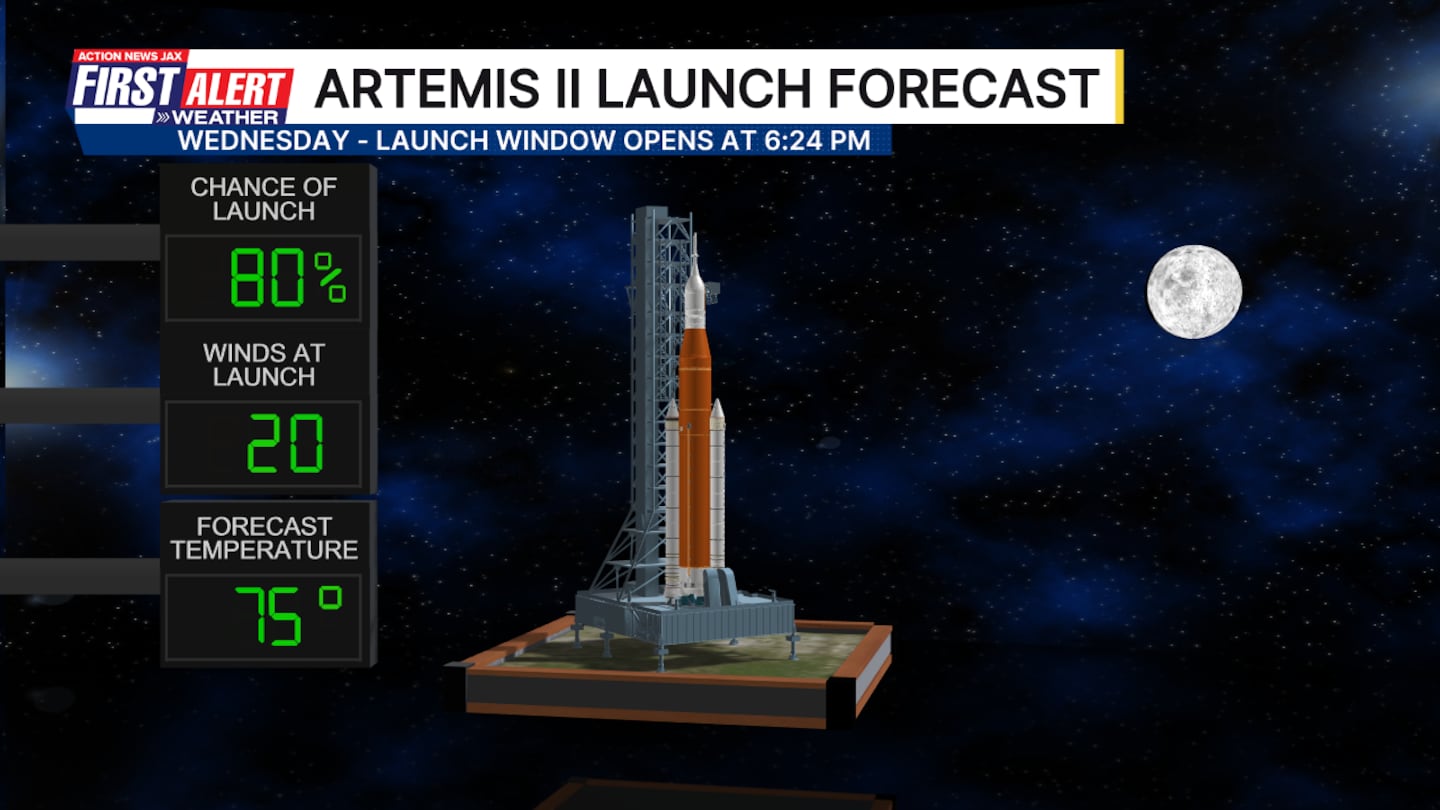
When: Targeted launch time; 6:24 p.m., Wednesday
LIVE LOOK AT ARTEMIS II
>>> STREAM ACTION NEWS JAX LIVE <<<
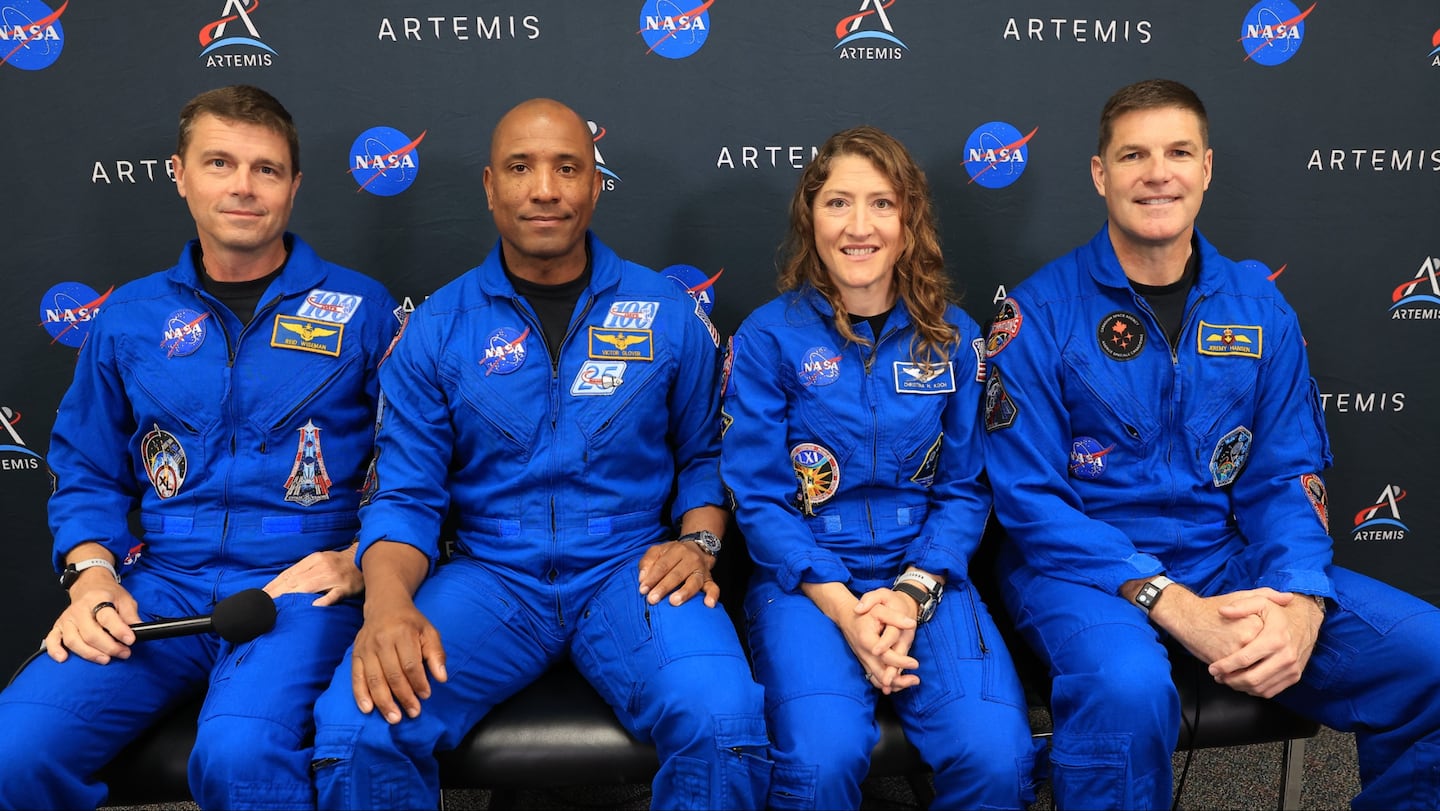
The Astronauts
Reid Wiseman
Wiseman, the commander of the crew, is a retired Navy captain who lived aboard the space station in 2014 and later headed NASA’s astronaut corps.
Victor Glover
A Navy test pilot, was the first Black astronaut to live and work aboard the space station in 2020 and 2021. He also was one of the first astronauts to launch with SpaceX.
Christina Koch
Koch holds the record for the longest single spaceflight by a woman. During her 328-day mission at the International Space Station spanning 2019 and 2020, she took part in the first all-female spacewalk.
Jeremy Hansen
From the Canadian Space Agency’s Hansen is a former fighter pilot and is the lone space rookie of the Artemis crew.
The Mission
Wednesday’s scheduled Artemis II test flight will be the first flight with crew aboard the SLS rocket and Orion spacecraft.
After liftoff, the astronauts will spend the first 25 hours circling Earth in a high, lopsided orbit. They’ll use the separated upper stage as a target, steering their Orion capsule around it as docking practice for future moonshots. Instead of fancy range finders, they’ll rely on their eyes to judge the gap, venturing no closer than 33 feet (10 meters) to the stage.
The Artemis II crew may behold never-before-seen regions of the lunar far side — with the moon appearing the size of a basketball at arm’s length during the closest part of the roughly six-hour flyby.
If all goes as planned, Orion’s main engine will hurl the crew to the moon some 244,000 miles (393,000 kilometers) away. This free-return trajectory made famous in Apollo 13 relies on the moon and Earth’s gravity, minimizing the need for fuel.
On flight day six, Orion will reach its farthermost point from Earth as it sails 5,000 miles (8,000 kilometers) beyond the moon. That will surpass Apollo 13’s distance record, making Artemis astronauts the most remote travelers. After emerging from behind the moon, the crew will head straight home with a splashdown on flight day 10 — nine days, one hour and 46 minutes after liftoff.
Returning to Earth
Like Apollo, the Artemis mission ends with a splashdown homecoming into the Pacific.
All eyes will be on Orion’s heat shield as the capsule plunges through the atmosphere. It’s the part of the spacecraft that took the biggest beating during 2022’s test flight, with charred chunks gouged out. The heat shield is being retooled for future capsules but remains the original design for Artemis II.
NASA is limiting the heat exposure during reentry by shortening the capsule’s atmospheric descent. Navy recovery ships will be stationed off the coast of San Diego as Orion parachutes into the ocean.
[DOWNLOAD: Free Action News Jax app for alerts as news breaks]

[SIGN UP: Action News Jax Daily Headlines Newsletter]
Click here to download the free Action News Jax news and weather apps, click here to download the Action News Jax Now app for your smart TV and click here to stream Action News Jax live.


