
Jacksonville, Fl. — The “Buresh Bottom Line”: Always be prepared!.....First Alert Hurricane Survival Guide... City of Jacksonville Preparedness Guide... Georgia Hurricane Guide.
STAY INFORMED: Get the * FREE * First Alert Weather app
FREE NEWS UPDATES, ALERTS: Action News Jax app for Apple | For Android
WATCH “The Ins & Outs of Hurricane Season”
WATCH “Preparing for the Storm”
READ the First Alert Hurricane Center “Survival Guide”
***** ALWAYS CHECK & RE-CHECK THE LATEST FORECAST & UPDATES! *****
Potential local - Jax/NE Fl./SE Ga. impacts from“Fred” BASED ON CURRENT FORECAST.... (there will be NO direct impacts to the local area from “Grace” or t.d. #8 [soon to be “Henri”]):
* lots of tropical moisture
* multiple heavy bands of showers & t’storms through Tue. Rainfall totals by Wed. should average 1-2″, locally 3″+.
* isolated waterspouts & tornadoes
* little if any significant increase in the gradient winds though bands of strong storms/squalls may briefly produce strong gusts between 30 & 50 mph.
* heightened rip current risk at area beaches - swim or surf with a buddy & as close to a lifeguard as possible
* no storm surge
* CHECK BACK FOR UPDATES!!
FRED:
Fred underwent a metamorphosis of sorts Sat. night/early Sunday in what is likely the long awaited/anticipated reorganization cycle after its 3-4 day entanglement with the land masses of Hispaniola & Cuba. How much & how fast Fred can reorganize & whether or not a true core can be become established has been questionable but convection has been steadily increasing with the center on the west edge of the heavy storm due to moderate westerly shear. While there is plenty of warm water for Fred to work with, the storm will remain imbedded within 20-30 mph of shear out of the southwest but veering more southerly which will be in alignment with Fred’s movement. Therefore, the shear vector should not be as detrimental through the day Mon. Still.. Fred will largely remain heavily weighted on its east side with much of the heavy rain & wind north & east of the center.
Overview: The strong tropical wave entered the NE Caribbean Tue. & was upgraded south of Puerto Rico to tropical storm “Fred” Tue. evening - the 6th named storm of the Atlantic season & about 2 1/2 weeks ahead of the avg. date of Aug. 28th. The avg. date for the first hurricane is Aug. 10th but Elsa briefly became a hurricane in early July. Fred weakened to a tropical depression over the mountainous terrain of Hispaniola Wed. evening & has struggled since with more land interaction with Cuba for some 48+ hours but regained tropical storm strength Sunday morning. Overall... forecast models have come into very good agreement on the track & speed of Fred trending a bit east again recently centered on a Central to Western Fl. Panhandle landfall late Mon./Monday night.
Fred had taken it on the chin after tangling with Hispaniola & Cuba but satellite & radar data show the storm is now clearly getting its act together upon a steady heading of almost due north with an eye on the Panhandle. Fred has slowed as the storm has made it to the western edge of the expansive Bermuda High stretching over the Central & Western Atlantic.
The greatest complicating factors have been - & will be - the land interaction combined with the fairly persistent shear albeit at varying speeds. Both the GFS & European have been initializing well & bring the system northward through the Central & Eastern Gulf into the Fl. Panhandle as a “healthy” tropical storm. IF Fred can overcome the shear, there is concern for a stronger tropical cyclone than is indicated by models or the current NHC forecast - possibly as a low end Cat. 1 hurricane. But it becomes semantic at that point with a difference in wind speed of a 5 - 10 mph either way of sustained winds at 70 mph. Anyone on the Gulf Coast from the NW coast of Fl. through the Panhandle & along the Alabama & Mississippi coasts needs to stay up to date on the latest forecasts.
The GFS has had a right/east bias the last couple of weeks with tropical cyclones over the E. Pacific, but the model was a clear “winner” during Elsa 4-5 weeks ago. A stronger ridge seems to be the most logical forecast given how stout the ridge has been since essentially May & has proven true during the past week. The UKMET model is generally a compromise between the GFS & European & has been pretty decent on Fred so far showing the more westward movement before turning north.
Everyone along the Gulf coast should check & re-check the latest trends & forecasts!
Expect heavy rain bands for much of the Florida Peninsula at one time or another into Monday spreading from south to north. Winds will be of little concern for most of the Peninsula saving the Panhandle where sustained winds should reach tropical storm strength with tropical storm wind gusts as far east as the Big Bend.
Stay tuned & stay up to date on the latest forecasts!


Spaghetti plots including ensemble forecasts for Fred:


South Fl. Water Management District:
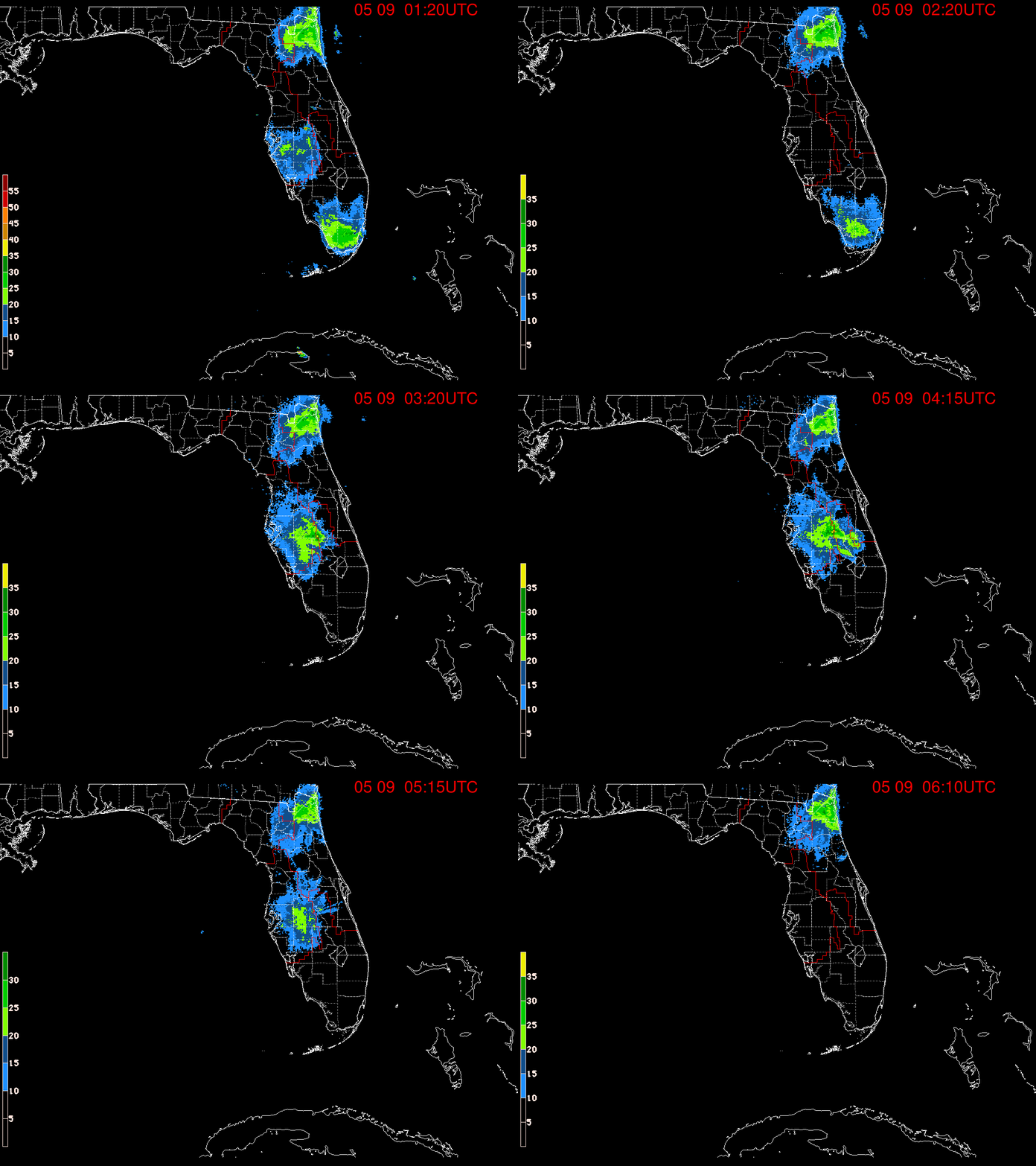


Plenty of moisture for Fred & Grace to work with:


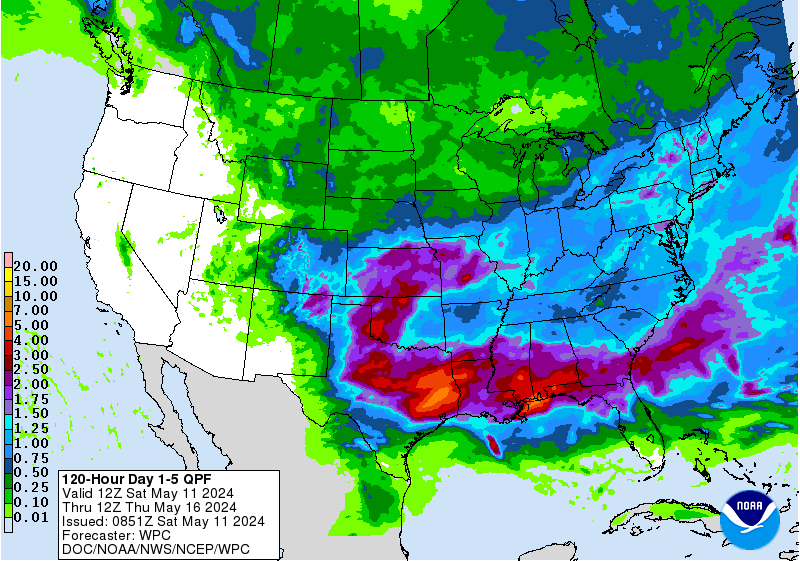
A half foot or more of rain will accompany Fred causing areas of flooding, especially considering the wet ground due to a wet last 6-7 weeks:

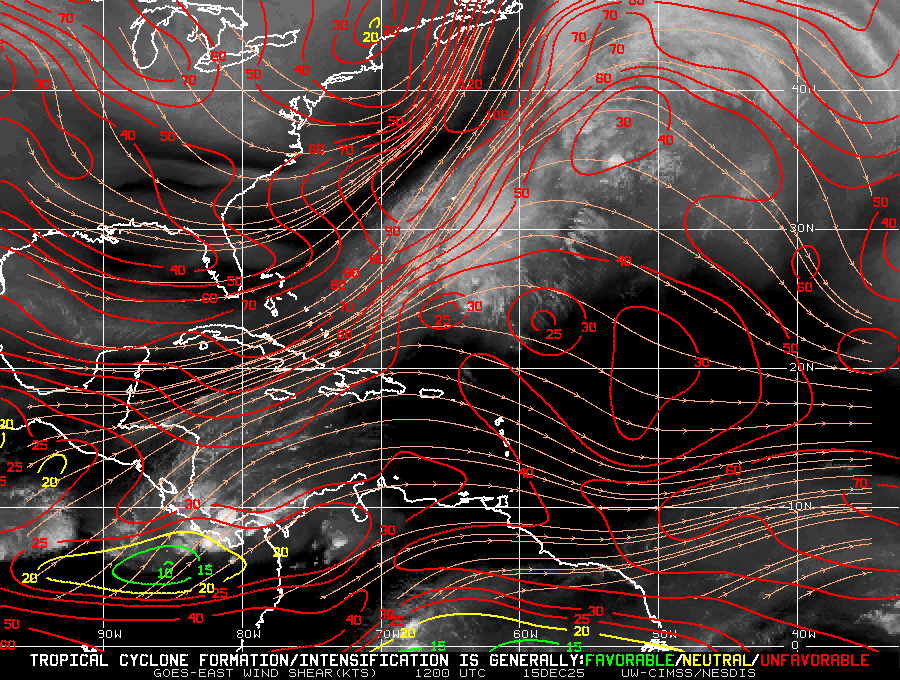
A “zone” of strong shear is gradually shrinking & weakening:
GRACE:
Tropical wave ‘95-L’ became tropical depression #7 Fri. afternoon & was upgraded to tropical storm “Grace” while steadily & quickly moving west/northwest. The five earliest named 7th storms of the season (Klotzbach): 2020 (7/22) 2005 (7/24) 1995 (8/10) 2017 (8/13) 2011 (8/14). Grace weekend back to a depression Sunday.
The track appears to be very similar - initially - to Fred but with more of a west vector &, therefore, a more southern route. As Fred departs over the next couple days, a high pressure ridge will have a tendency to build underneath which steers Grace more westward. The GFS model seems to have come to terms with itself after some wild swings regarding track & intensity & - unfortunately - some irresponsible posts on social media. In any case... the GFS, European & UKMET models are in general agreement on an almost due west or slightly W/NW swift movement this week taking Grace across the Northern Caribbean & a little south of Cuba... briefly across the Yucatan Peninsula then into Mexico south of Texas, potentially as a hurricane by late in the week/early in the weekend. Some of the models are showing a decay to an open wave once over land. Such a track will keep most of the U.S. out of any direct significant impacts from Grace.


T.D. #8:
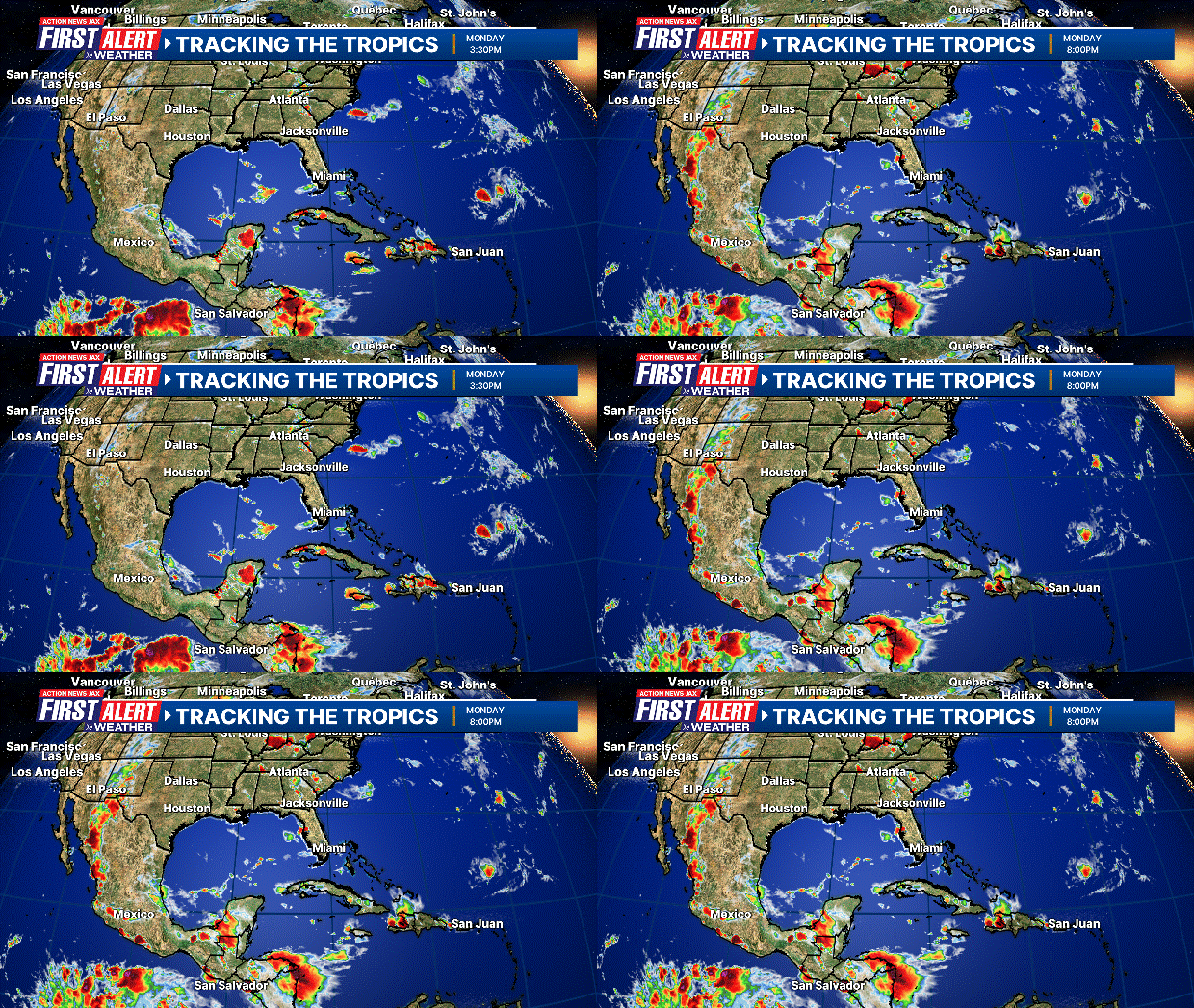
A disturbance over the Western Atlantic has become tropical depression #8 - upgraded Sun. night. This storm should soon become “Henri” while drifting south/southwest then more west & finally turning northeast - doing a loop near & around Bermuda. Early indications are that #8 will stay east of the U.S., but it’s still early on this one & the storm could - for a while - get uncomfortably close to U.S. east coast anywhere from N. Carolina to the Mid-Atlantic. The tropical cyclone will be at about Jacksonville’s latitude Wed./Thu. but hundreds of miles to the east while making the turn to the NW then north. A strengthening upper level high over the S.E. U.S. should ultimately keep t.d. #8 well away from Jacksonville.


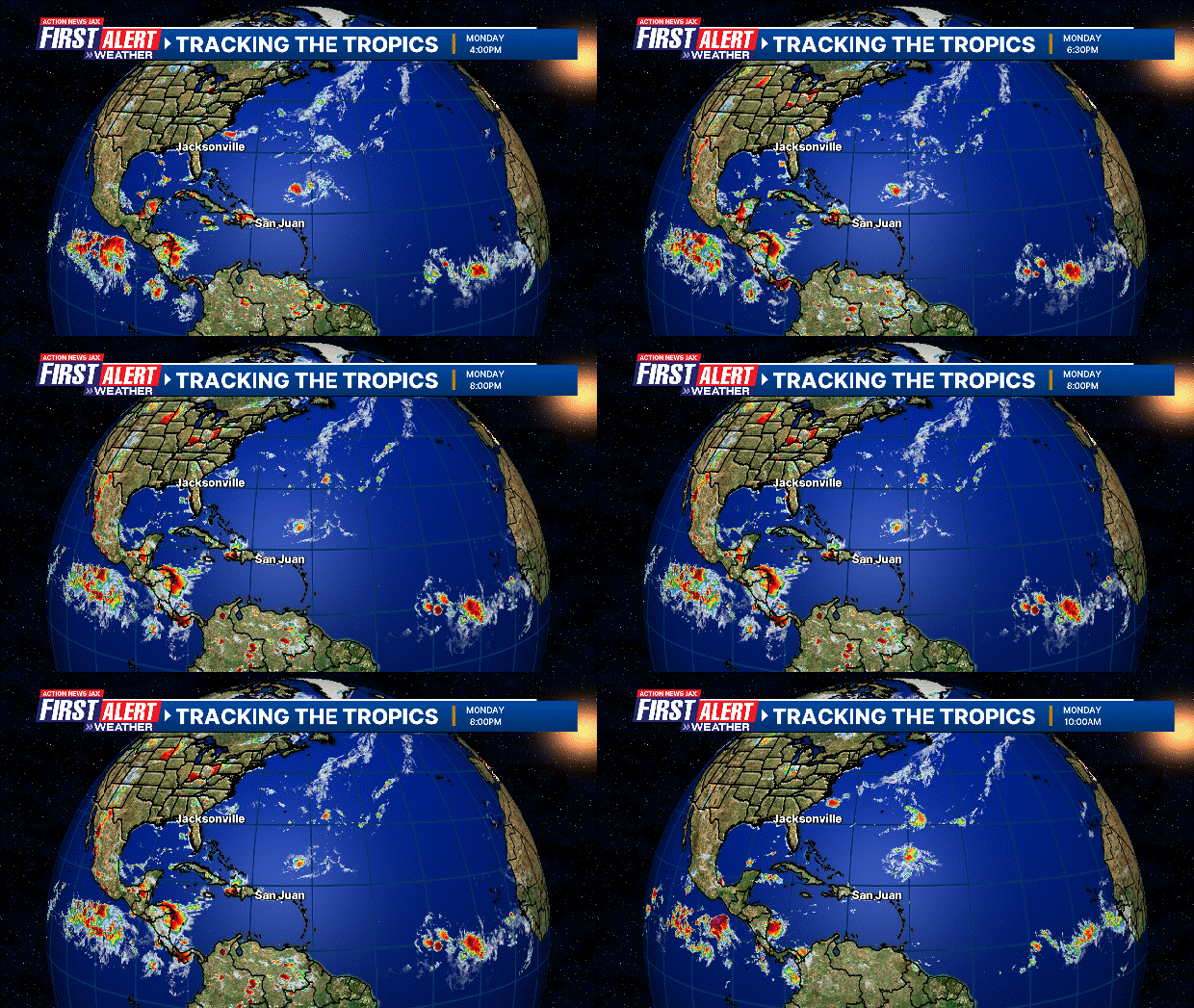
Meanwhile... a series of tropical waves continues to move west off the coast of Africa with multiple “threats” over the next couple of weeks.
We’re now less than 4 weeks from the peak of the hurricane season (Sept. 10), so just from a climatological point, we should see an uptick in Atlantic activity. But there are also other indications of a more active period or “burst” with the MJO, seasonally warm sea surface temps. & rather impressive deep oceanic heat content.
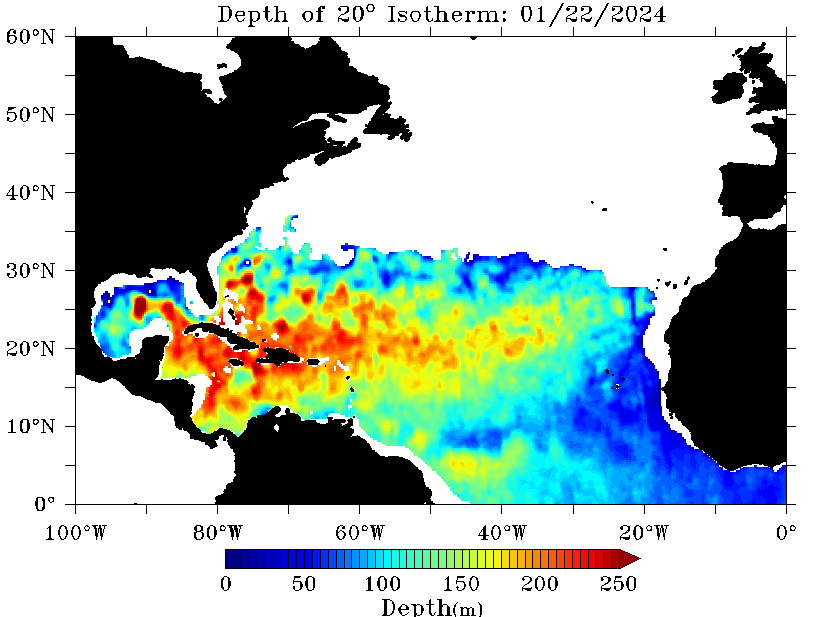
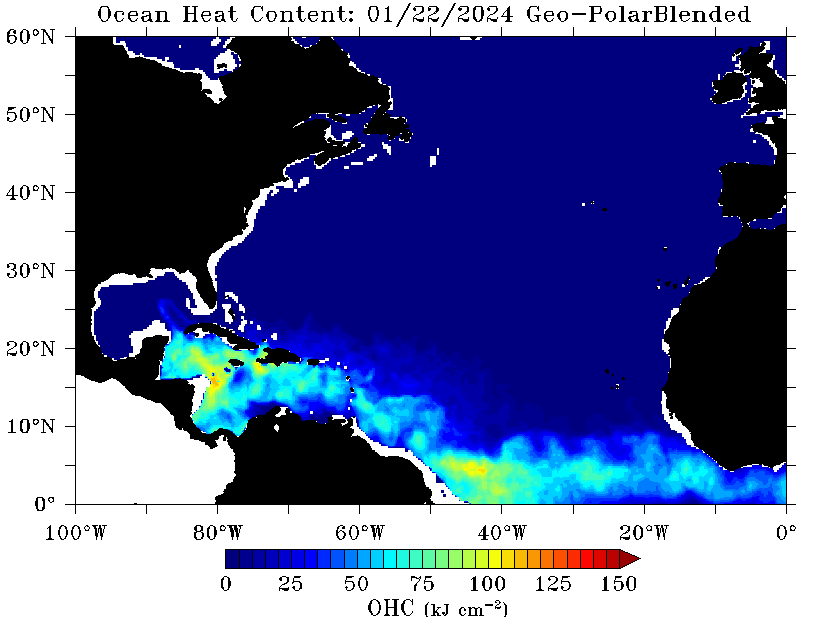
Sea surface temps. across the Atlantic are now near to above avg. across much of the basin (2nd image below) & - even more importantly - deep oceanic heat content is becoming impressive & the “equivalent oceanic heat content” - namely depth averaged temperature in the upper 300 m (~984 feet) - is even more impressive all the way from Africa to the Gulf of Mexico. Such an ocean water temp. pattern is conducive to long track deep tropical Atlantic tropical cyclones & can lead to a more favored regime for rapid intensification cycles. From an AMS research paper in ‘08 Mainelli, DeMaria, Shay, Goni: “Results show that for a large sample of Atlantic storms, the OHC variations have a small but positive impact on the intensity forecasts. However, for intense storms, the effect of the OHC is much more significant, suggestive of its importance on rapid intensification. The OHC input improved the average intensity errors of the SHIPS forecasts by up to 5% for all cases from the category 5 storms, and up to 20% for individual storms, with the maximum improvement for the 72–96-h forecasts. The statistical results obtained indicate that the OHC only becomes important when it has values much larger than that required to support a tropical cyclone.” More recent research continues to indicate similar correlations.


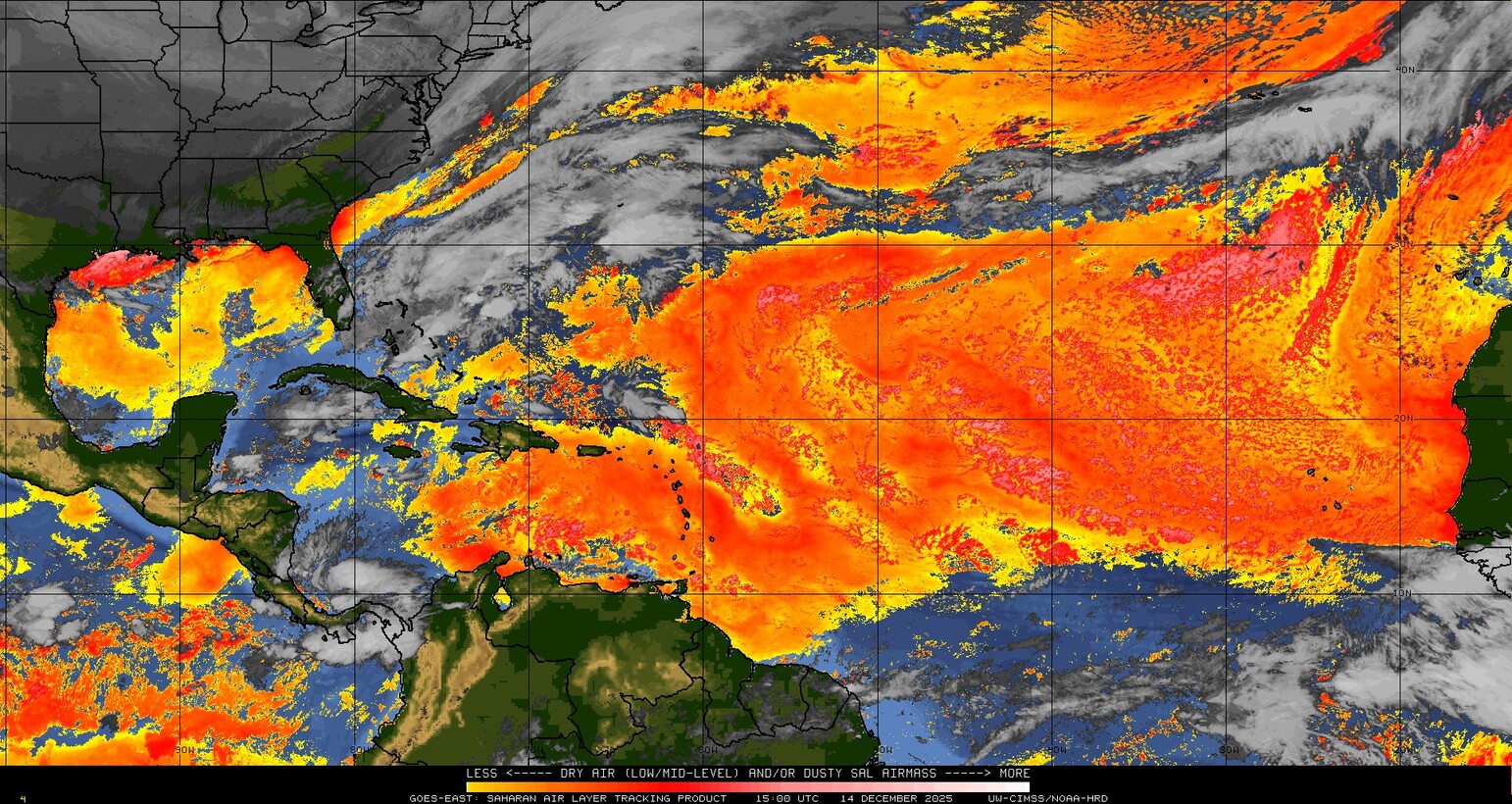
Saharan dust. Dry air - yellow/orange/red/pink. Widespread dust is most common earlier in the hurricane season & is indicative of dry air that can impede the development of tropical cyclones. However, sometimes “wanna’ be” waves will just wait until they get to the other side of the plume then try to develop if everything else happens to be favorable.
2021 names..... “Henri” is the next name on the Atlantic list (names are picked at random by the World Meteorological Organization... repeat every 6 years... historic storms are retired (Florence & Michael in ’18... Dorian in ’19 & Laura, Eta & Iota in ‘20). Last year - 2020 - had a record 30 named storms. The WMO decided beginning in 2021 that the Greek alphabet will be no longer used & instead there will be a supplemental list of names if the first list is exhausted (has only happened twice - 2005 & 2020). More on the history of naming tropical cyclones * here *.


East Atlantic:


Mid & upper level wind shear (enemy of tropical cyclones) analysis (CIMMS). The red lines indicate strong shear:
Water vapor imagery (dark blue indicates dry air):

Deep oceanic heat content continues to increase across the Gulf, Caribbean & deep tropical Atlantic & has become pretty impressive from the Central/NW Caribbean into the Gulf of Mexico:
Sea surface temp. anomalies:

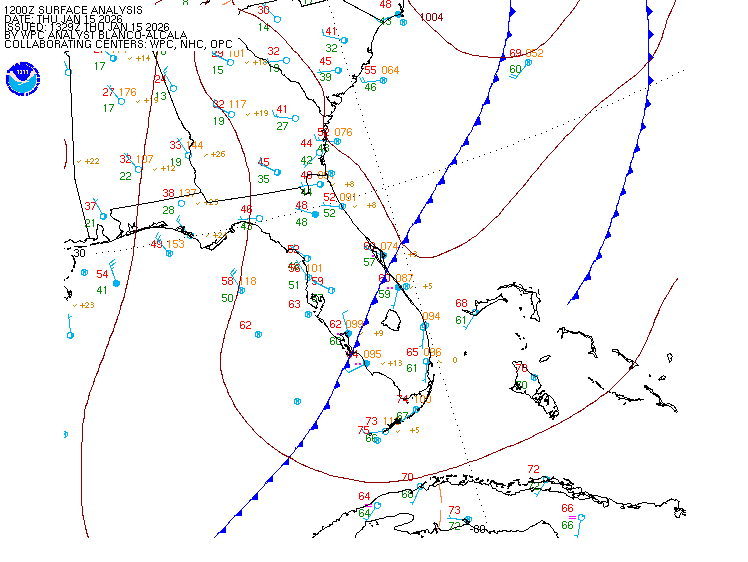
SE U.S. surface map:
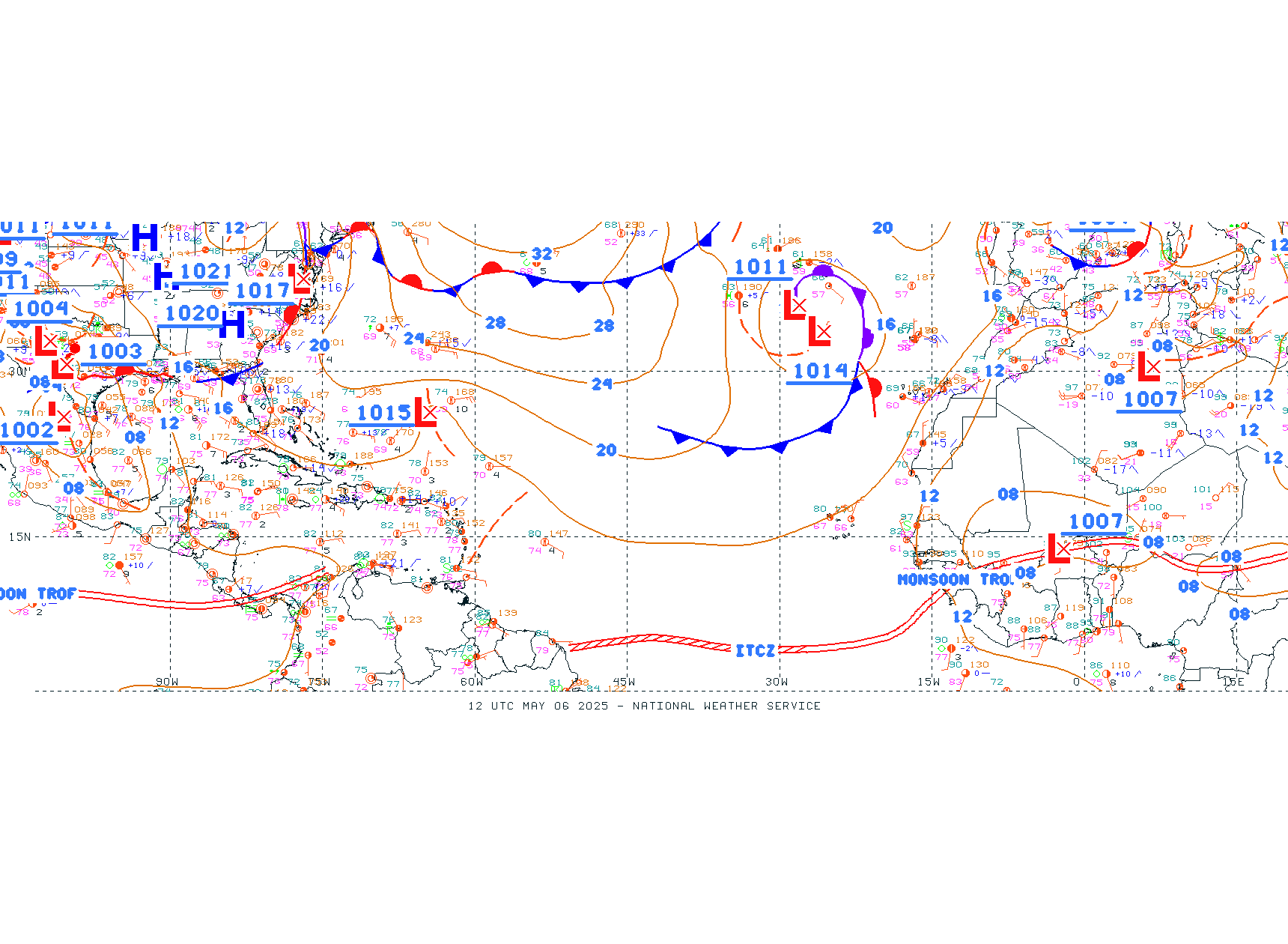
Surface analysis centered on the tropical Atlantic:
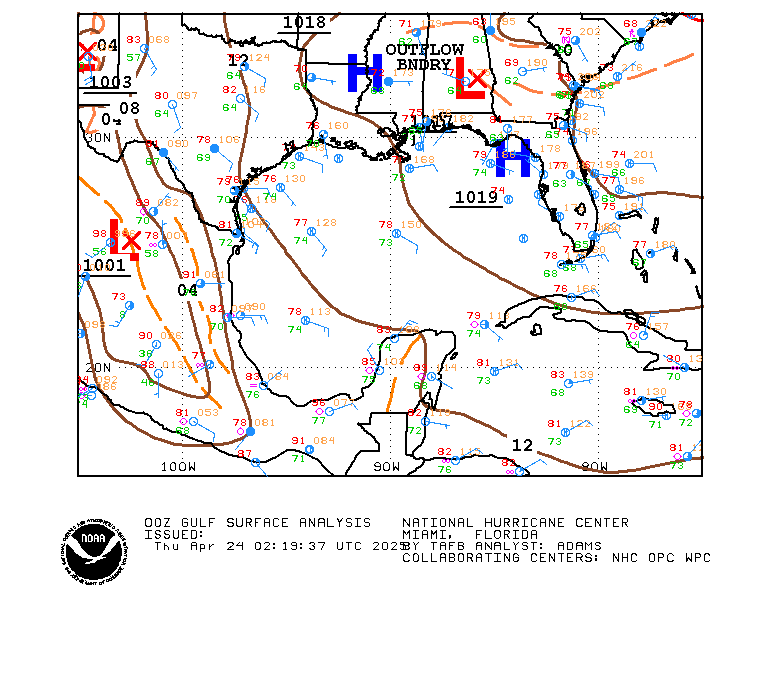
Surface analysis of the Gulf:
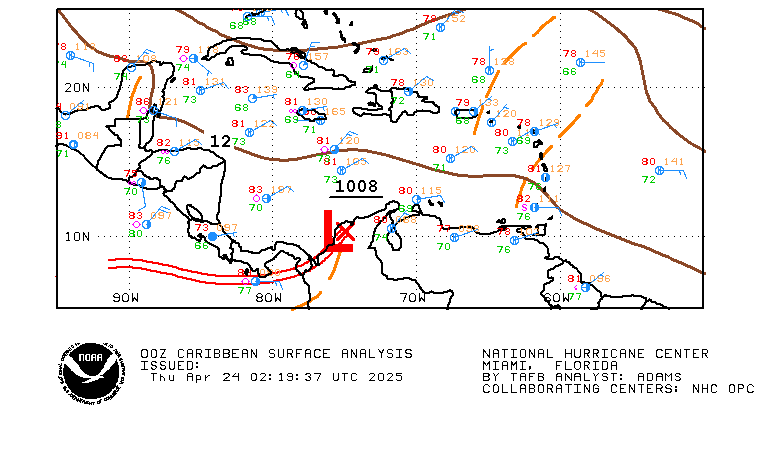
Caribbean:
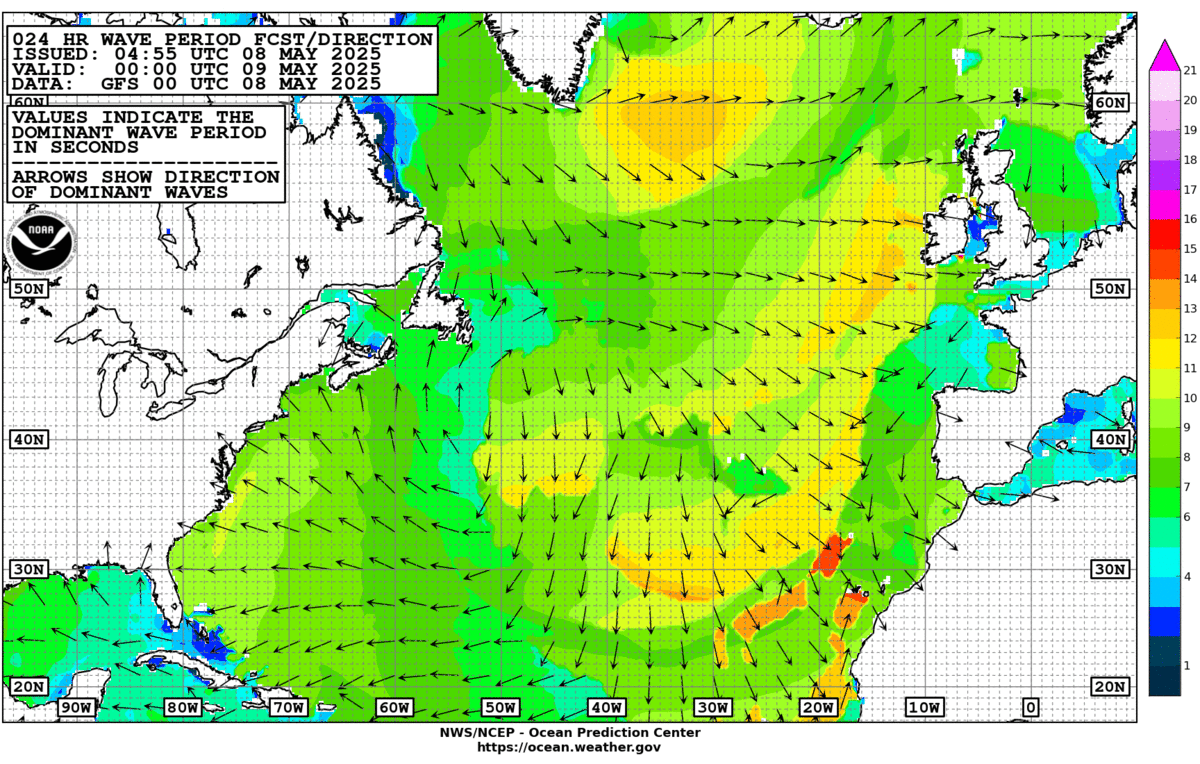
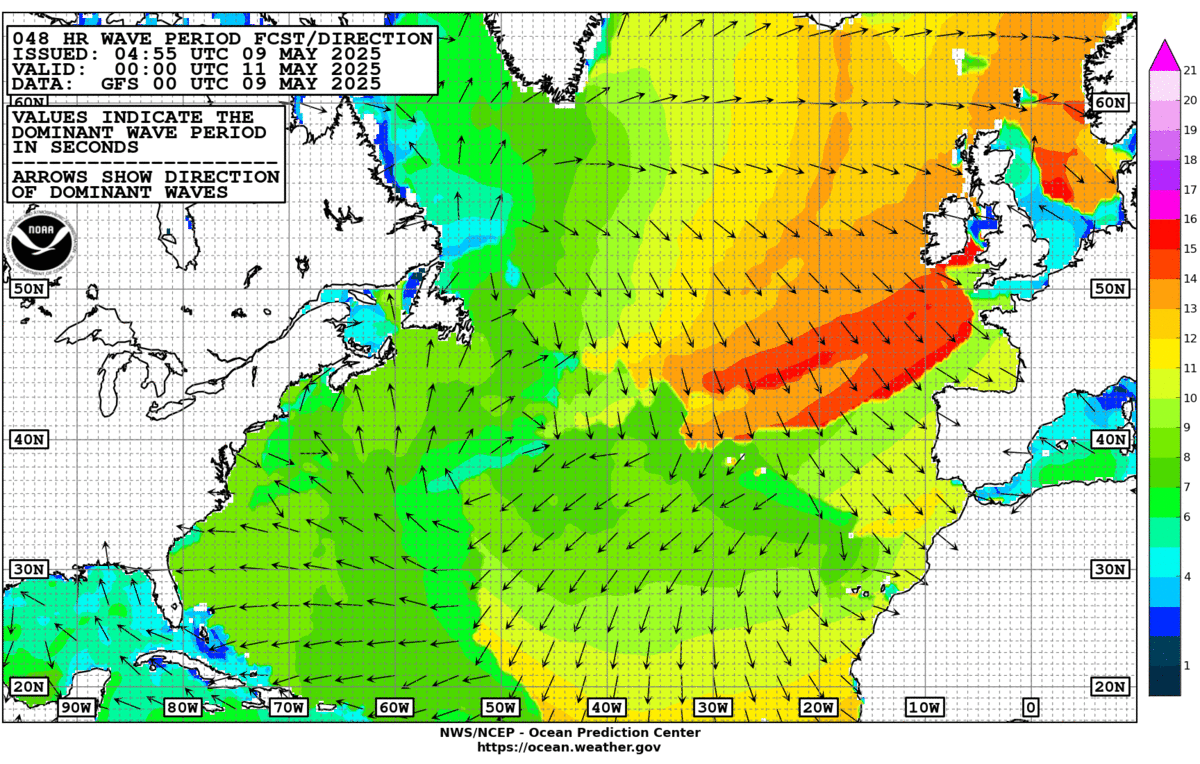
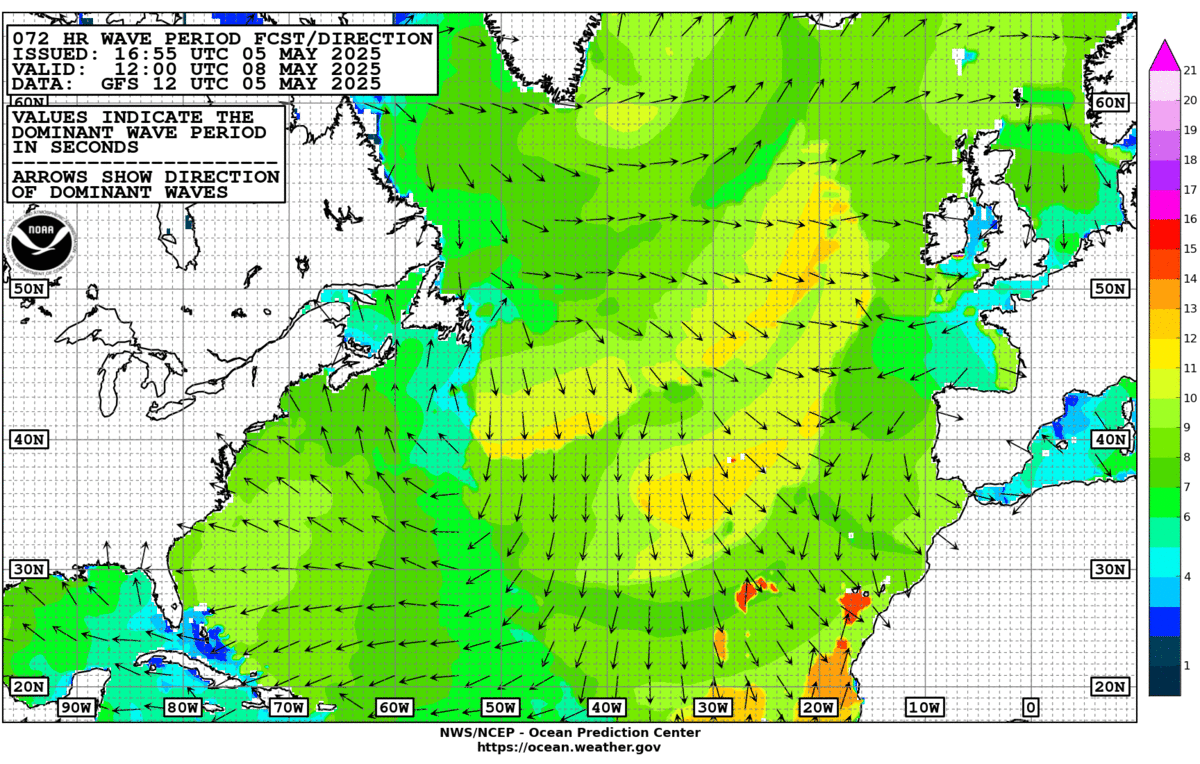
Atlantic Basin wave forecast for 24, 48 & 72 hours respectively:
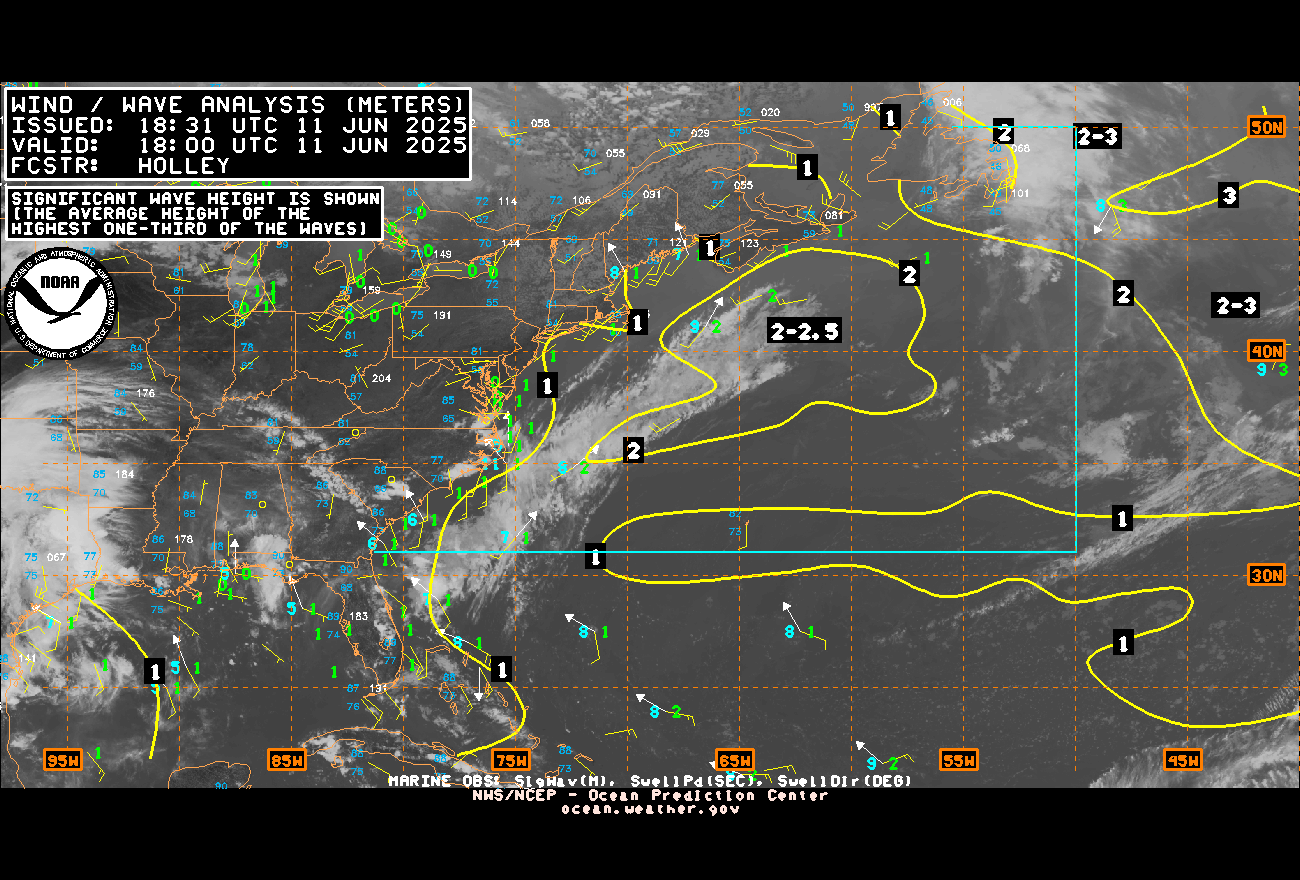
The East Pacific - Linda will slowly wind down after becoming an annular hurricane:


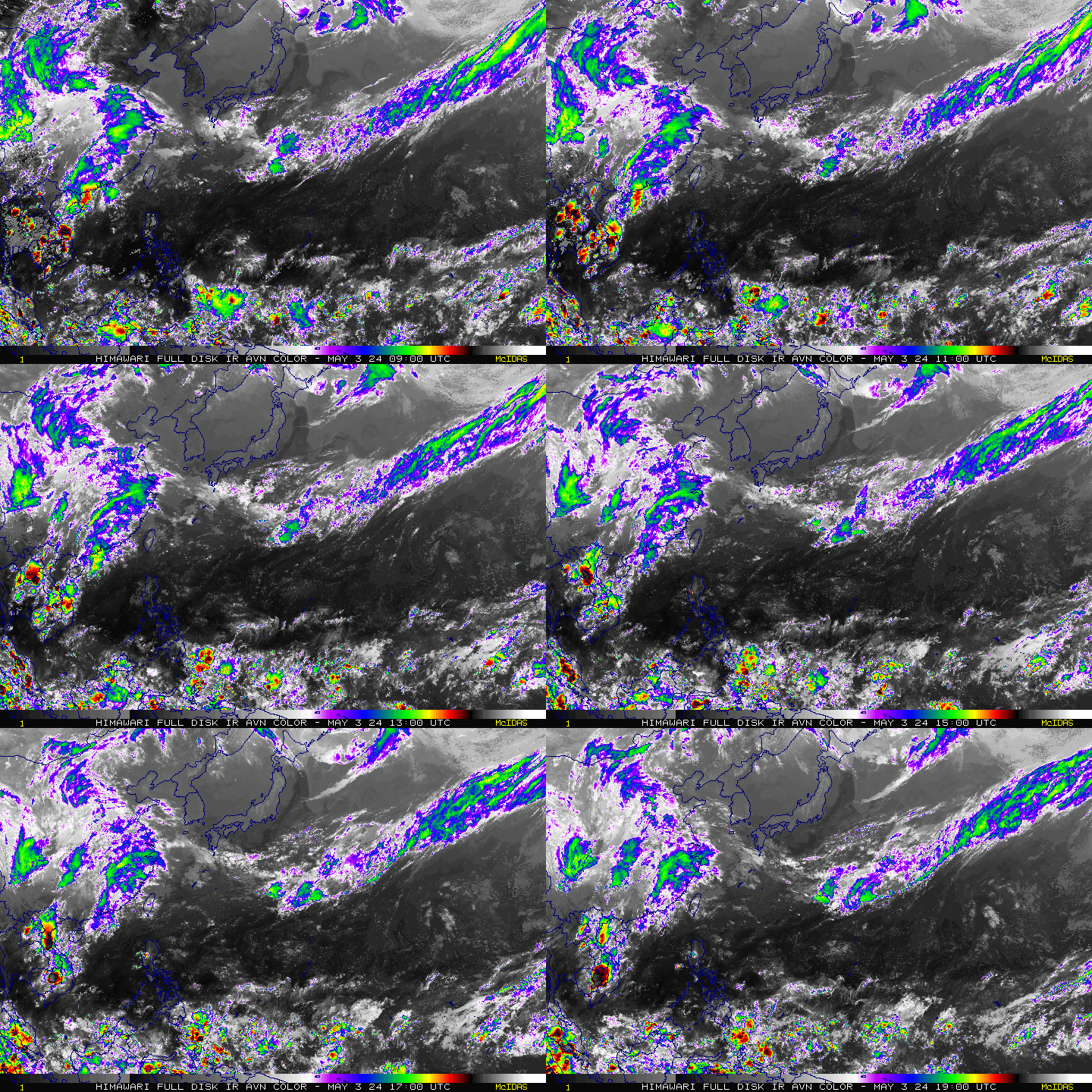
West Pacific IR satellite:
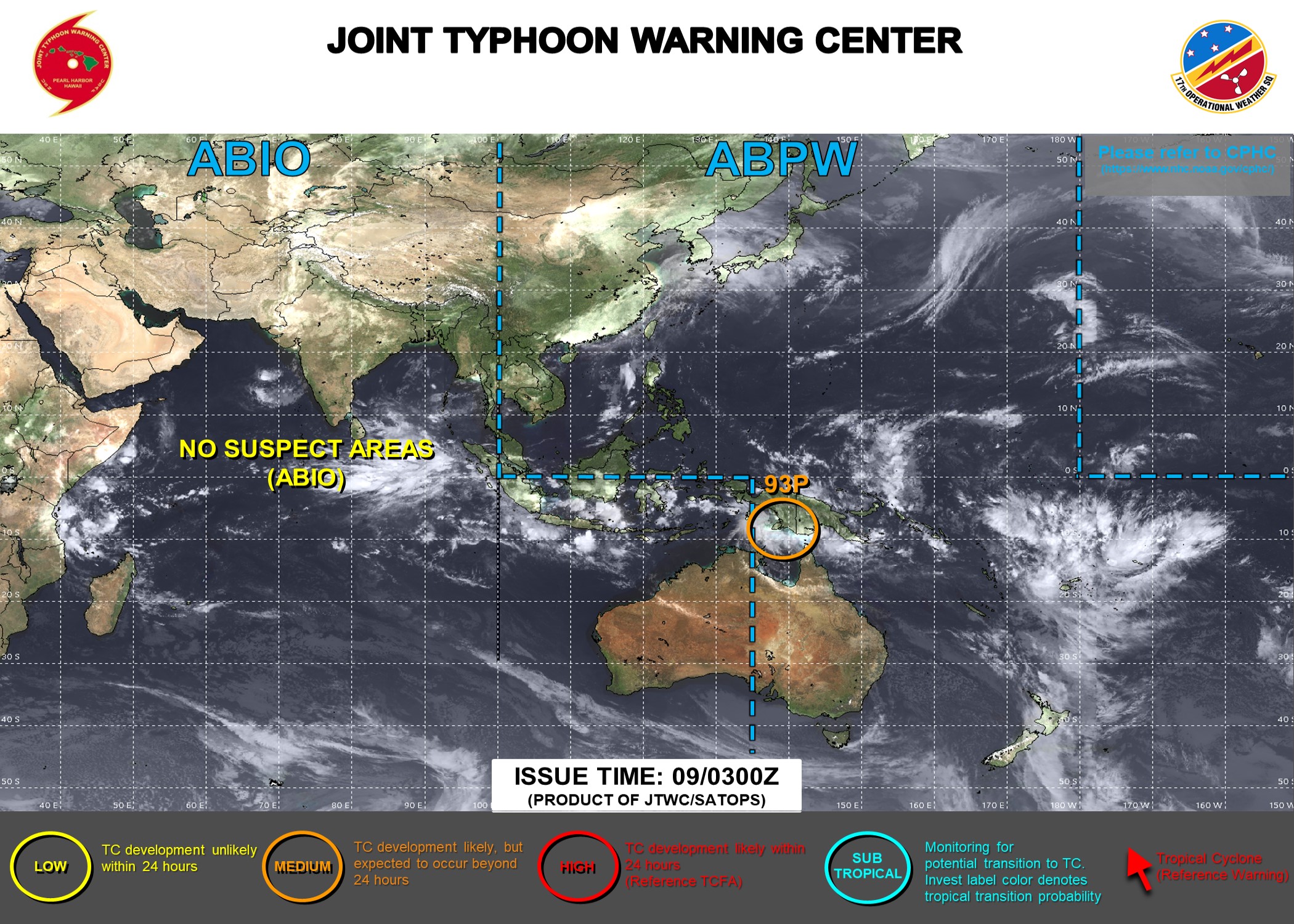
Global tropical activity:
Cox Media Group


