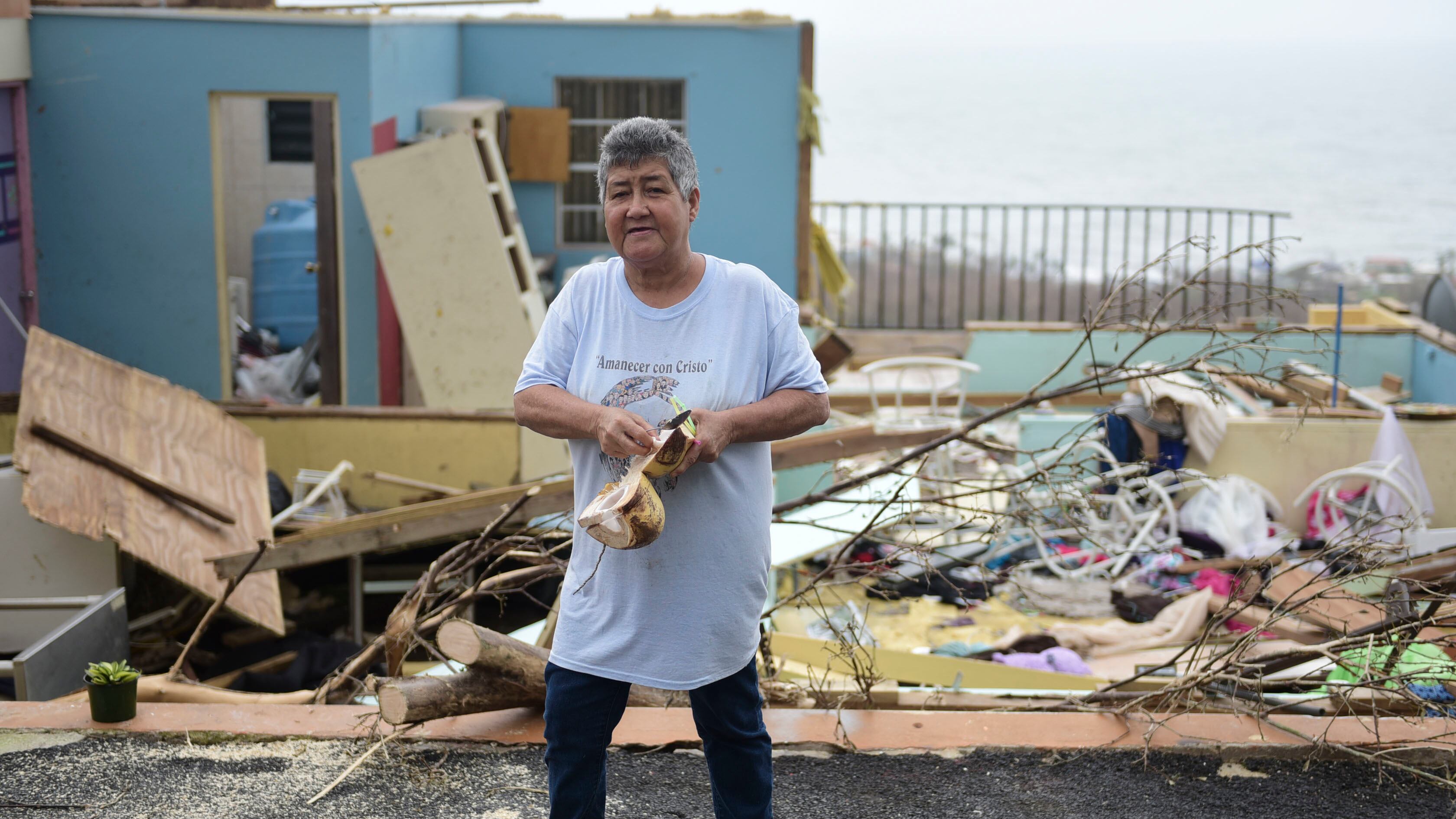
Sept. 22, 2017 — Photos: Must-see photos of Irma damage in Jacksonville area
Live updates: Maria is a powerful Category 3 hurricane
"Jose" off of New England... powerful "Maria" near the Bahamas....
The "Buresh Bottom Line" is: stay tuned!... Always be prepared!..... City of Jacksonville Preparedness Guide... Georgia Hurricane Guide.
Maria:
LOCAL (JACKSONVILLE) IMPACTS - closest approach will be 550+ miles to the east late Sunday night-Monday:
- a high rip current risk this weekend into early next week
- breezy winds out of the northeast (onshore) - especially at & near the coast
- no rainfall..... no high winds .... no storm surge directly associated with Maria for NE Fl./SE Ga.
Maria went Cat. 5 & then some with a minimum pressure of at least 909 mb Tue. evening making the hurricane among the top 10 most intense on record for any part of the Atlantic Basin. Maria was the 2nd Cat. 5 of the season over the Atlantic - the first time that's happened since 2007 (Dean & Felix). The move over Puerto Rico caused some weakening before more intensification once over the warm water of the Southwest Atlantic. Some weakening has started anew as shear increases out of the west & southwest.
When it comes to movement.... how do we solve a problem like Maria? Well... much will come down to any upper level ridging near the U.S. east coast. All indication are that Maria will follow a wake of sorts to the south of a nearly stationary Jose over the NW Atlantic. It's the ol' "cork in a stream" - the hurricane is going to follow the path of least resistance which keeps Maria far to the east of Florida.


Spaghetti model plot for Maria:


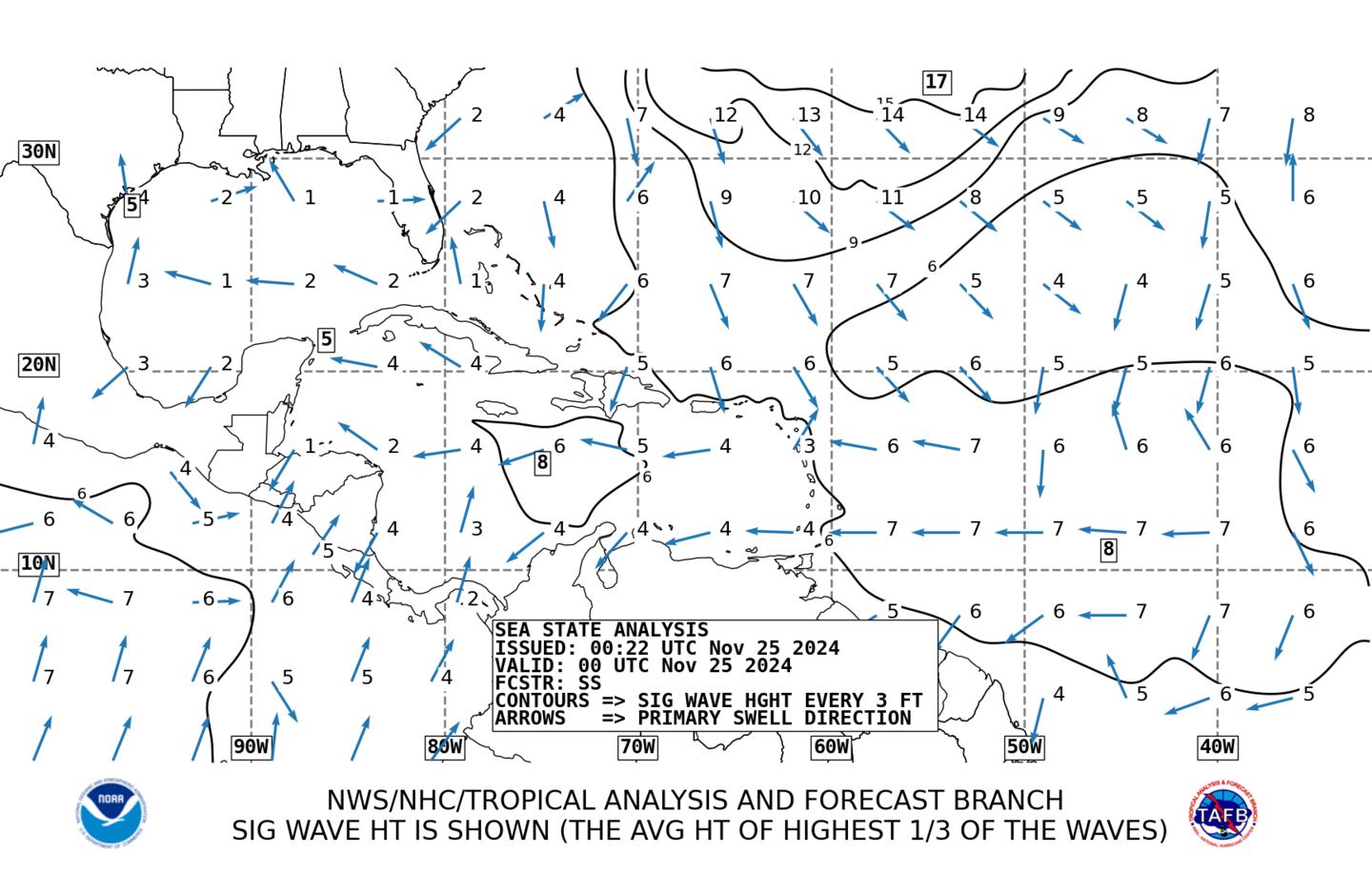
Average wave heights:
The chart below is the 500mb (upper level) forecast from the GFS model for early Sat., 09/23. The atmosphere is going through some major buckling as a big trough of low pressure moves into the Western U.S. helping to induce ridging over the Eastern U.S. But there's just enough "softness" over the W. Atlantic for the models to sniff out an escape route for Maria. I think our best hope is for Jose to be enough of a factor to maintain that alleyway as otherwise ridging should have a tendency to develop given the large trough over the Western U.S. If the ridging is faster & wins out then the U.S. has a problem with regards to Maria.
It is still too early to fully know how these details will work out next week. It is a rather complicated weather pattern. But I am confident that Maria stays well east of Florida so only fringe relatively minor effects on the coast of NE Fl. & SE Ga. - rip currents & breezy winds out of the northeast (onshore).

Jose:
.... The storm has become post-tropical while it meanders far to the southeast of Boston. Jose will continue to wind down while eventually turning more east.
There will be no major direct impacts on Fl.. But "Jose" will bring strong winds & rough seas/surf to New England including Boston the rest of this week while a very high rip current risk will occur from Chesapeake Bay to Maine.


Jose....
0
NOAA WaveWatch III below predicated on GFS model - will change & update - hit refresh for latest + loop:
1
Very warm ocean water persists:
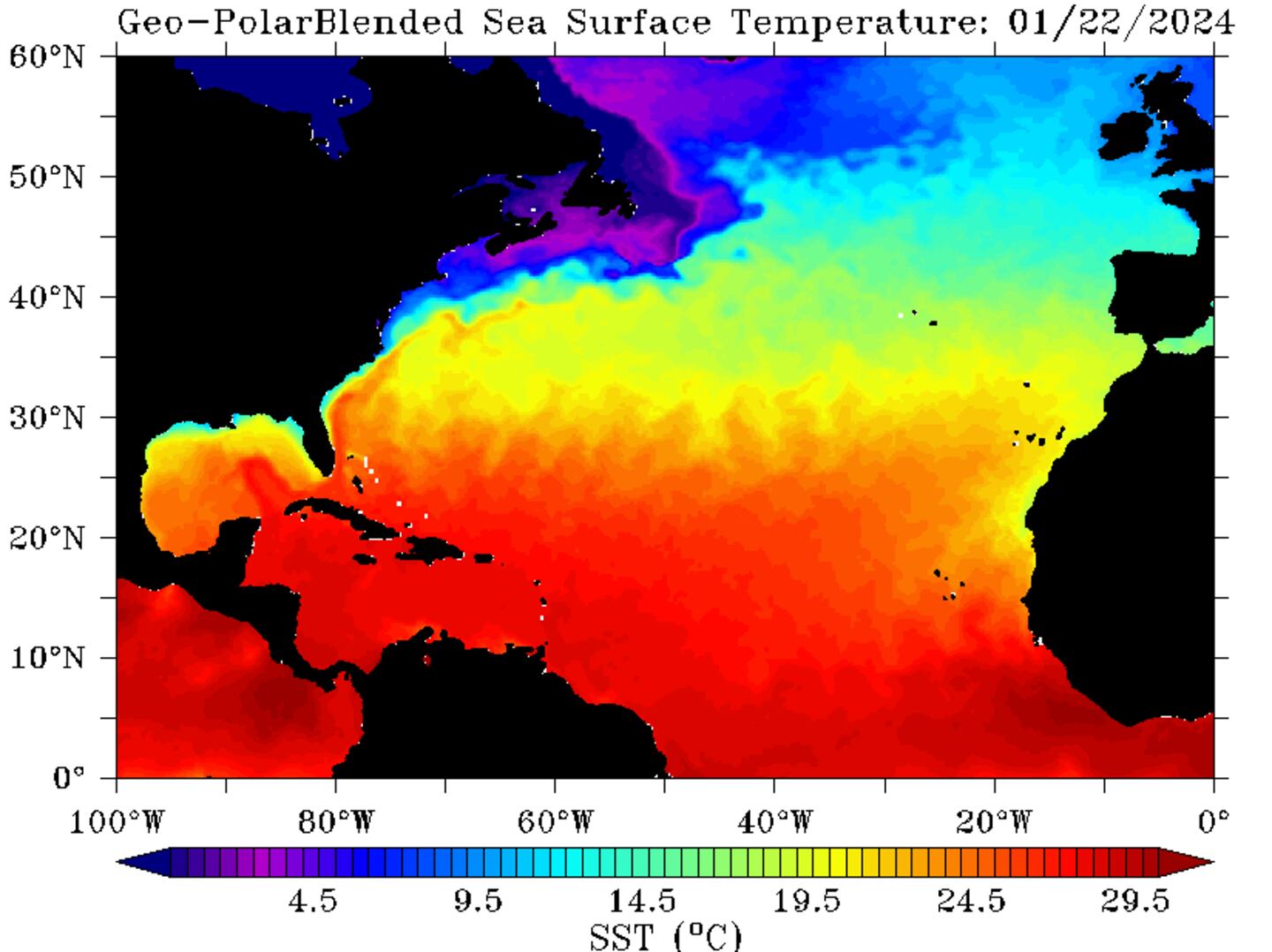
Deep oceanic heat content is still very evident - especially over the Caribbean & Gulf. We will have more tropical troubles before the season is over.

Sea surface temp. anomalies show sea surface temps. have cooled across the Northern Gulf & surrounding Fl. most likely caused by the recent tropical cyclones....
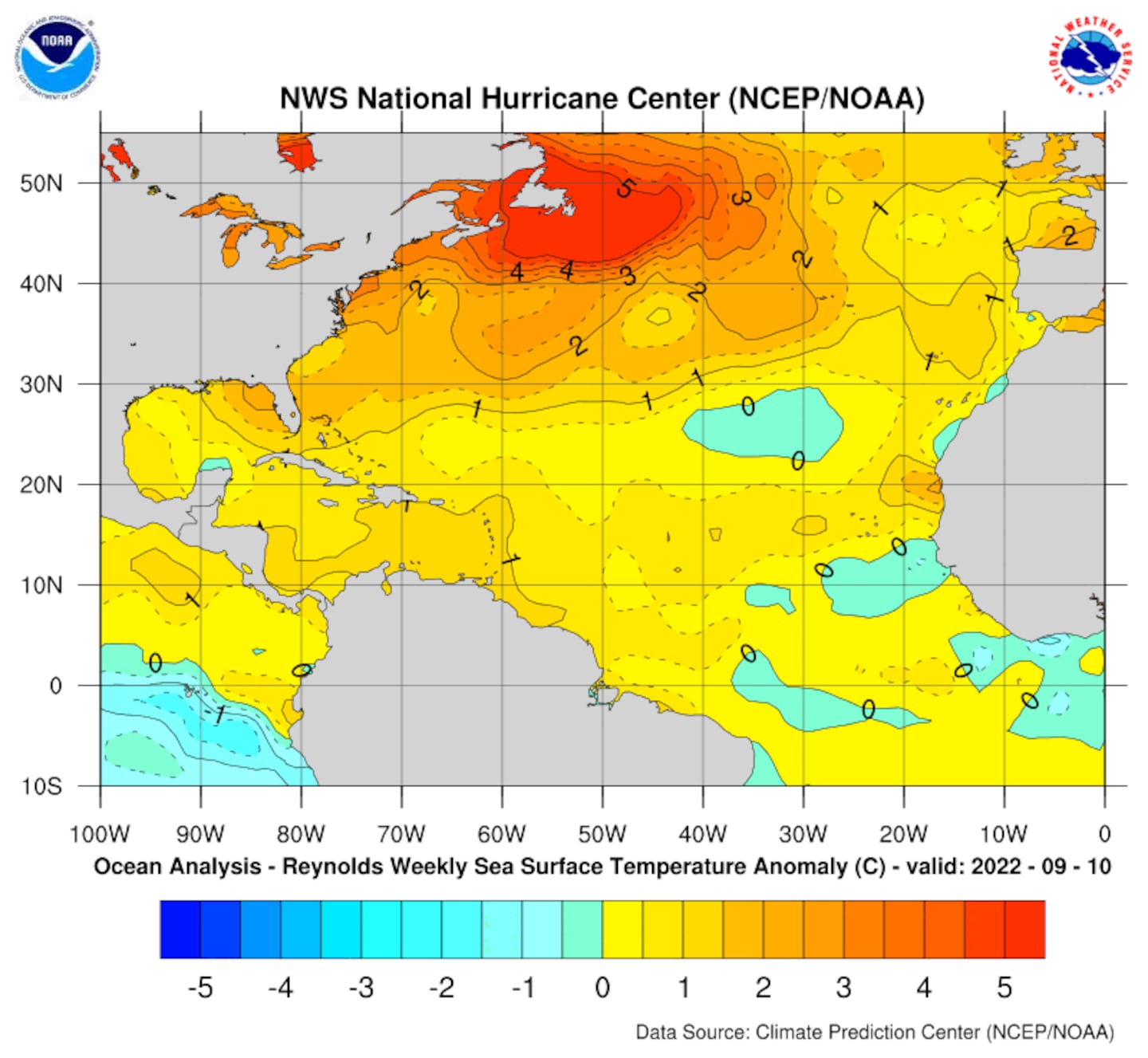
Dr. Phil Klotzbach, CSU tweeted the two images below. The point being that the sea surface temps. right now have been an indication in the past of active late hurricane seasons.
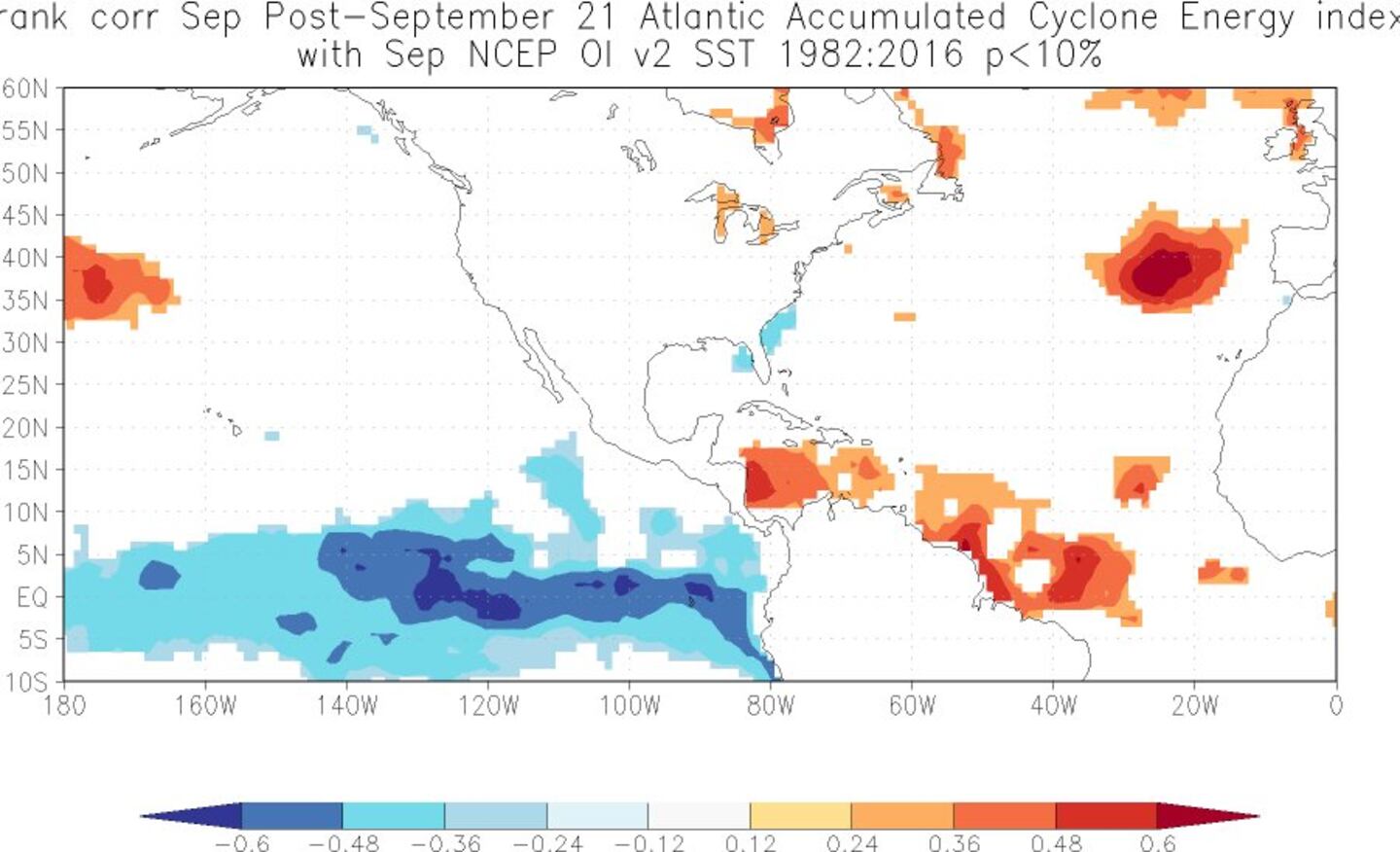
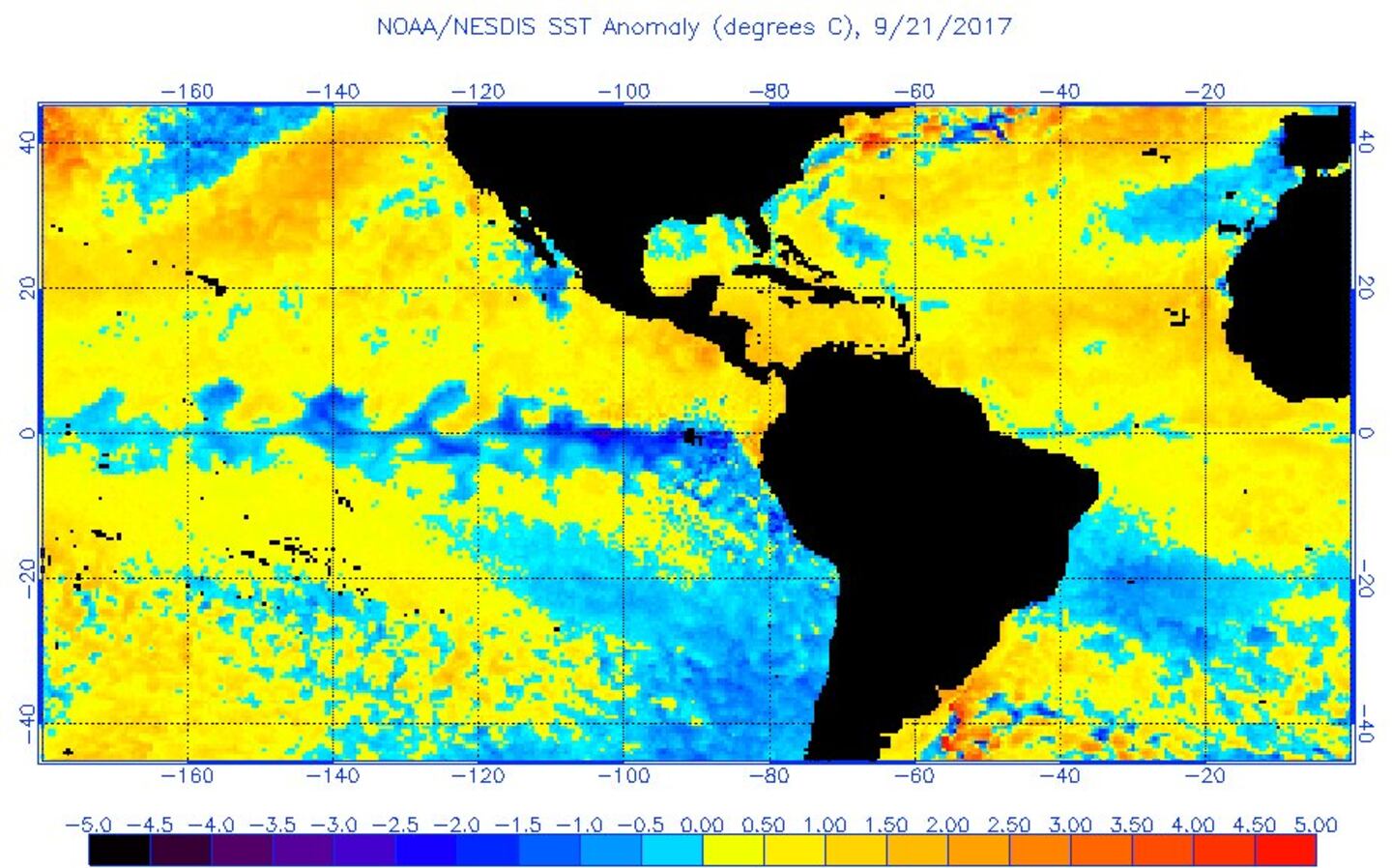
The Gulf & Caribbean remain quiet. There are indications of a general lowering of surface pressures across this area for late month which might be a hint pointing to tropical "mischief" in 10 days to 2 weeks.

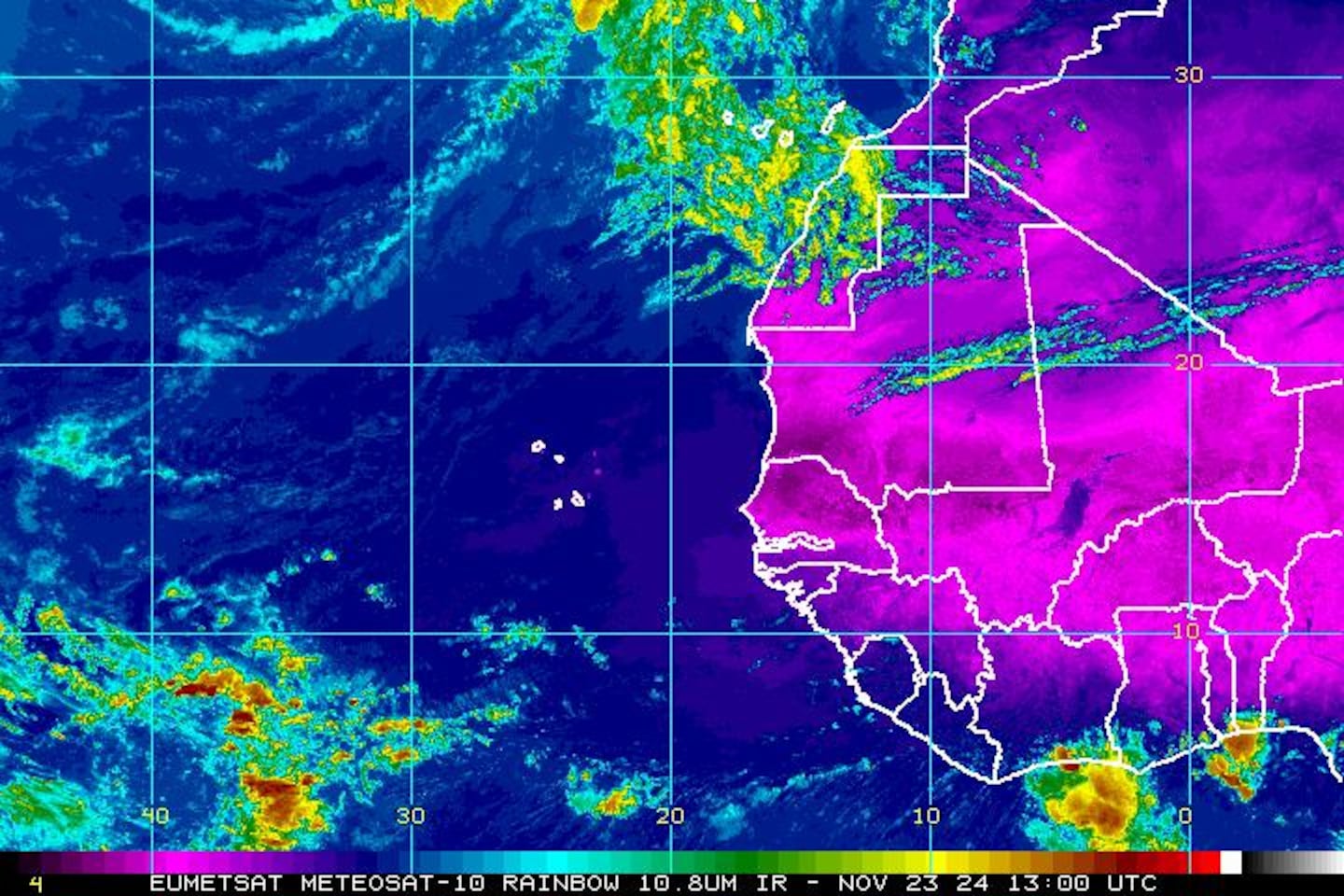
East Atlantic IR satellite:
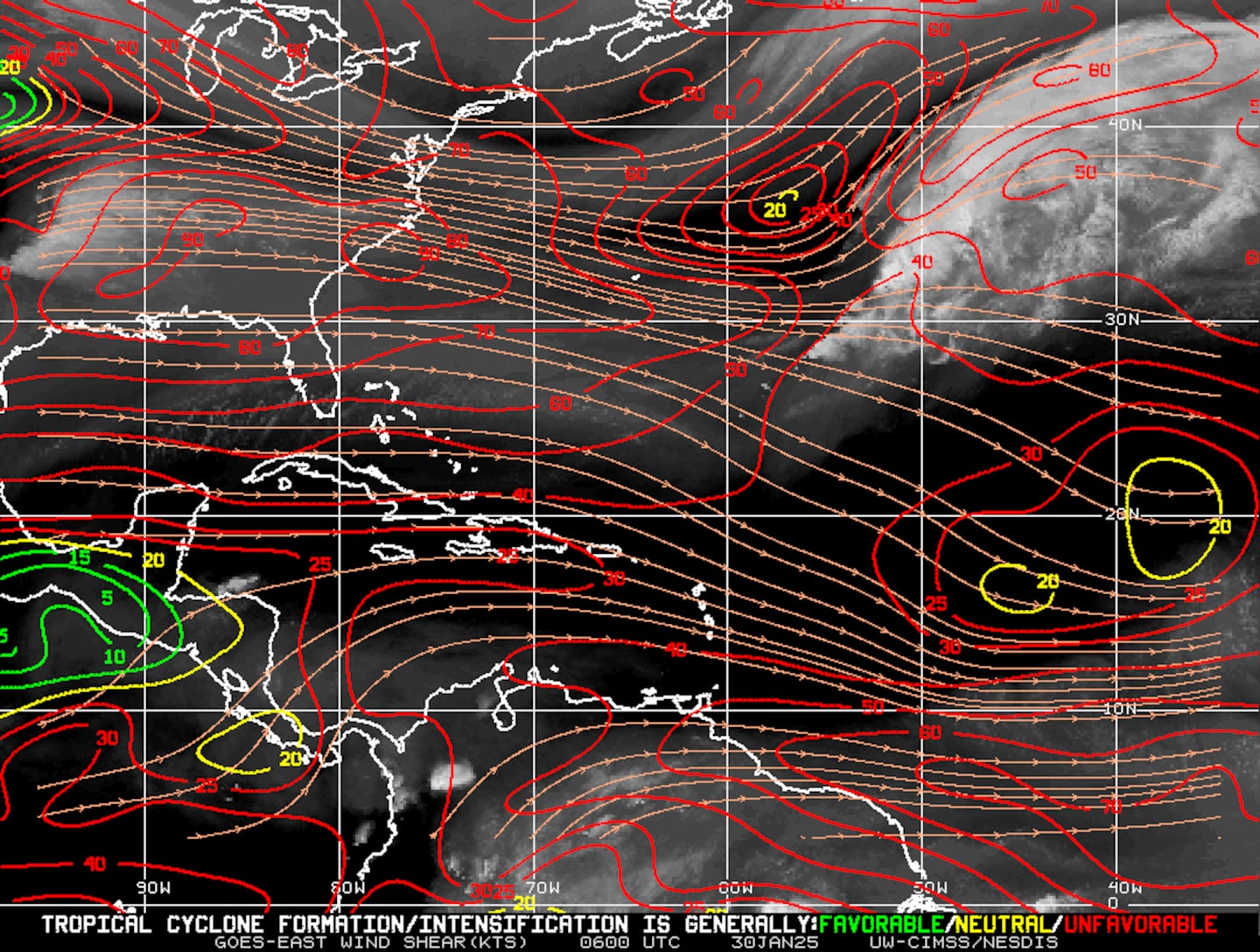
Mid & upper level wind shear (enemy of tropical cyclones) analysis (CIMMS):
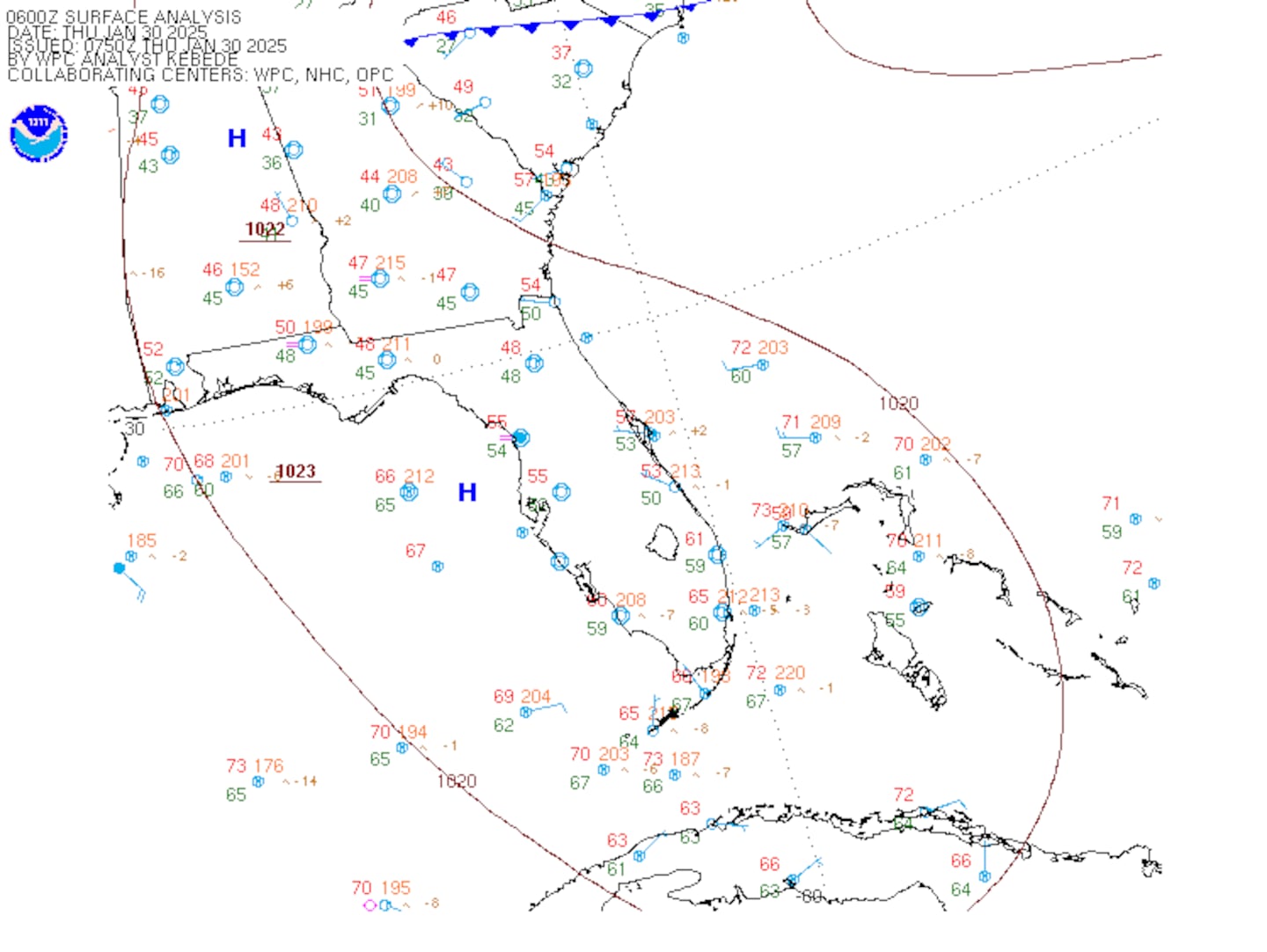
SE U.S. surface map:

Surface analysis centered on the tropical Atlantic:

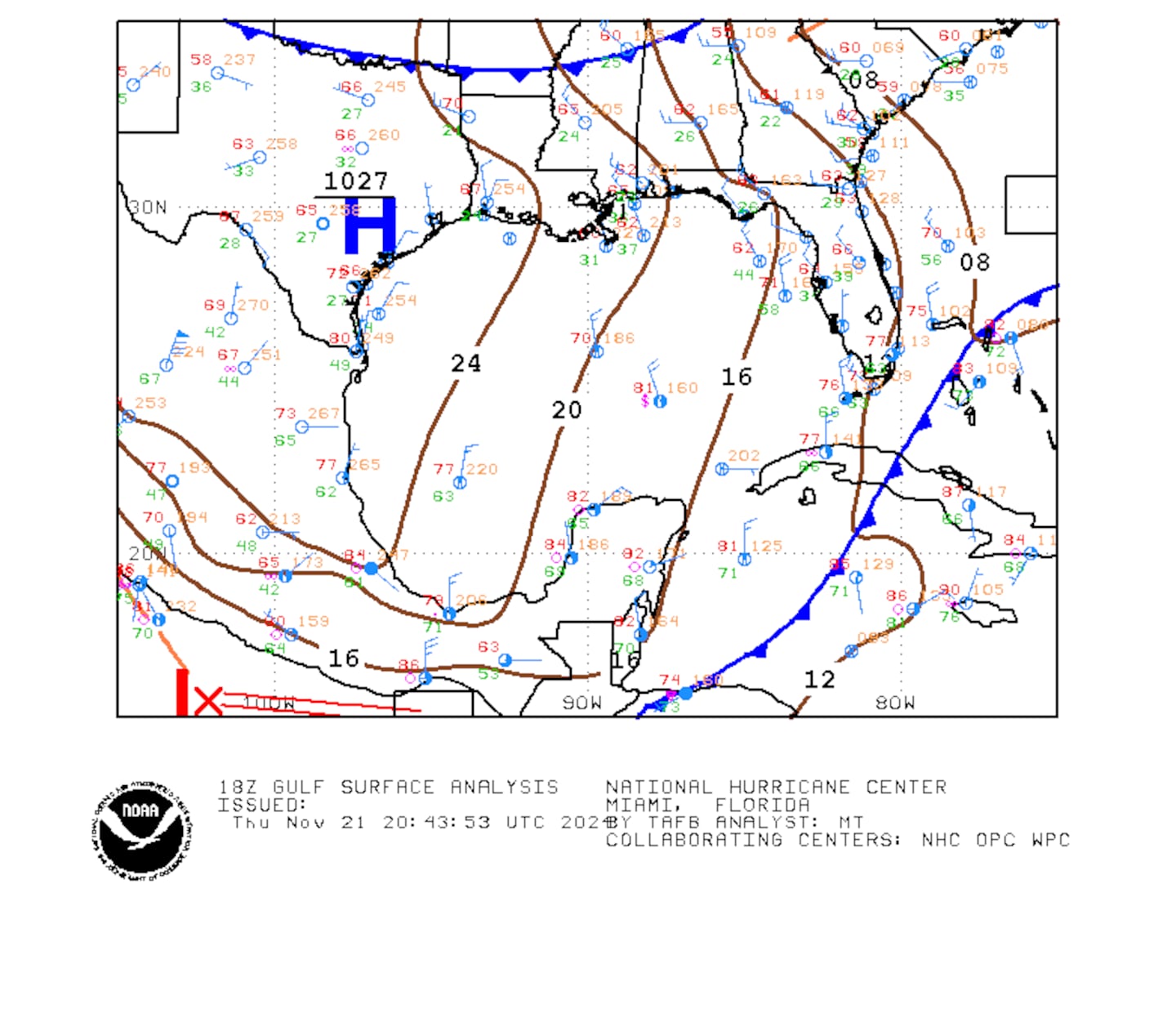
Surface analysis of the Gulf:
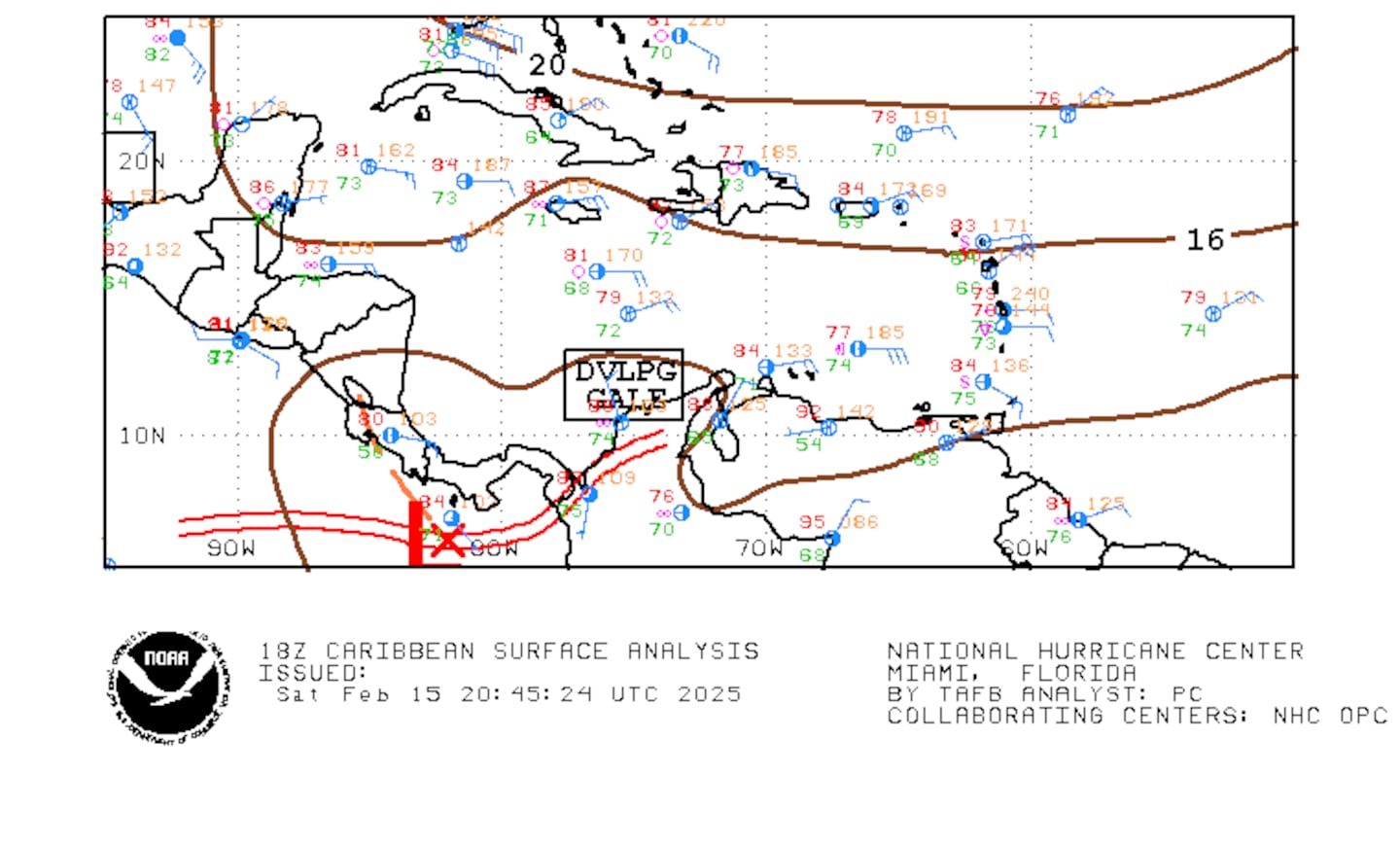
Caribbean:
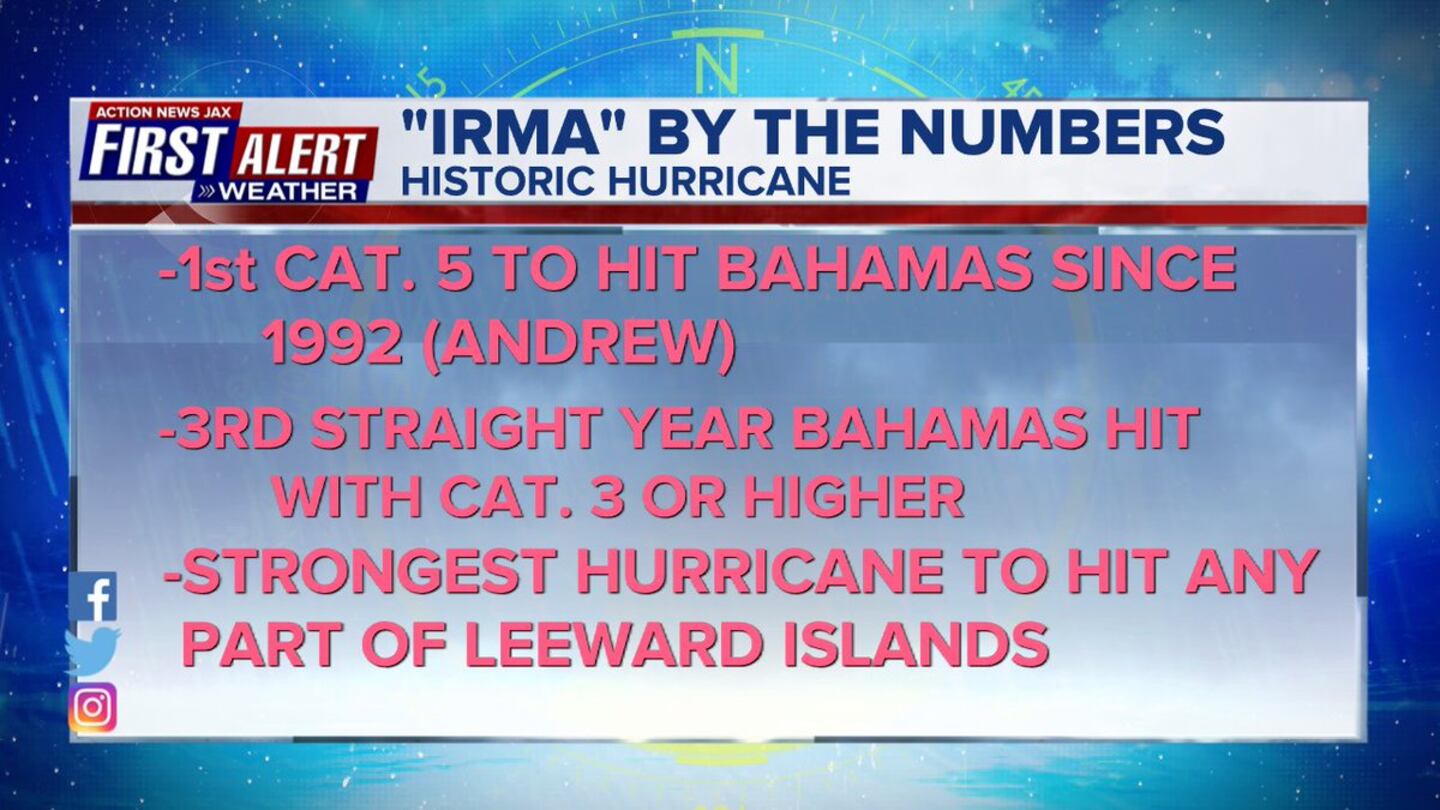
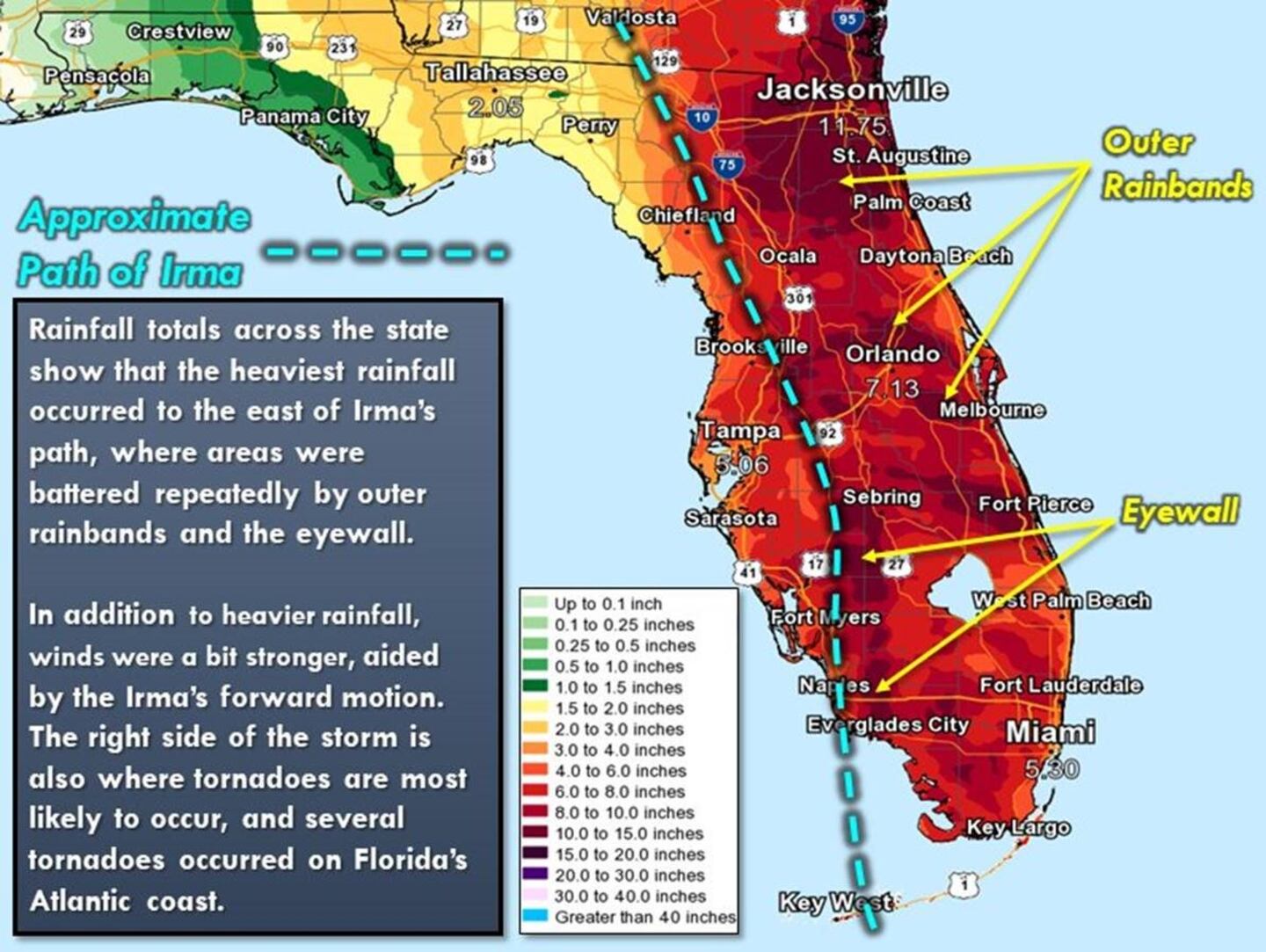
Hurricane Irma recap: made the turn to the northwest & then north after ravaging the Keys. Ft. Myers & much of Florida Sept. 9 - 11th. this is the first "major" Fl. hurricane landfall since Cat. 3 "Wilma" in Oct., 2005 (Twitter did not yet exist!)...
The last advisory by the NHC on "Irma" was issued Tue. morning, Sept. 12 as the storm became post tropical.



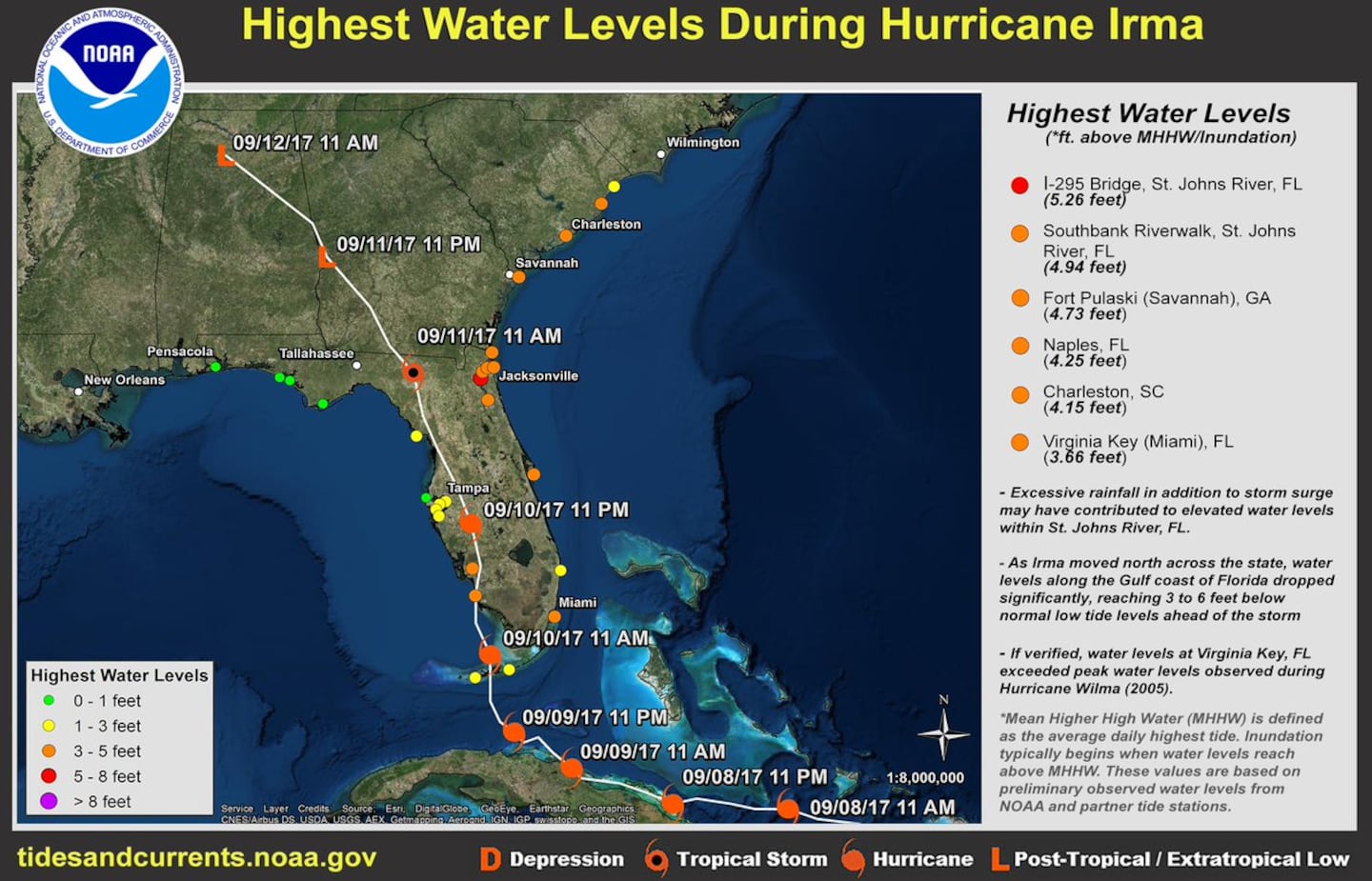
Preliminarily highest water levels from NOAA. Further ground verification will follow & result in some higher numbers ultimately (probably) - especially for the Keys & S. Florida. What pops out is the highest so far is the I-295 Bridge (Buckman)!.... then the southerly wind on the east side of Irma pushed all that water north to downtown resulting in the massive once in a generation flood for Riverside & San Marco. Initial post storm analysis is showing salinity of the St. Johns River at the peak of the "Great Flood" to not be as great as during the peak of flooding during/immediately after Matthew last year.
Cox Media Group