Sept. 4, 2017 — Great uncertainty continues regarding the final path of Irma in the long range.... model shift to the west continues.... Hurricane WARNING Northern Lesser Antilles.... Hurricane WATCH Virgin Islands & Puerto Rico...
The "Buresh Bottom Line" is: stay tuned!... Always be prepared!..... City of Jacksonville Preparedness Guide... Georgia Hurricane Guide.
"Irma" has turned into a classic deep tropics long track (trans-Atlantic) hurricane. Changes in structure (eyewall replacement cycles) from time to time will lead to fluctuations in intensity but Irma - overall - should remain a major hurricane though possible land interaction with the Greater Antilles late in the week could cause more significant changes in strength. Satellite imagery shows a well developed hurricane with a clear eye & excellent outflow over the top. The NHC notes there's a history of intensifying "backing" (SW) moving hurricanes (Katrina, Joaquin & Fernanda... I'd add Matthew) like we're seeing now with "irma". NOAA hurricane research planes are flying through (avg. 1,000-10,000 feet) & around "Irma" pretty regularly which will give us a better idea of the structure & intensity & - above all - hopefully add to some consistency & accuracy in model forecasts assuming better analysis/input for the models.
Some of the plane recon is being used in the model & might be part of the reason for the most recent big track adjustments by the models.... in addition to it being quite clear that a big trough moving into the Eastern U.S. will miss "Irma" (more on that below). And this from the NHC:
"Six hourly upper-air soundings will begin at 1800 UTC today over the central United States to better sample the upstream mid-latitude trough. In addition, the NOAA G-IV aircraft will begin sampling the environment around Irma this afternoon and evening, and these data will be included in tonight's 0000 UTC model runs." [00Z = 8pm EDT.... Central U.S. sounding sites: Bismarck, Dodge City, Amarillo, Topeka, Oklahoma City, Springfield, Detroit, Minneapolis, Rapid City, North Platte, Aberdeen & Omaha... + extra soundings from San Jaun, Puerto Rico.
I cannot emphasize enough that it's too early - & would be premature & irresponsible - to try to peg exactly
where Irma is going to go in the long run &, therefore, it's still early to determine which parts of the U.S. might
be adversely impacted.  I do believe this is more of an east coast "issue" vs. Gulf, & I'm leaning south & east of
Jacksonville upon closest approachthough the recent trend to the west has to be cause for pause.  Most likely
closest approach to Fl. would be late in the week into the weekend.  Stay cool, calm & collected... NOW is the
time to prepare:
(1) peak of the hurricane season is upon us
(2) you'll be prepared for anything mother nature throws at us - hurricane, lightning, flooding, tornadoes, etc. Preparations do not need to take a long time nor do preparations need to be expensive. But preparing now will offer peace of mind for when & if a storm is headed your direction & will also give you a better chance to survive the storm then allow you thrive after the storm.
(3) know your evacuation zone
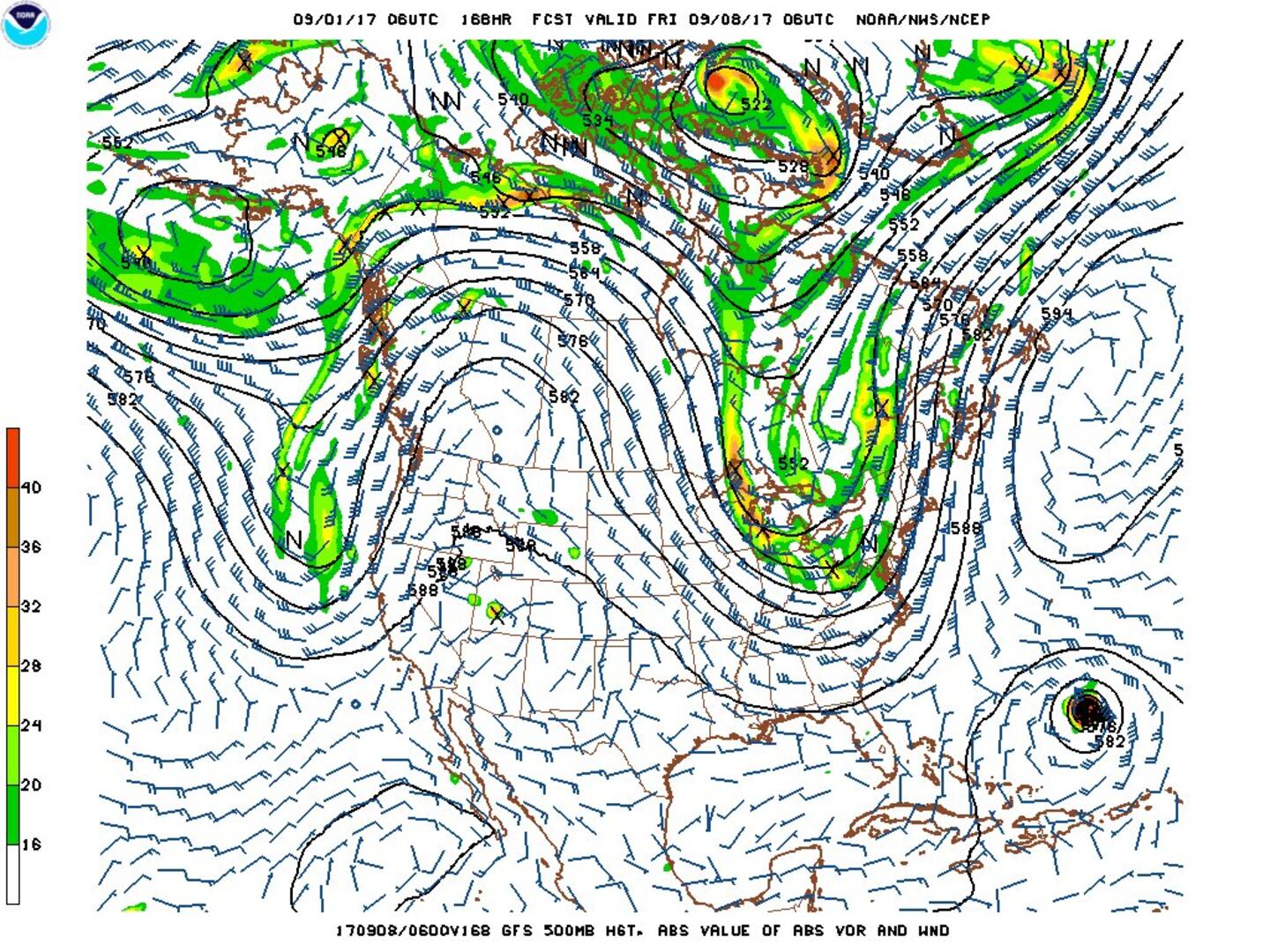
Forecast models continue to jump around though have - as a whole - definitely shifted west & are a little slower. More adjustment & changes are ahead - it would be prudent to not hang on each & every individual model run but rather look at the bigger picture in the coming days. The mountainous terrain of Hispaniola & Cuba just might come into play. And any building/movement &/or strengthening of the Bermuda High - which has been a strong mainstay for months - makes storm recurvature more difficult. Ultimately much of how this all unfolds hinges on a rather deep upper level trough that moves into the Central/Eastern U.S. this week which will play a pivotal role in the eventual movement of "Irma" (that's why extrea soundings are being released in the Midwest). The GFS model upper level (500 mb) chart below for Fri., 09/08 shows the strong trough. There is a clear alleyway along the U.S. east coast but all indications are that this strong trough will be moving quickly & that it will not pick up Irma. As the trough lifts out, a strong surface high will build into the Northeast U.S. which could be a block for Irma getting too far north while an upper level ridge builds underneath the departing trough. This puts the coastline from Fl./Ga. to Virginia on high alert!.... with a move that would be very near if not into Florida & quite possibly close to Jacksonville at one time or another. And by no means is this set in stone!
The GFS model is pretty consistently shifting west to a hit on the U.S. coast, even Fl. (though some of its intenstiy forecasts are obviously too deep).... & the European is coming back west too. It's worth noting that the European did a pretty good job last year with an intensifying southwest moving Matthew which is what Irma will be doing the next few days. The Euro model then, however, played Matthew too far north & east last year (too far away from the U.S.). So I'm concerned about a right - or east - bias once Irma starts to get tugged again more west then northwest. In fact, the UKMET still shows the hurricane very close to Hispaniola. This solution has to be considered. I still believe a rather abrupt turn to the north will occur in the long run. The question becomes when & where. But it is clear - to me - the big eastern U.S. trough will be fast moving & transient & that "Irma" does not get sucked up into the trough & taken far to the east over the Atlantic.
STILL VERY EARLY on how the steering currents will play out by the weekend as "Irma" makes its move W/NW then more northward. Global models will continue to try to correct for the better part of the next several days, especially given new analysis data provided by hurricane hunter & research aircraft. A combination of plots from each model's run (ensemble) points to near Florida by the weekend but with any part of the U.S. coastline potentially at risk for a landfalling hurricane. I cannot emphasize enough the uncertainty at this point.
Upper level (500 mb) chart below from GFS for Fri.:
I am also keeping a watchful eye on the Western Gulf of Mexico (yet again!) as indications - though forecast models have generally backed off for now - are that low pressure will try to develop over the Western Gulf later this week. Whether or not this becomes a tropical system, the pattern could produce more heavy rain for parts of the Gulf Coast.
.... & there are hints of an overall lowering of pressures over the Caribbean which could be a spot to watch in the long range. The Caribbean is a "favorite" for tropical cyclone genesis from mid through late season.


"Irma" model plots....

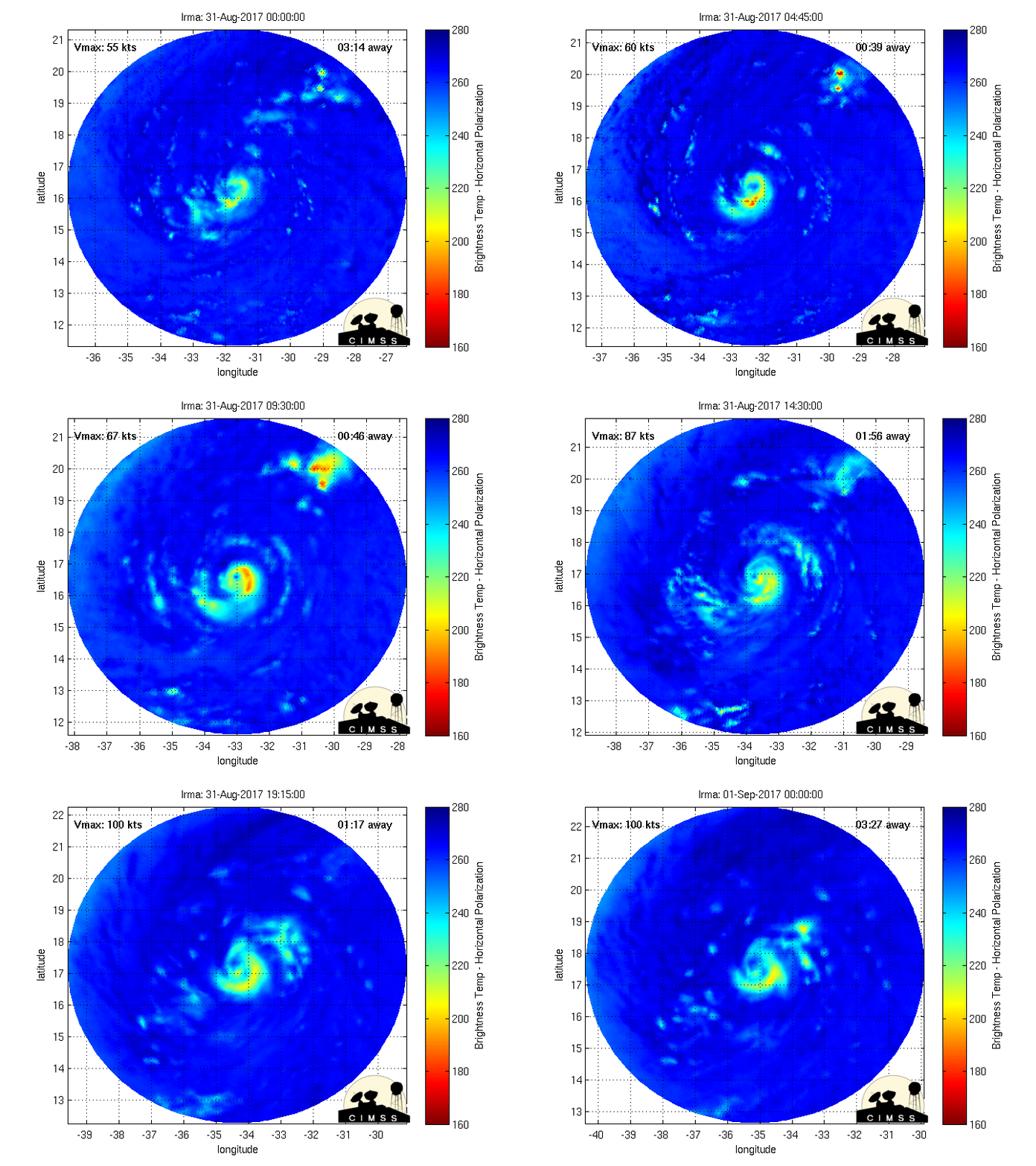
Fascinating imagery(!) from CIMMS, University of Wisconsin, Madison - Microwave radar-simulated imagery showing Irma wrapping up... click here for full definition..... as "Irma" rapidly tightens up then weakens....

There is also the potential for tropical development over the Central Atlantic to the southeast of "Irma"...

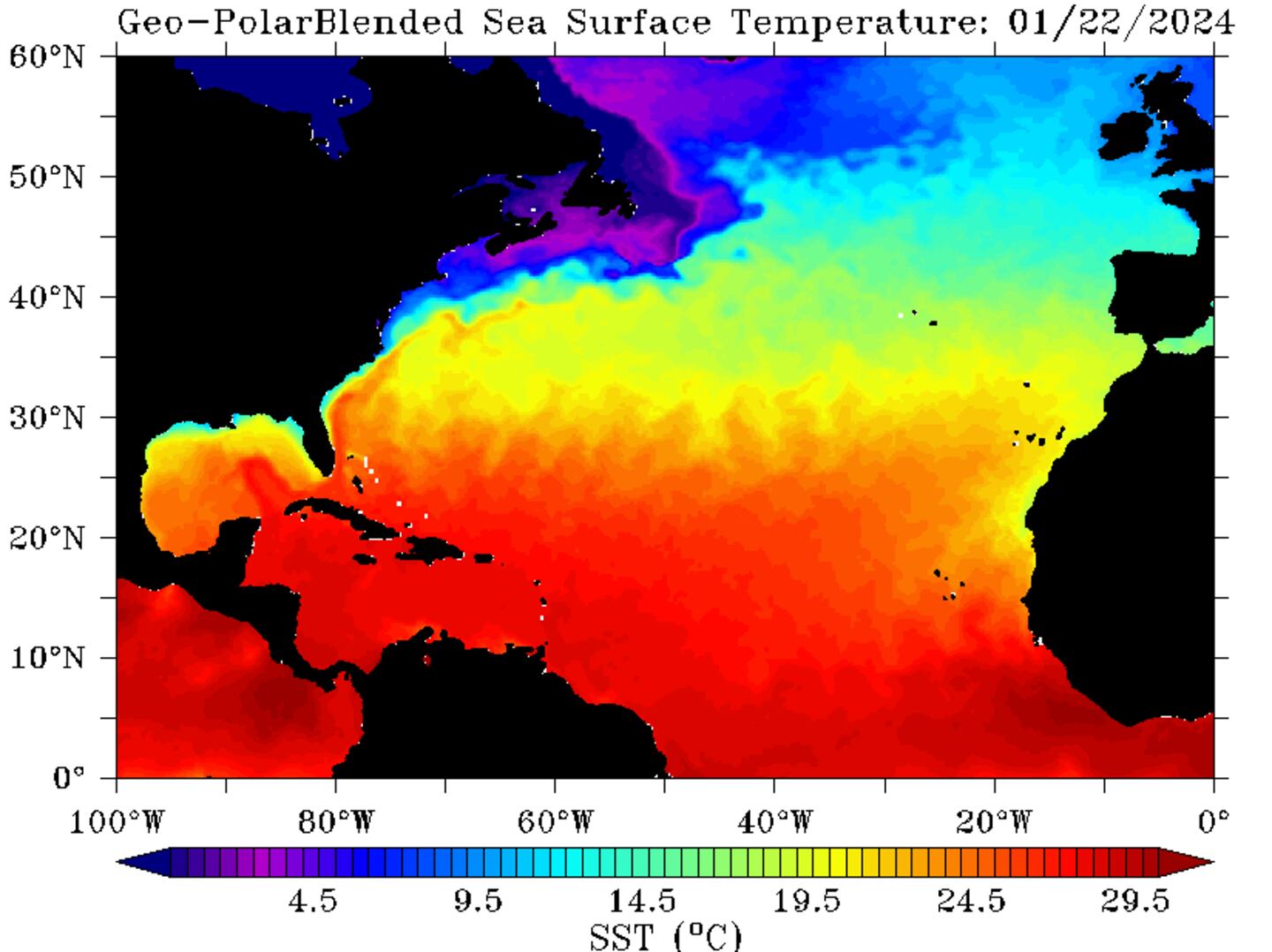
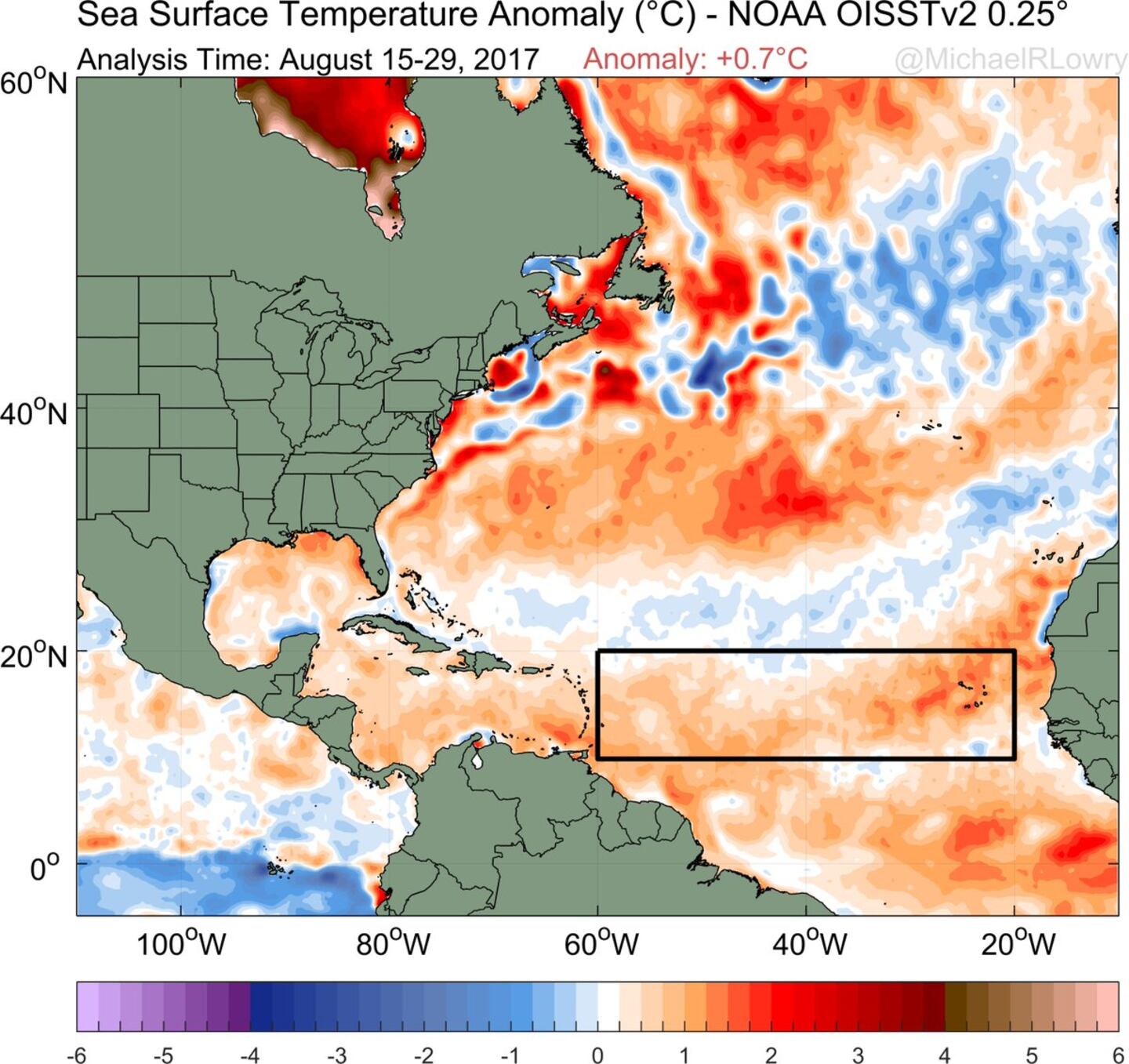
Very warm ocean water ahead for Irma:
Even more telling - the oceanic heat content showing a wealth of deep warm water over the SW Atlantic/Caribbean & Gulf of Mexico:

And let's dust off our Pacific typhoon teleconnection for trying to forecast "Irma" - it's not quite exactly lined up but is becoming close enough to possibly draw some parallels. The 500mb chart below from the GFS for the N. Pacific to the Northern U.S. shows trough, ridge, trough, ridge, trough - the last trough being over or near the Eastern U.S. (it's what's picking up the "Harvey" remnants). The W. Pacific trough is picking up typhoon "Sanvu" keeping the tropical cyclone very near or to the immediate east of Japan with a recurve into the N. Pacific. This MIGHT be an early clue that at least some semblance of troughing or alleyway will remain in place over or near the Eastern U.S. which COULD draw Irma northward near or over U.S. coast.
0
Satellite imagery below shows a band of clouds over the W. Atlantic - a weakening front that will be reinforced later this week & is part of the weakness in the upper level flow that gradually tries to pull Irma northward....
1
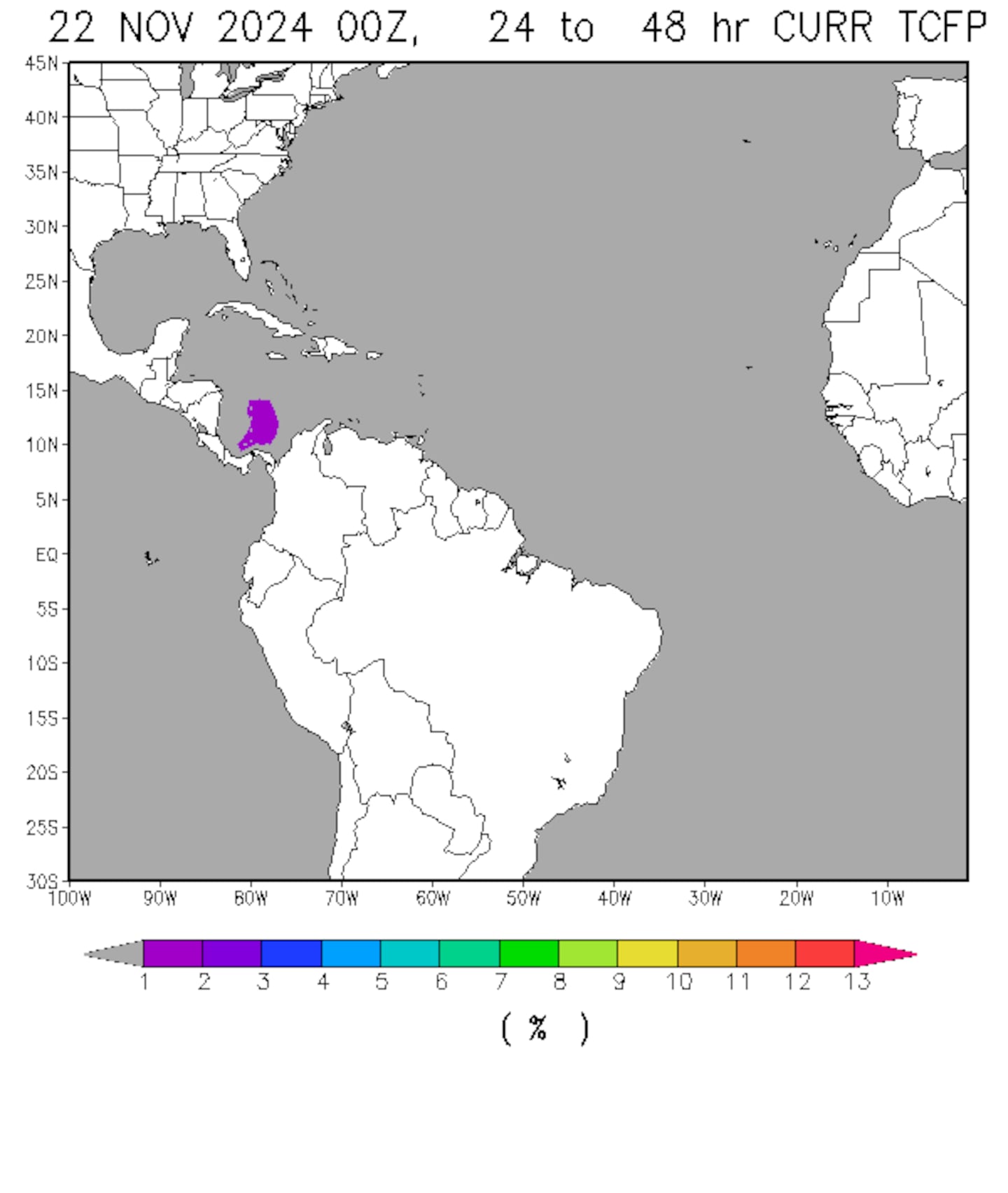
Tropical cyclone formation probability over next 1 - 2 days:
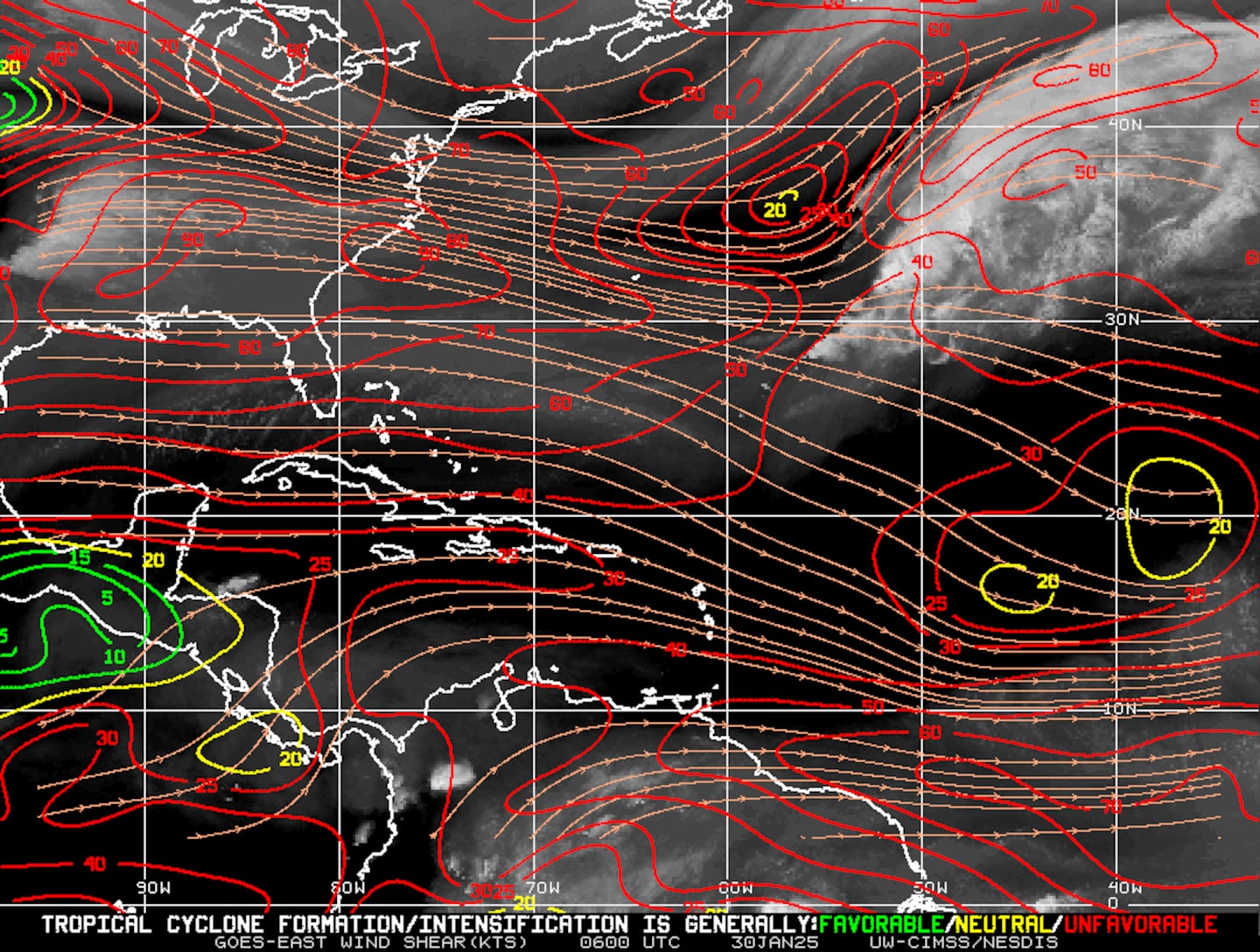
Wind shear analysis (red is stronger shear).....
Water vapor imagery shows quite a bit of dry air in the vicinity of "Irma" for the moment:

Imagery below courtesy CIMMS shows African Saharan dust (orange & red)....
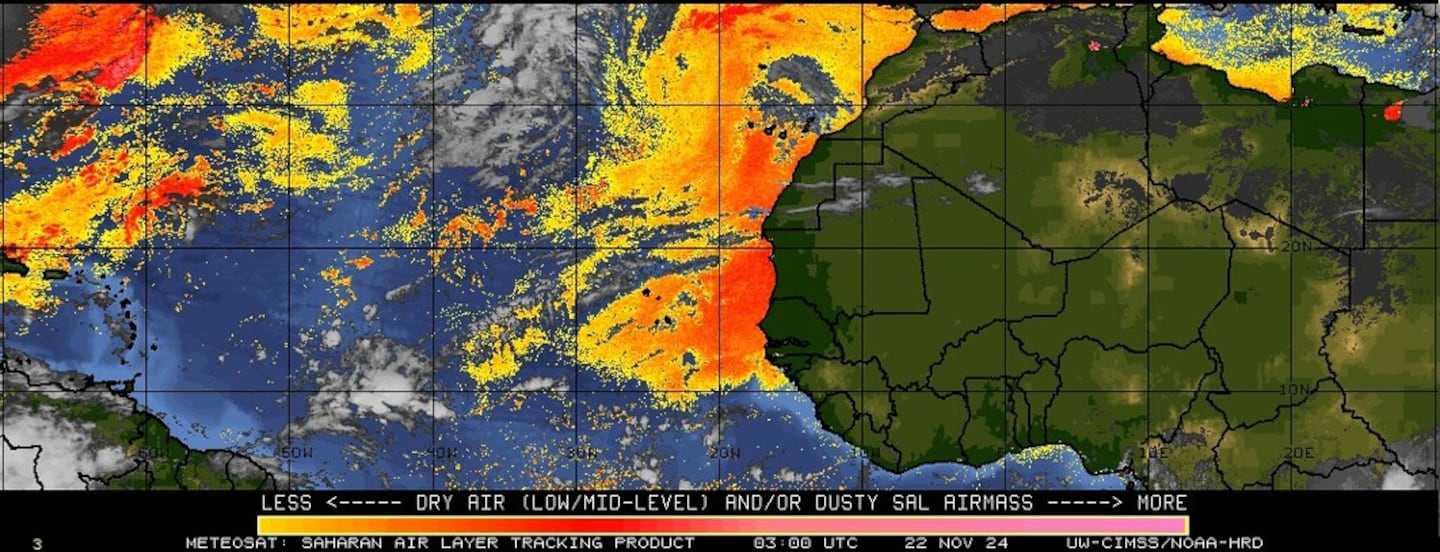
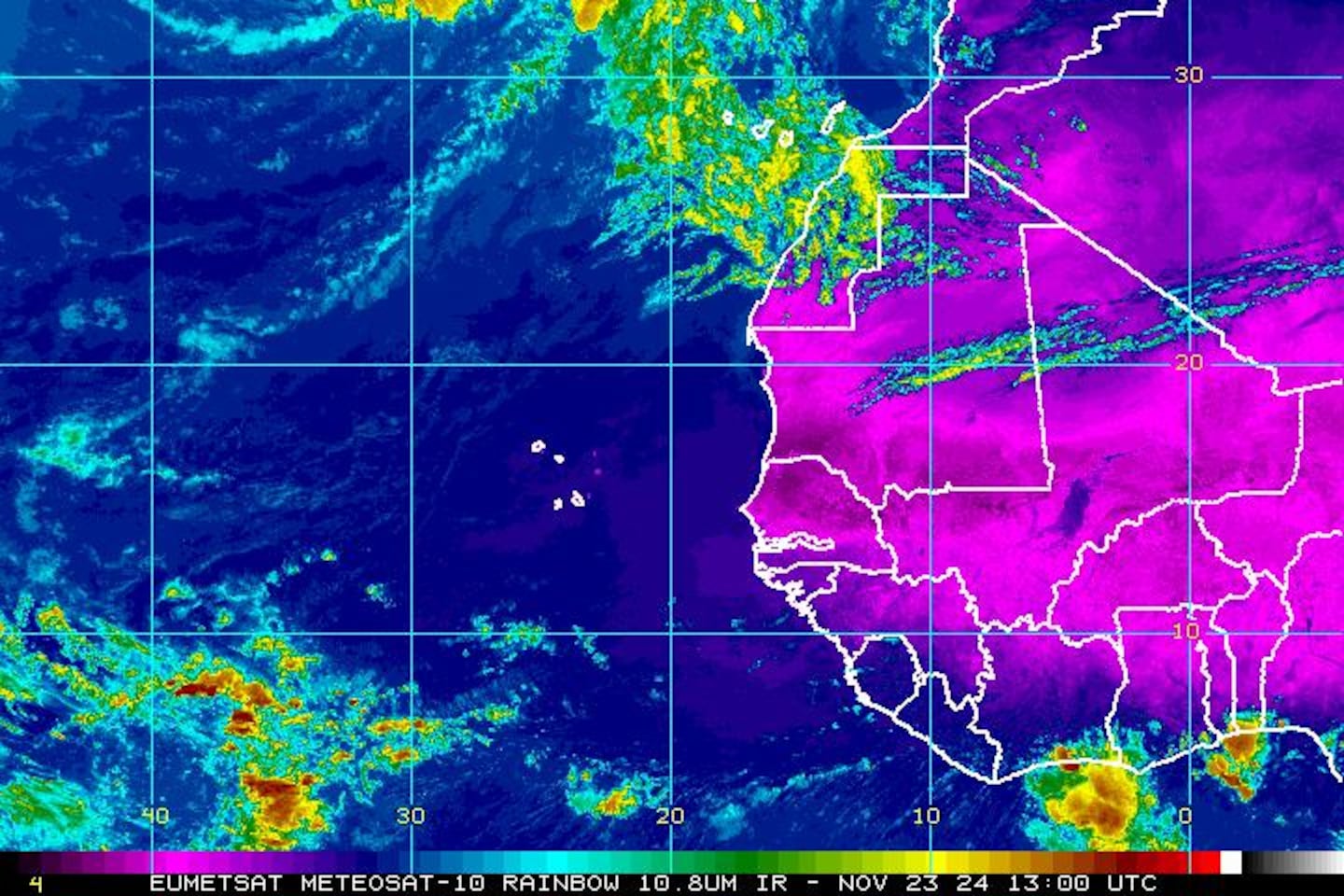
"Tis the season for tropical waves rolling west off Africa....
The main development region (MDR) shows above avg. temps. - in fact - only 2005 & 2010 were warmer. The deep warm ocean water can "energize" tropical cyclones:
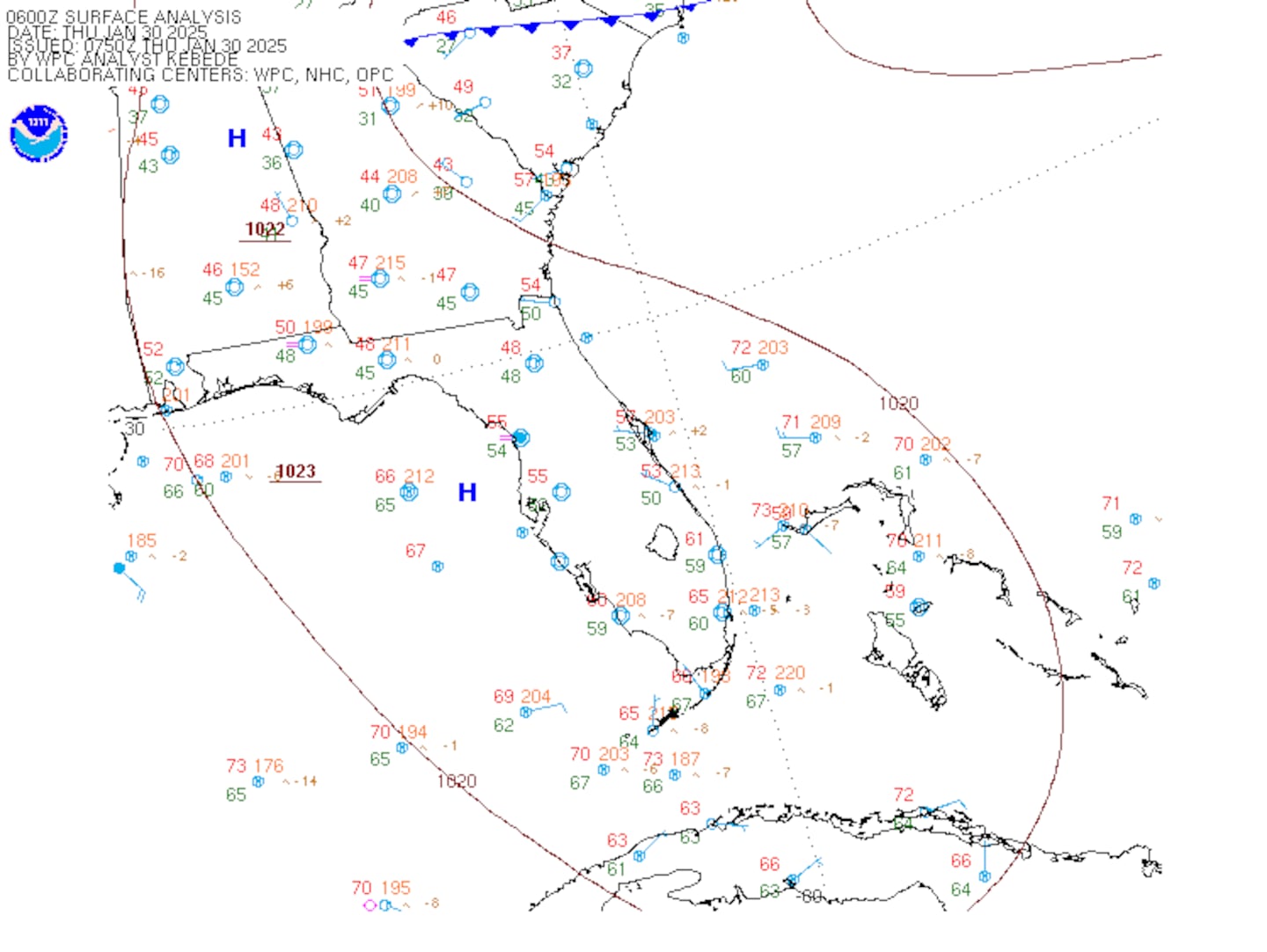
SE U.S. surface map:

Surface analysis centered on the tropical Atlantic:

Surface analysis of the Gulf:
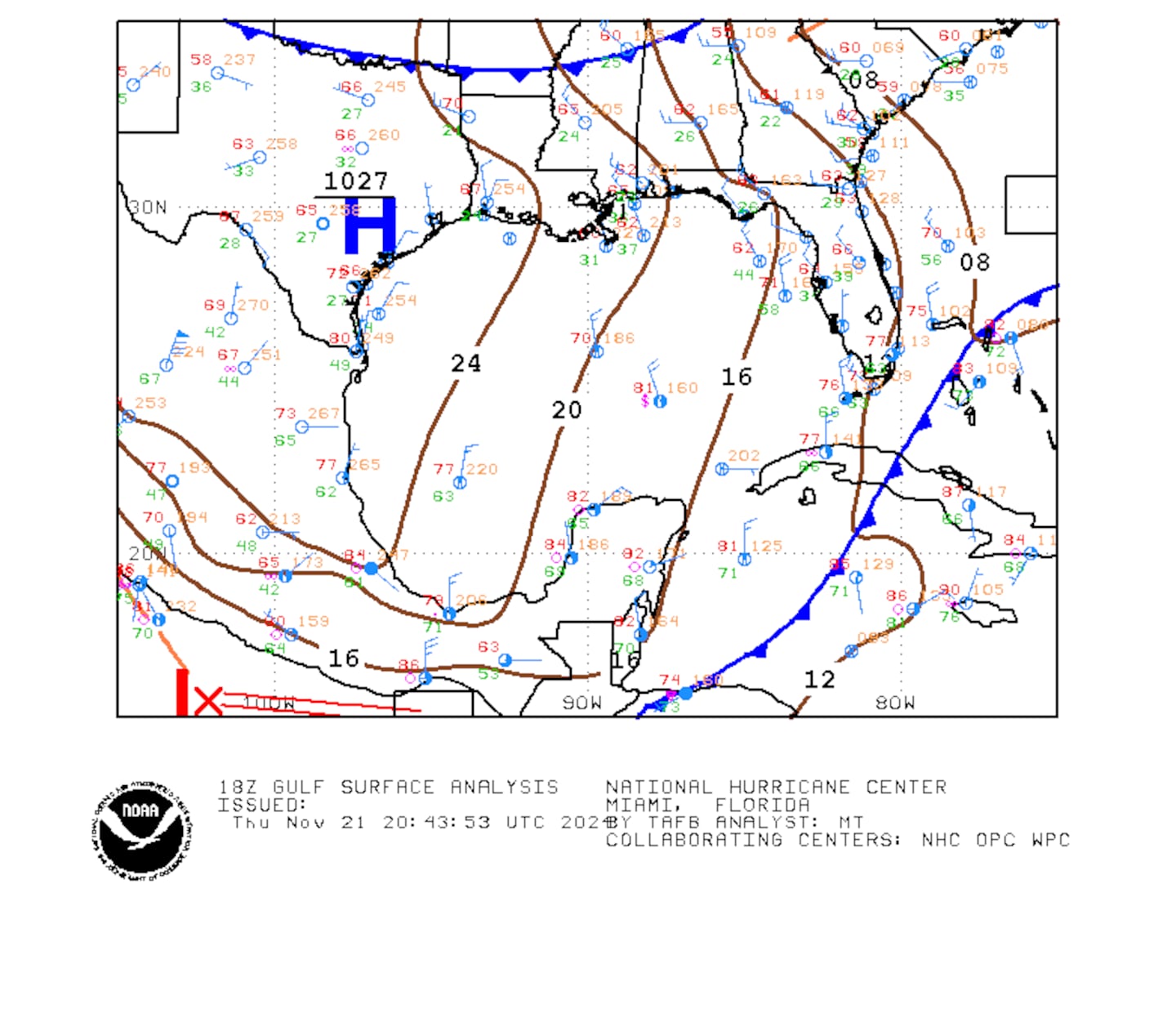
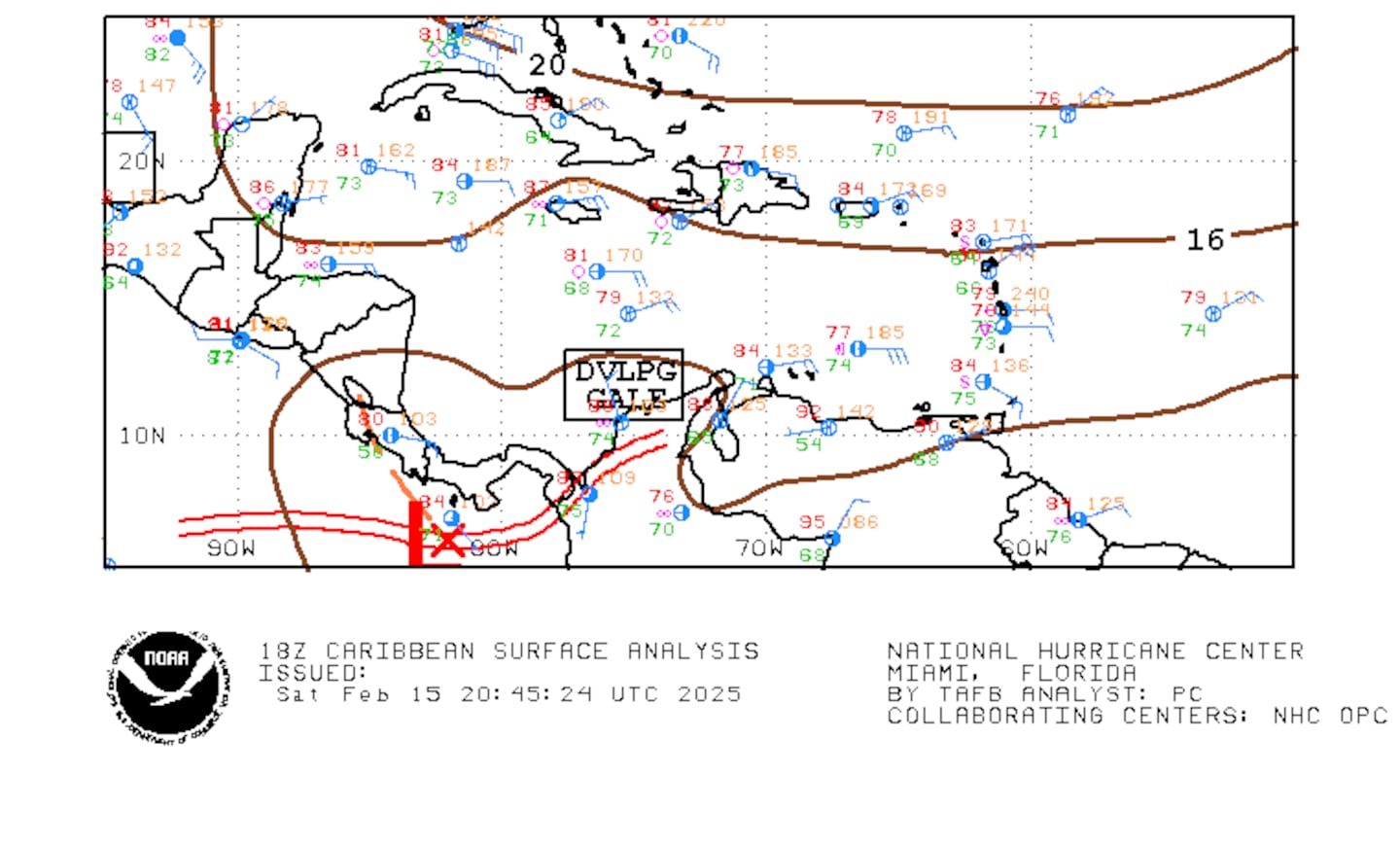
Caribbean:
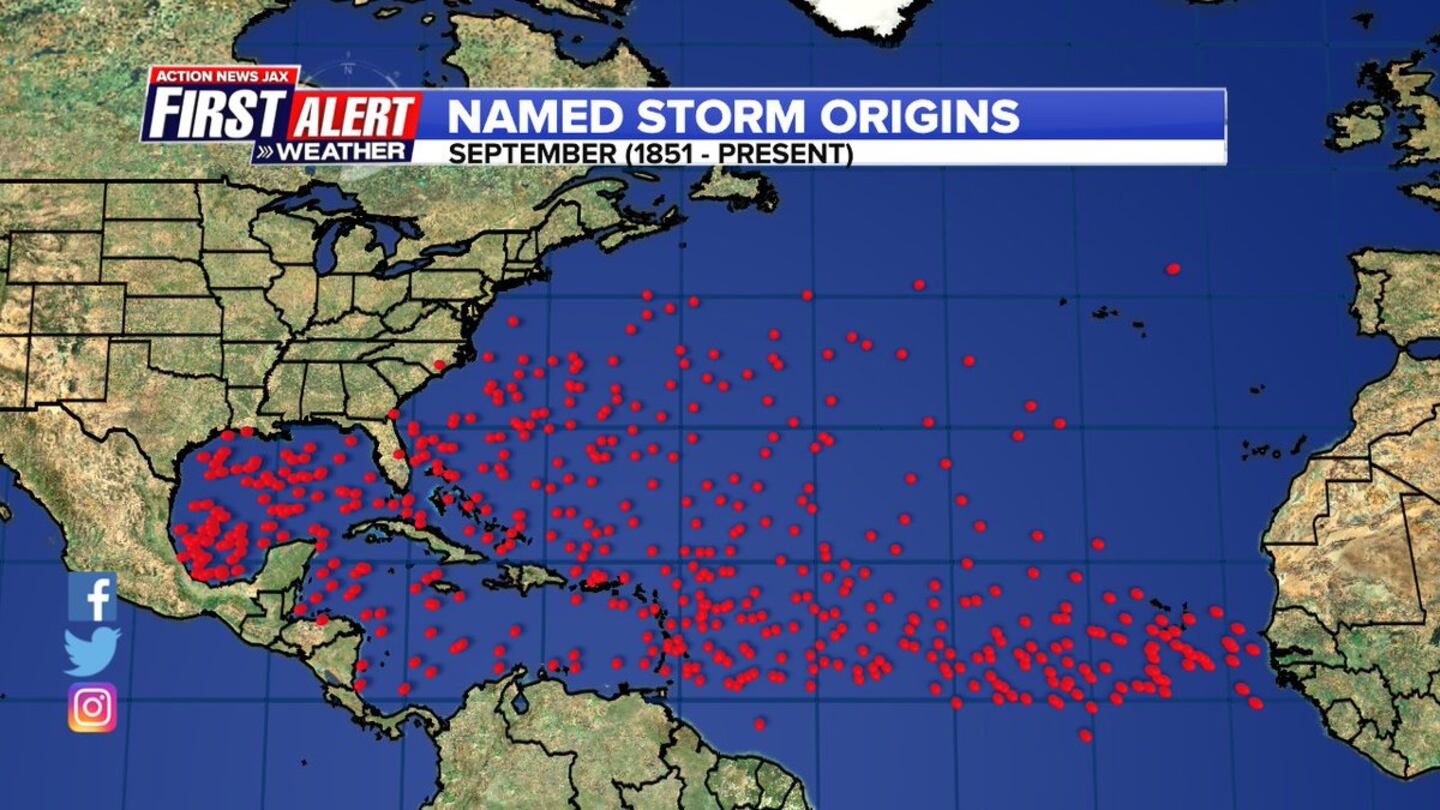
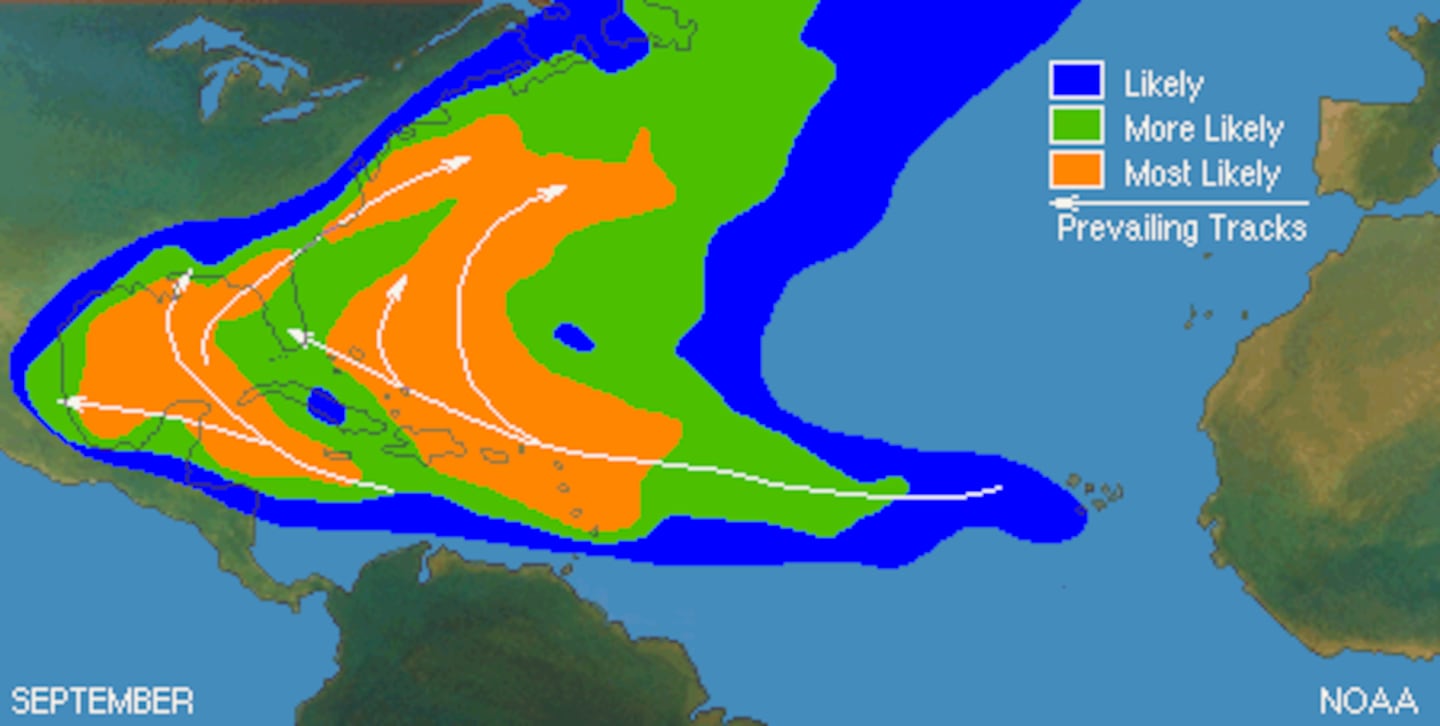
September is typically the most active month of the hurrican season over the Atlantic Basin. Dr. Phil Klotzbach provides the genesis points for September named storms:
NOAA:
Cox Media Group