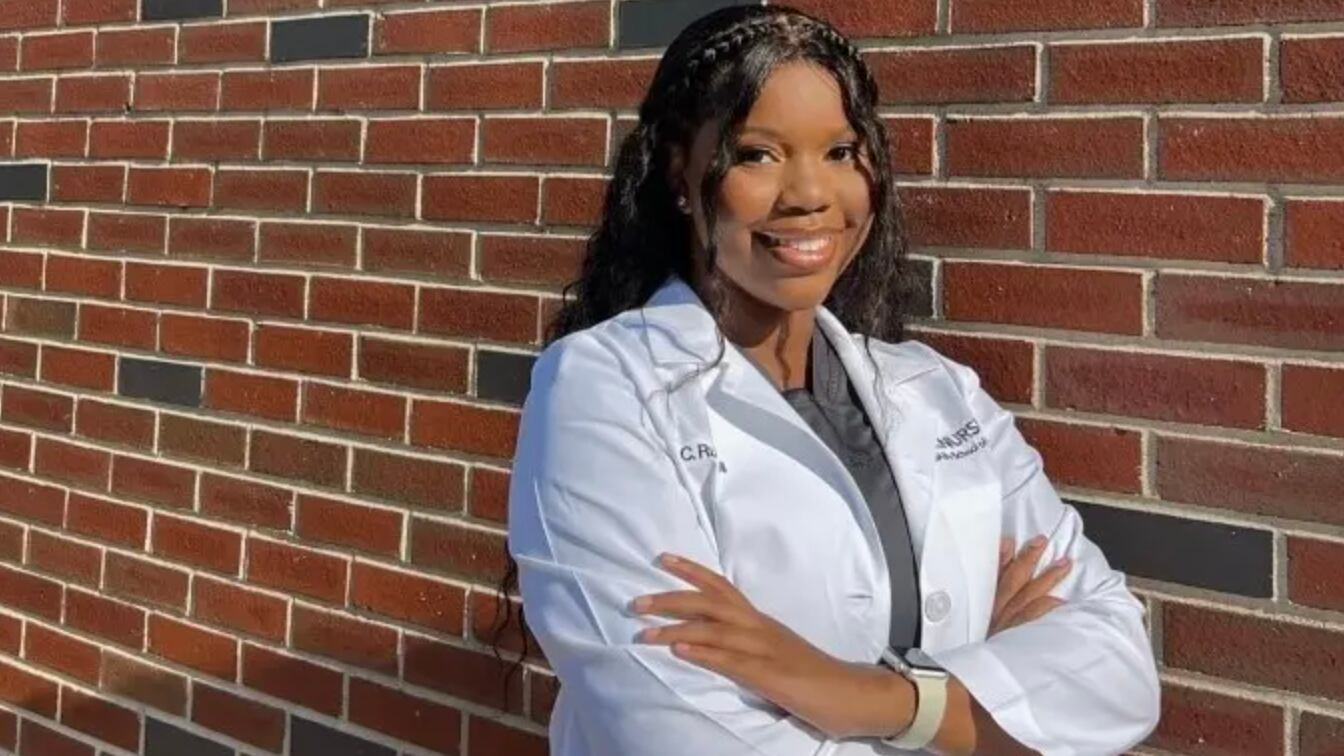
As doubt grows in the alleged kidnapping of Carlee Russell, the Alabama woman who went missing earlier this month after reporting seeing a toddler walking along the interstate, many critics have highlighted the twisted irony in the widespread coverage and resources devoted to Russell's safe return that have been non-existent for thousands of other missing Black women.
“This was really the first case that went viral of a missing Black woman or young girl,” Natalie Wilson, co-founder of the Black and Missing foundation, told Yahoo News.
Russell’s safe return after vanishing for 49 hours was initially celebrated as a rare victory. But as more evidence was made public last week, including a number of revealing Google searches she made on her cellphone about an abduction movie and the cost of Amber Alerts in the days and hours leading up to her disappearance, many have questioned whether a crime took place at all.
Now, regardless of how Russell's story plays out, advocates want to keep the momentum on finding other missing Black women and girls.
“We just have to keep moving,” Wilson said.
1 in 5 people missing in the U.S. are Black women
In the U.S., Black women and girls are missing at an alarming rate.
In 2022, Black women and girls accounted for approximately 18% of all missing persons cases in the U.S. despite making up just 7% of the population, according to data from the National Crime Information Center and U.S. Census Bureau. Out of the more than 546,000 people reported missing last year, Black women and girls accounted for nearly 98,000 of those cases.
And, according to experts, most of the missing cases receive little to no attention at all.
In a 2016 study titled "Missing White Women Syndrome," attorney and legal scholar Zach Sommers found that when Black people are missing, their disappearance is covered with far fewer stories than people in other demographics.
“At any given time, there are tens of thousands of Americans categorized as ‘missing’ by law enforcement,” Sommers wrote in the study. “However, only a fraction of those individuals receive news coverage, leading some commentators to hypothesize that missing persons with certain characteristics are more likely to garner media attention than others: namely, white women and girls.”
That’s why critics say the growing holes in Russell’s story only make it harder for others.
"I think people are always looking for an excuse not to care about these types of stories involving Black women," Amara Cofer, the creator and host of Black Girl Gone, a podcast that highlights missing Black women and girls, told Yahoo News. "It's sad that after so much time of wanting stories of missing Black women to get this type of attention the story that does end up getting it, is essentially a hoax."
Eric Guster, a Birmingham-based former criminal defense lawyer and civil litigator, called the unraveling of Russell’s story a “setback.”
“In the criminal justice system, whenever you have [kidnapping] stories like this, it makes convictions harder to achieve because the juror will remember this fake one,” he said. “And that would be in that person's mind.”
‘They cannot turn a blind eye’
For decades, advocates have pushed to put the overwhelming number of missing Black women and girls in the forefront, and they say one possible bluff will not derail that progress.
“I know people are angry, they're disappointed, they're frustrated, but they cannot turn a blind eye to the families that are desperately searching for their missing loved ones,” Wilson said, noting that many of these disappearances stem from a wide range of causes, from human trafficking to domestic violence to mental health incidents.
"Even if this case is, in fact, not a legitimate case of someone missing, this is still a very important issue and Black women still need the type of attention that this young woman got," Cheryl Neely, a sociology professor at Oakland Community College in Michigan, told USA Today.
The public wants answers
While Russell has not spoken out publicly since she returned home, her boyfriend, Thomar Latrell Simmons, has asked the public to consider her mental health.
"I know what it seems like she did. Just stop bullying on social media," Simmons told The New York Post. "Think about her mental health. She doesn't deserve that. She doesn't. Nobody deserves to be cyberbullied."
However, for many, more questions remain.
Over $63,000 that was donated to Crime Stoppers of Metro Alabama to aid in Russell’s search will not be returned to donors, the organization announced Monday.
"This investigation is still ongoing, and accordingly, there is no basis to refund any contributions at this time," the company said in a statement to Al.com. "Furthermore, the Hoover Police Department has not requested for any donor contributions to be released or refunded."
But advocates for missing Black women say the public deserves an explanation.
"This has the potential to re-traumatize those families [of missing Black women] and the crying wolf syndrome may lead many to not believe the very next occurrence," Chad Dion Lassiter, a social worker and Executive Director of the Pennsylvania Human Relations Commission, told Yahoo News.
“I hope that somebody, either Carlee or someone on her behalf makes a statement,” Cofer said. “Because of everything that has happened around it, and how much [it] affected the public in a big way … There are families of real missing women who were very affected by what happened and then to find out that Carlee really wasn't missing has taken a toll on them and kind of ripped open new wounds for those family members.”


