JACKSONVILLE, Fla. — To become a part of the First Alert Neighborhood weather station network powered by Tempest - scan below &/or click * here *:

The 2026 hurricane season continues... see & read updates every day during the season (until Nov. 30th) at “Talking the Tropics With Mike”.
For the third year in a row, Jacksonville is off to the races when it comes to 90-degree days. Through Aug. 4th, Jacksonville was tied for the 4th most 90-degree days with climate data going back to 1871. If we just have an “average” rest of the year as far as 90-degree temps. go, we’ll end up with at 95-100 90-degree days. But a continued warm bias year could result in Jacksonville near the all-time record of 114 90-degree days set in 2011.


The University of North Florida will be again sending a group of engineering students to a total solar eclipse to conduct research - in conjunction with NASA - sending up a high altitude balloon over Spain on August 12th. I had the opportunity to talk with the students & esteemed Dr. Nirmal Patel & electrical engineering assistant professor Dr. Hemani Kaushal:
#firstalertwx A team of University of North Florida students led by Dr. Nirmal Patel Dr. Hemani Kaushal will travel to Burgos, Spain to collect scientific data during the Aug. 12 solar eclipse as part of a NASA-supported research initiative. @ActionNewsJax @WOKVNews pic.twitter.com/xHpYHdH1S2
— Mike Buresh (@MikeFirstAlert) August 5, 2026
From UNF:
A team of University of North Florida students and faculty will travel to Burgos, Spain, this week to collect scientific data during the solar eclipse as part of a NASA-supported research initiative.
NASA’s Nationwide Eclipse Ballooning Project (NASA-NEBP) selected and funded the UNF team as one of only three universities to participate in the international eclipse mission. The selection builds upon several years of successful collaboration with UNF and NASA-NERB. Additional scholarship support was provided by the Florida Space Grant Consortium.
The UNF team is led by physics faculty Dr. Nirmal Patel and electrical engineering assistant professor Dr. Hemani Kaushal. Students on the team are electrical engineering majors Jorge Meza, Curren O’Brian, Henry Chea, and Stella Bewntley and mechanical engineering majors Aren Bronton, Yechiel Bulman, and Amy Pagurko.
The team collaborated with Dr. José Francisco Romero García and students from Colegio Retamar in Madrid, Spain. The Spanish students will assist the UNF team in launching and recovering the balloons. The mayor of Melgar de Yuso, Burgos, has also expressed his support for the project and looks forward to welcoming the group to Burgos.
They will launch the high-altitude balloon and fly the UNF Osprey payload at approximately 120,000 ft in the stratosphere above Spain to track and study the solar eclipse phenomena. The UNF team designed and built several research payloads that will measure changes in atmospheric conditions, including temperature, humidity, pressure, dew point and ozone concentration. The instruments will also gather data on energetic particles, radiation levels, radio communications and capture images of the moon’s shadow moving across Earth during totality.
To prepare for the mission, the team tested the hardware and software on the payloads from a tethered balloon launch on UNF’s campus and completed actual launches from Live Oak, Florida.
UNF’s strong NASA partnership
UNF has developed a strong data collection relationship with NASA. Patel’s ozone sensor payload has been selected and launched by the NASA-High Altitude Student Payload project every year since 2008. Kaushal has also developed a long-range communication system (LoRa) that will be launched by NASA this September along with a second UNF payload named the Osprey Ozone Sensor.
The UNF team was selected to participate in NASA-NEBP data collection during the annular solar eclipses of 2023 and the total solar eclipses of 2024. UNF was one of 50 universities across the United States and one of only three in Florida chosen for this project. The project provided two-year scholarships to six students.
In 2025, UNF was again selected as one of eight universities for the NASA-NEBP Solar Max Project and seven students were awarded fellowships. Later that year, UNF was chosen for the Design of Nanosatellites project, funded by NASA and the Air Force Research Laboratory (AFRL). Six students received scholarships, including three internships at the AFRL during the summer.
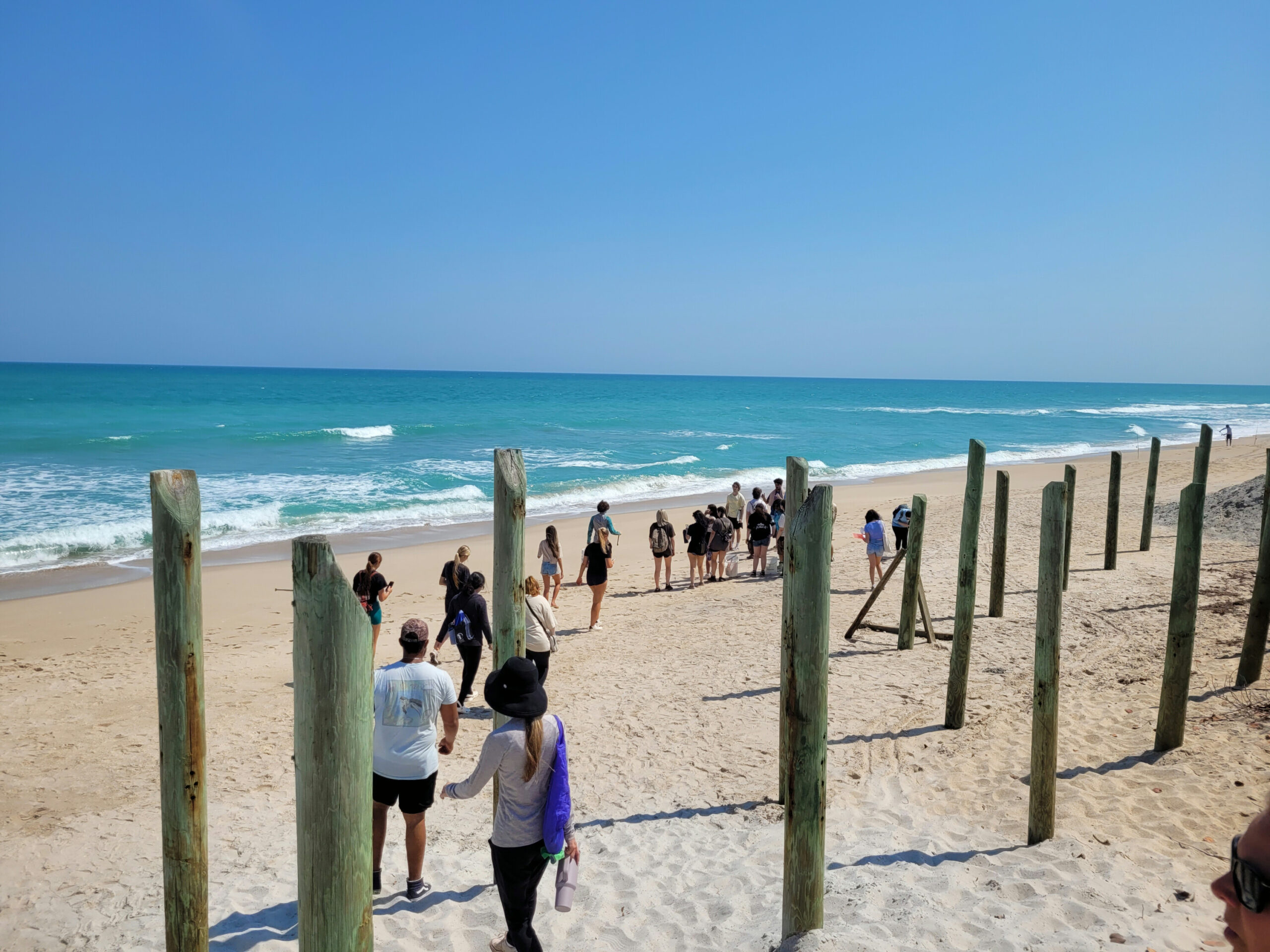
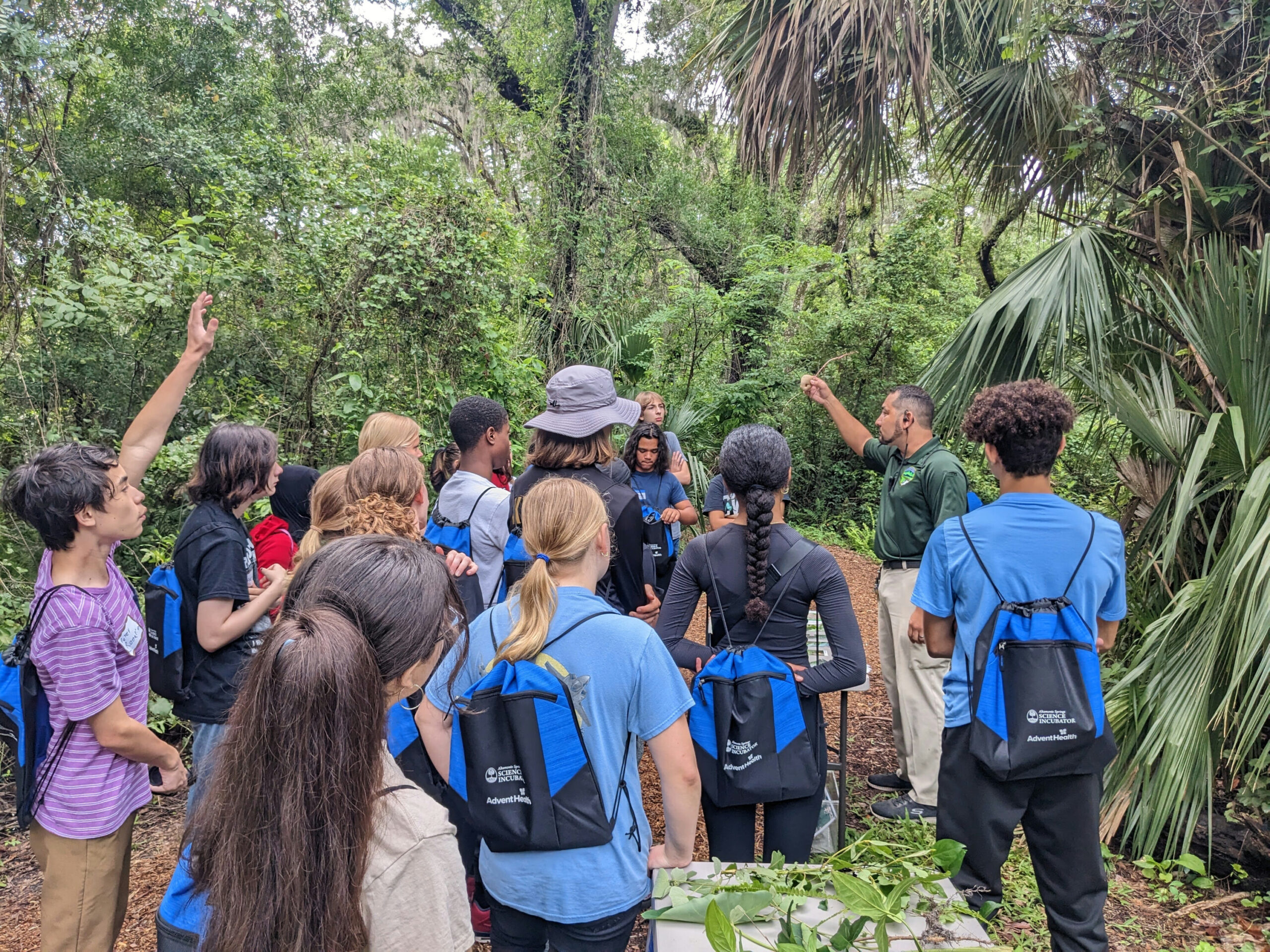
Attention teachers & schools! - a great opportunity for some hands-on & interdisciplinary environmental studies. Applications will be accepted through September 15 with up to $3,000 to be awarded per teacher or school. From St. Johns River Water Management:
Students across the St. Johns River Water Management District will have new opportunities to explore Florida’s waterways, conduct scientific research and connect with the environment through the Blue School Grant program. The District is offering up to $60,000 in funding for the 2026-2027 school year to support hands-on learning in K-12 public and charter schools throughout the District, helping teachers bring water-focused science lessons beyond the textbook.
Individual awards of up to $3,000 per teacher or school are available to fund water-focused STEAM curriculum or projects such as water quality testing, aquaponics, conservation gardens and watershed studies. The program helps students connect classroom learning to real world environmental concepts, while inspiring them to explore and protect Florida’s water resources.
“Teachers have incredible ideas for bringing science to life, and Blue School Grants help turn those ideas into meaningful learning experiences,” said Ali Pressel, education and outreach coordinator for the District. “The best science lessons happen when students can ask questions, explore and make discoveries for themselves and this funding helps make those experiences possible.”
Applications for the 2026-2027 Blue School Grant cycle open Aug. 1 and close at 11:59 p.m. on Sept. 15. Teachers and schools interested in bringing hands-on water science to their students are encouraged to apply. For a full list of application requirements, instructions and key dates, visit sjrwmd.com/education/blue-school.
Since 2016, the Blue School Grant program has funded 141 projects at more than 135 schools, supporting more than 22,000 students. These authentic learning experiences give students the opportunity to apply science skills while increasing their knowledge of how their actions impact natural systems.