
Aug. 30. 2019 — The "Buresh Bottom Line": Always be prepared!.....First Alert Hurricane Survival Guide... City of Jacksonville Preparedness Guide... Georgia Hurricane Guide.
STAY INFORMED: Get the * FREE * First Alert Weather app
FREE NEWS UPDATES, ALERTS: Action News Jax app for Apple | For Android
WATCH "Surviving the Storm"
READ the First Alert Hurricane Center "Survival Guide"
DORIAN:
FOLKS! - don't get hung up on individual forecasts, model runs & bad info. Stay calm but with a logical dose of preparation & understand there WILL BE changes in the forecast in the days ahead. Do not focus too much on the exact center as impacts will occur far away from the eye. Hurricane preps are important & will help you before & especially during & after the storm.

*** Everyone in the Bahamas & the Southeast U.S. should prepare for a slow moving & powerful hurricane next week. Obvious coastal impacts - strongest for Central & SE Fl.... but major inland impacts as well ***
There will still be some adjustments to the track but POSSIBLE Jacksonville/NE Fl./SE Ga. impacts (primarily Tue. into especially the middle & end of next week) & very dependent on exact location, movement & intensity of Dorian:
* increasing & potentially deadly rip current risk at area beaches (through the weekend [despite no direct Dorian impacts yet] due to steady onshore flow). Always swim & surf with a "buddy" & as near a lifeguard as possible. Rips will become severe next week. Rip current explainer & safety info * here *.
* rough seas & surf... some coastal flooding (accentuated by new moon phase Fri. in addition to occasional heavy rain) + above avg. tides at the coast, St. Johns River & its tributaries.
* breezy winds out of the east/southeast 10-20 mph, higher gusts.... peak wind gusts could reach 50+ mph next week depending on positioning & strength of Dorian.
* several periods of heavy showers & t'storms, but it's not looking like a "washout" for the weekend.. All this water including the higher than avg. tides & onshore flow could make for some serious flooding.
* isolated fast-moving tornadoes/waterspouts
Dorian became a hurricane east of Puerto Rico Wed. afternoon with the eye moving a little east & northeast of the island nation sparing Puerto Rico the worst of its wrath but not so for the U.S./ British Virgin Islands. Dorian has won the battle against the dry air & appears to be going through a rapid intensification cycle Fri. evening.. Dorian will now be over the open Southwest Atlantic for at least several days where. Tropical storm force winds extend about 115 miles from the center & hurricane force winds out to about 30 miles from the center as the wind field gradually expands. Dorian will continue to encounter an increasingly favorable environment for strengthening as the NHC takes the hurricane to a Cat. 4 & then maintaining itself upon approach to the Bahamas & then Florida. IF landfall on the Fl. east coast is indeed a Cat. 4, it would be the strongest Fl. east coast hurricane since Cat. 5 Andrew in 1992. The most recent "major" hurricane hit on the east coast was Cat. 3 Jeanne in Sept., 2004. Only 2 cat. 4 Fl. landfalls have ever occurred : "Okeechobee", 1928 & "Irma", 2017.
As for movement.... The positioning of a significant upper level ridge of high pressure - Bermuda high - across the Central Atlantic will be a key factor in the future movement. The upper level high will act as a brick wall stopping the northward movement that virtually all of the models have missed so far likely owing to the an upper level low to the west. The European model has become consistent with Dorian generally strengthening over the SW Atlantic before reaching the Florida coast Tuesday. The GFS model has joined many of the forecast models in showing a more west/northwest movement across the SW Atlantic & Bahamas then near or into Florida (depends on the model run) by early Tuesday but generally as weaker - though still significant - tropical cyclone. The UKMET model has been showing a similar trend as the European (but did not do particularly well w/ "Erin" - too strong, too far west) but has been lacking consistency, especially on intensity. It's not wise to jump on a single model run or even a single model. And there will continue to be changes & updates. The GFS has been the northern outlier & faster while the European has been slower/strongest & the more southern outlier. One recent European model run shows the hurricane turning north such that the storm hugs the coast- or a little offshore from Cape Canaveral all the way north to Jacksonville. But hurricane recon data has now been ingested by the latest models - along with extra sounding info. from the SE U.S., & it does seem to be helping the models come to more of a consensus aiming at the SE Fl. coast for landfall followed by some kind of slow northward turn. The conditions over the SW Atlantic & near the Bahamas do appear quite - if not very - favorable for strengthening. We need to be aware of the potential for an even stronger tropical cyclone in the long term than is currently indicated by models &/or forecasts. In an attempt to have better data to forecast with, the NHC has announced:
THE NATIONAL WEATHER SERVICE HAS BEGUN 6-HOURLY UPPER-AIR SOUNDINGS ACROSS PORTIONS OF THE MID-ATLANTIC AND SOUTHEASTERN UNITED STATES.SIX-HOURLY BALLOONS ARE ALSO BEING LAUNCHED IN BERMUDA AND NASSAU INTHE BAHAMAS. A NOAA G-IV SYNOPTIC SURVEILLANCE MISSION IS ONGOING,AND THE DATA FROM THIS FLIGHT WILL BE ASSIMILATED INTO THE 0000 UTCMODEL CYCLE.
Our Jax N.W.S. will be participating in these "special" balloon launches.
An exiting trough over the Northwest Atlantic this week (helping to steer Erin N/NE) will not be strong enough to pick up Dorian. Instead, high pressure will rebuild in place of & south of the exiting trough turning Dorian back more to the west & northwest & possibly west upon approach to Florida & the S.E. U.S. coast ... likely in tandem with at least an intensification phase. In the long term, Dorian's intensity may very well be modulated by structural changes & nuances including possible eyewall replacement cycles.
So.... the bottom line is stay up to date on the latest forecasts for the Caribbean, Fl. & Southeast U.S. this week into the upcoming holiday weekend. There will be changes in the forecast & impacts in the days ahead! Don't be so foolish as to look at a forecast one day & not return for an update whether it's 1, 3 or 5+ days later.


Spaghetti model plots for Dorian:

Ensemble (An ensemble weather forecast is a set of forecasts that present the range of future weather possibilities) spaghetti plots: (for an in-depth look on ensemble modeling see * this * [Blake/Brennan, NHC])

The GFS model below for the upper levels (500mb) valid Sun. afternoon (09/01) shows the ridge of high pressure/Bermuda high over the Central/Western Atlantic. Dorian will follow the edge of this ridge - path of least resistance - to the west then northwest then north. So..... what I have to figure out is the exact strength & positioning of the ridge to determine exact Dorian movement. As of this moment - very subject to change! (of course).... I favor a strong enough ridge to keep Dorian south of Jacksonville (landfall near or south of Cape Canaveral) before a turn NW then north then even NE.

The busy map below (courtesy CIMSS) helps explains some of what's going on & what's ahead for Dorian. The lines are shear vectors. Brighter lines - yellow & red - stronger shear & the enemy of tropical cyclones. The upper level trough is just west of Dorian helping to nudge Dorian more northwest vs. west. This feature should drop W/SW & weaken in the coming days. When combined with building Bermuda high to the north, Dorian "straightens out"... moves more west.
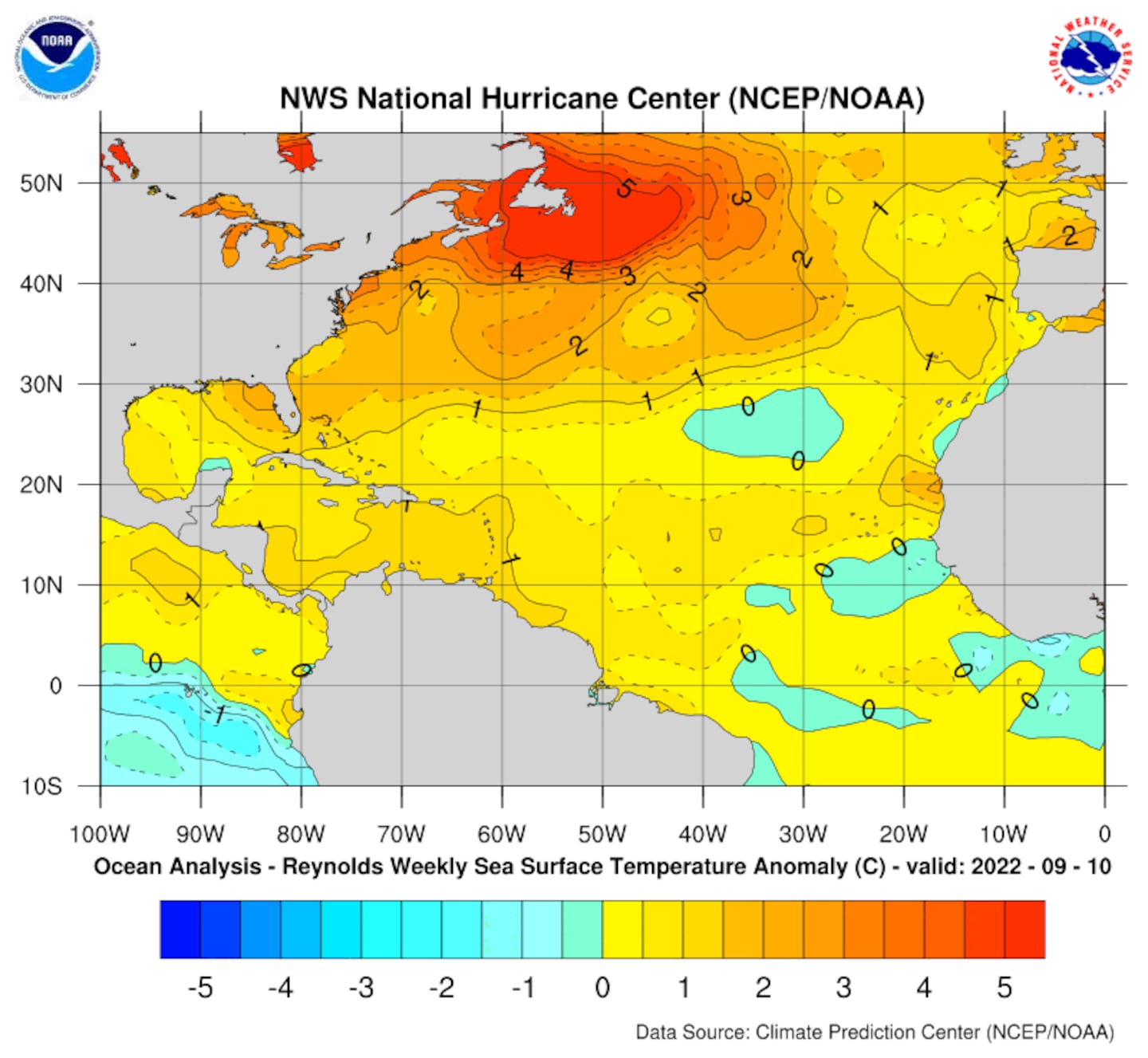
The solid colors are sea surface temps. show plenty of warm water along Dorian's projected path - 80s & even around 90 degrees near the Bahamas.

But it's not just the sea surface temps., it's also - arguably more importantly - the depth of the available warm water - deep oceanic heat content. Image below shows there's plenty of such energy ready to "feed" Dorian, especially closer to the Bahamas & coastal Fl. (partly the Gulf Stream).

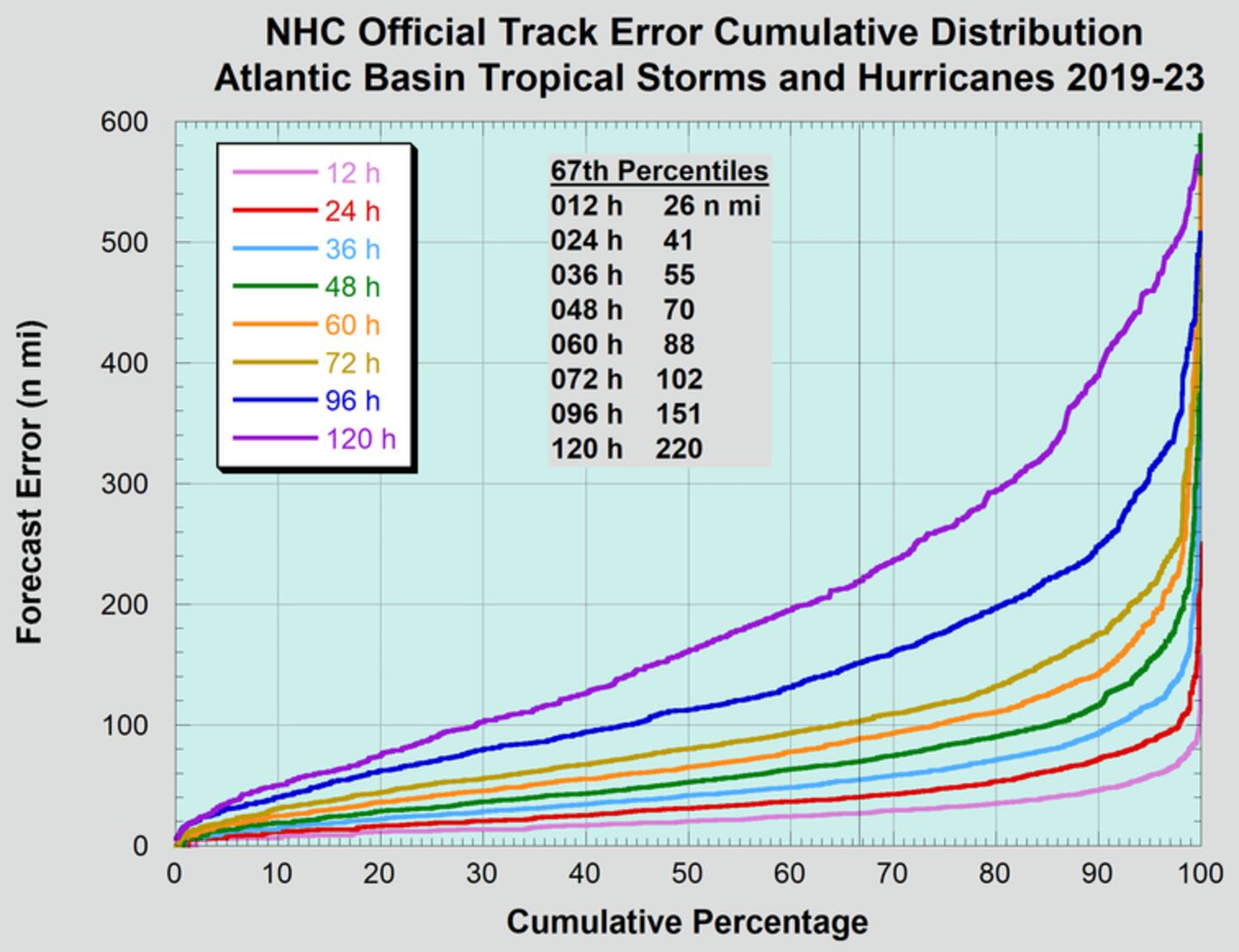
And remember what that "cone of concern or uncertainty" means & does not mean. That cone has everything with the historic track error ranging from the moment the forecast was issued all the way out to 5 days when the avg. error is nearly 200 miles!

National Hurricane Center average track error starting with 12 hours & ending at the 120 hour forecast from 2014-'18:
IR satellite:

Integrated Microwave imager courtesy CIMSS: ("beautiful" & detailed evolution of Dorian)

What to do now in addition to making sure ready for possible power outages & some tree trimming:

Dr. Phil Klotzbach - September landfalling hurricanes:


& a couple of strong waves over the E. Atlantic have at least some potential for gradual development....

An examination of dust over the Central & Eastern Atlantic shows a continuation of a good deal of dust over the Central & Eastern Atlantic as well as parts of the Caribbean. Dorian has been trying to fight off this dry air the last several days.

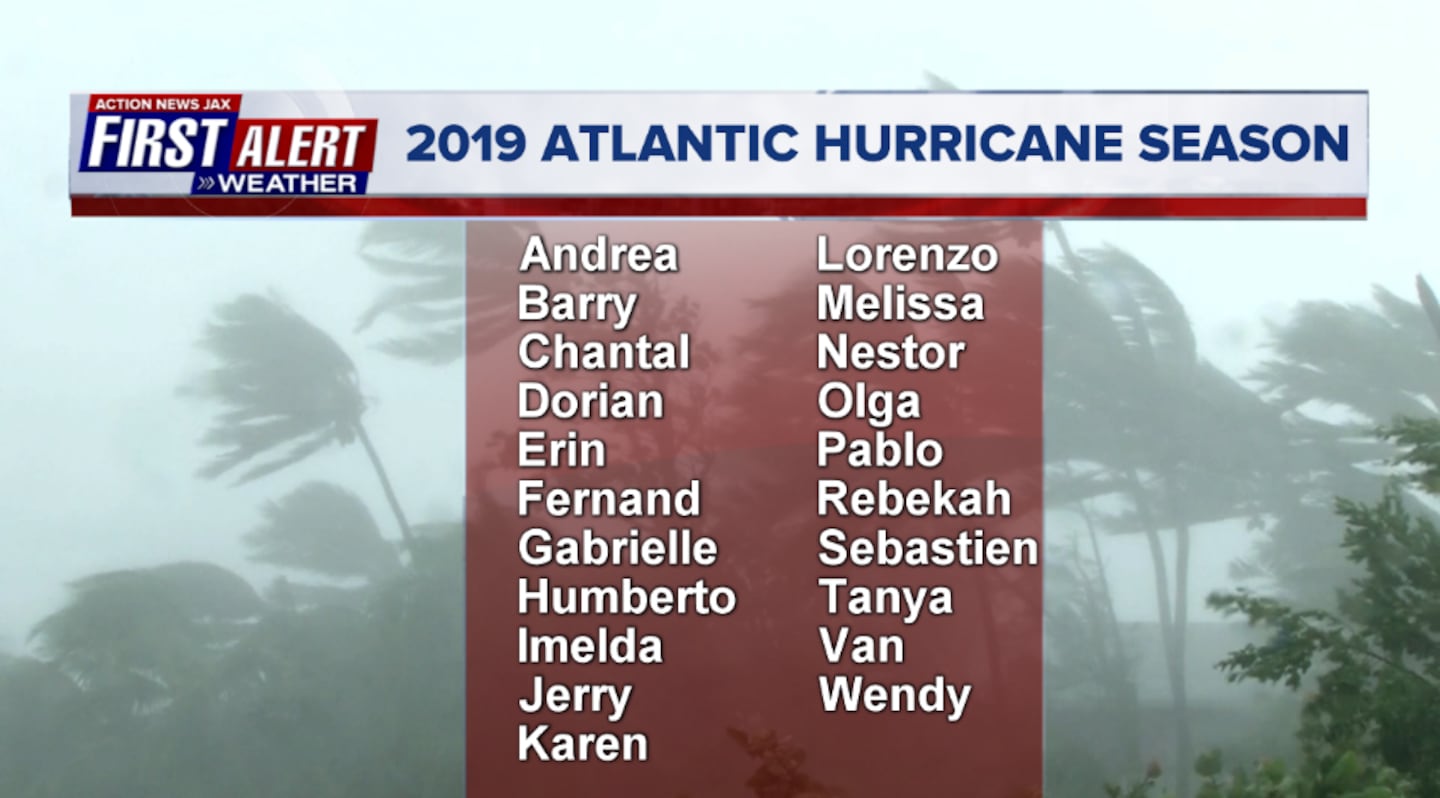
2019 names..... "Fernand" is next on the Atlantic list (names are picked at random... repeat every 6 years... historic storms are retired (Florence & Michael last year):
East Atlantic:
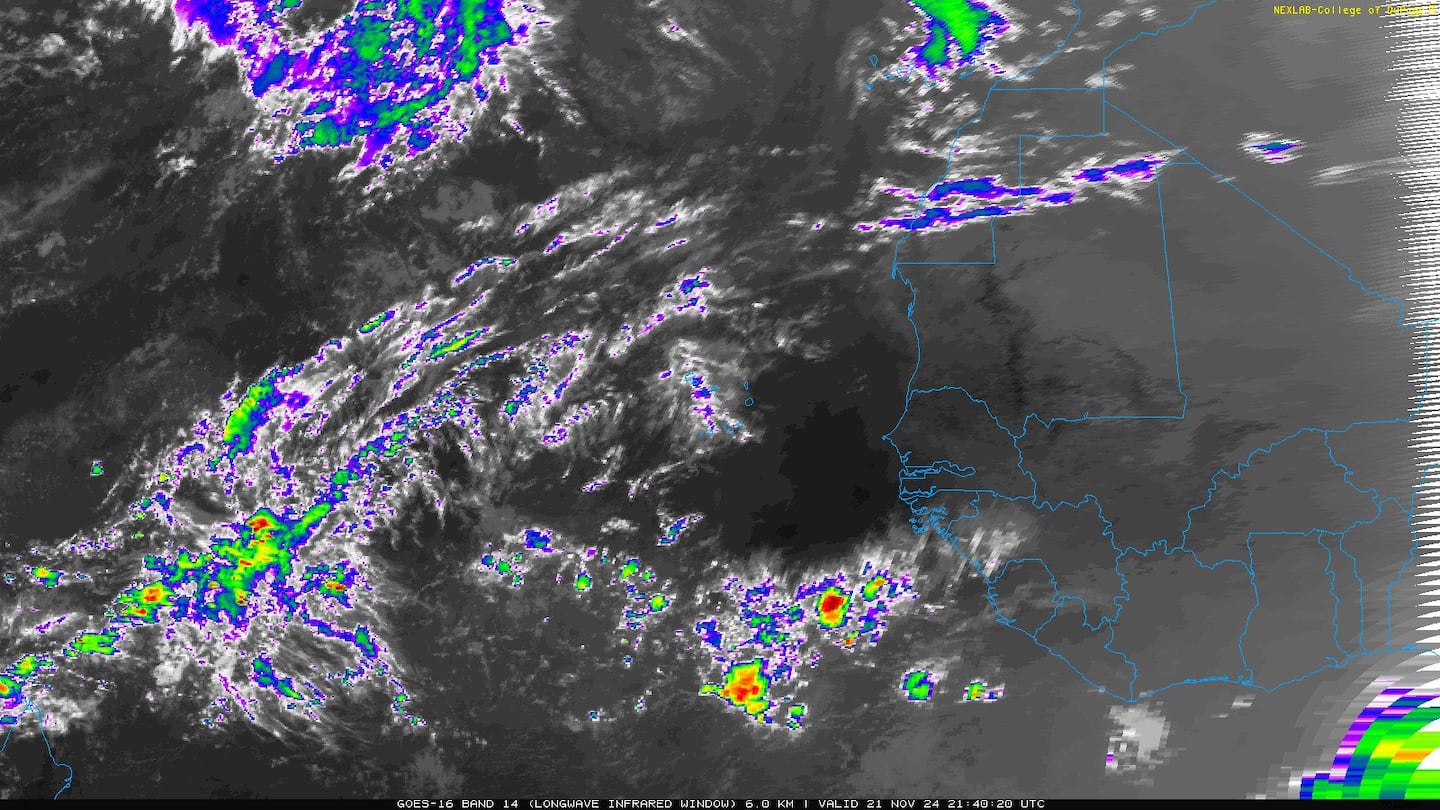
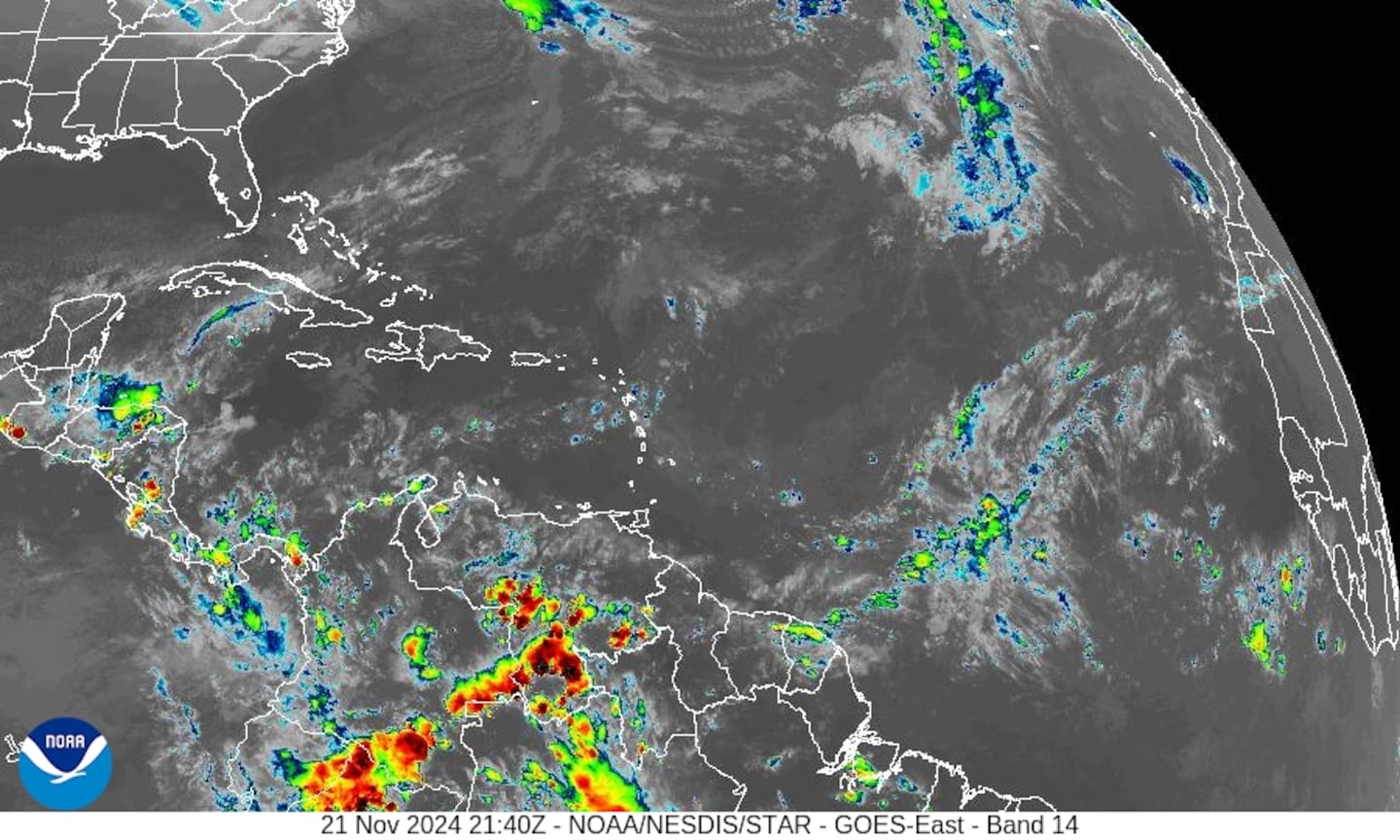


Mid & upper level wind shear (enemy of tropical cyclones) analysis (CIMMS). The red lines indicate strong shear of which there is plenty across the Atlantic at the moment:
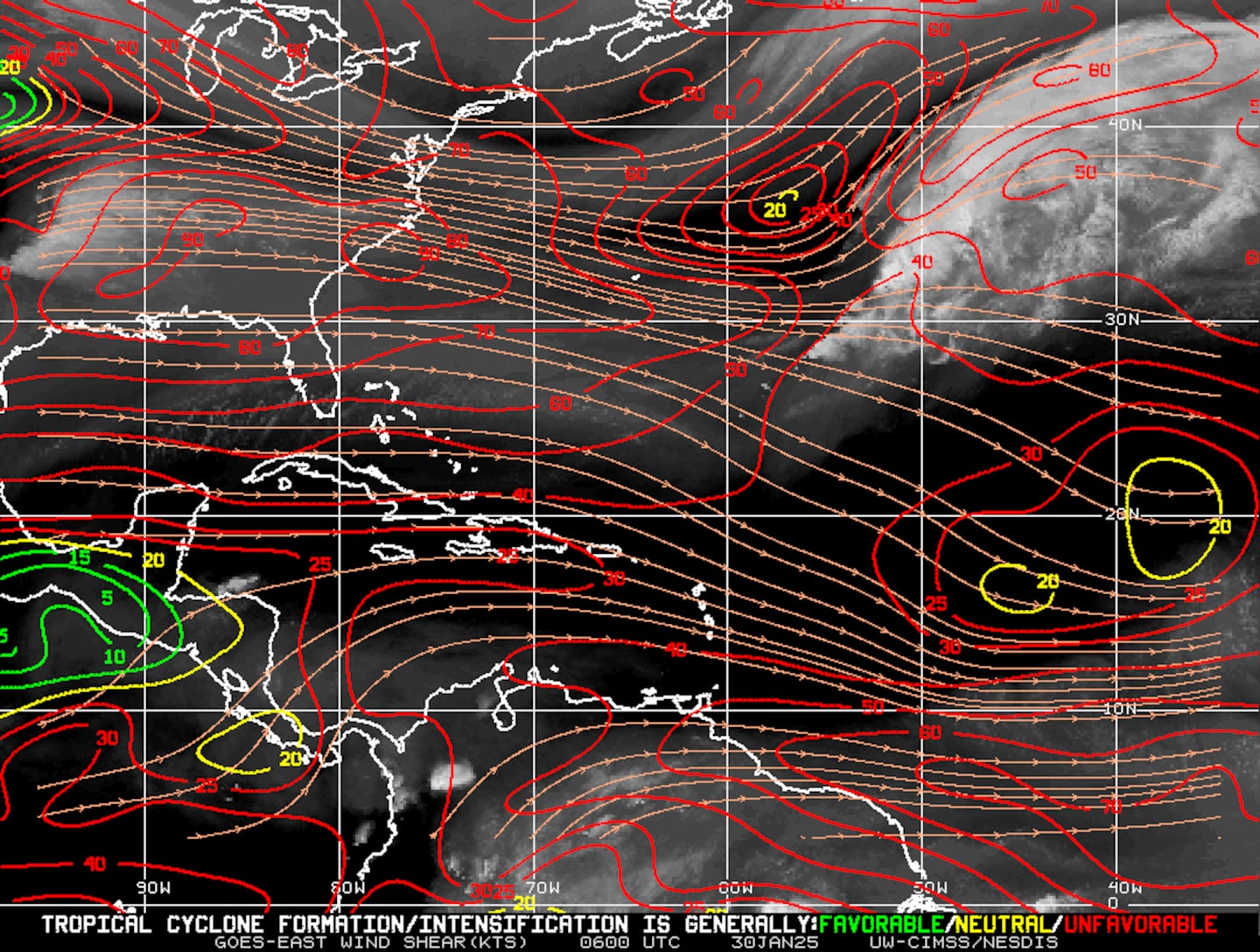
The Atlantic Basin:

Water vapor imagery (dark blue indicates dry air):
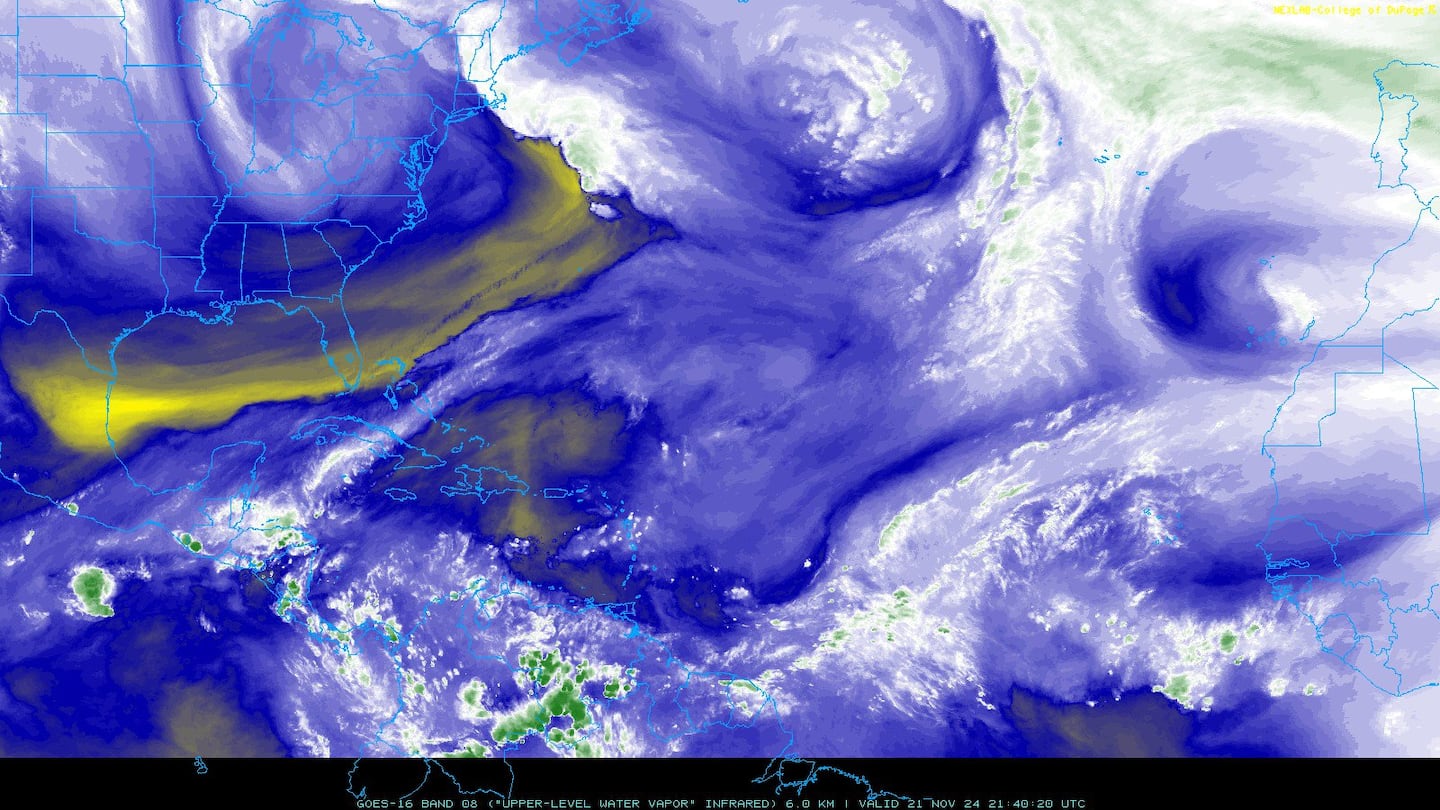
Deep oceanic heat content:

Sea surface temp. anomalies show a warm Gulf of Mexico, Central & Northwest Atlantic while the "Main Development Region" (MDR) remain cooler than avg. along with parts of the Central Caribbean.....
SE U.S. surface map:
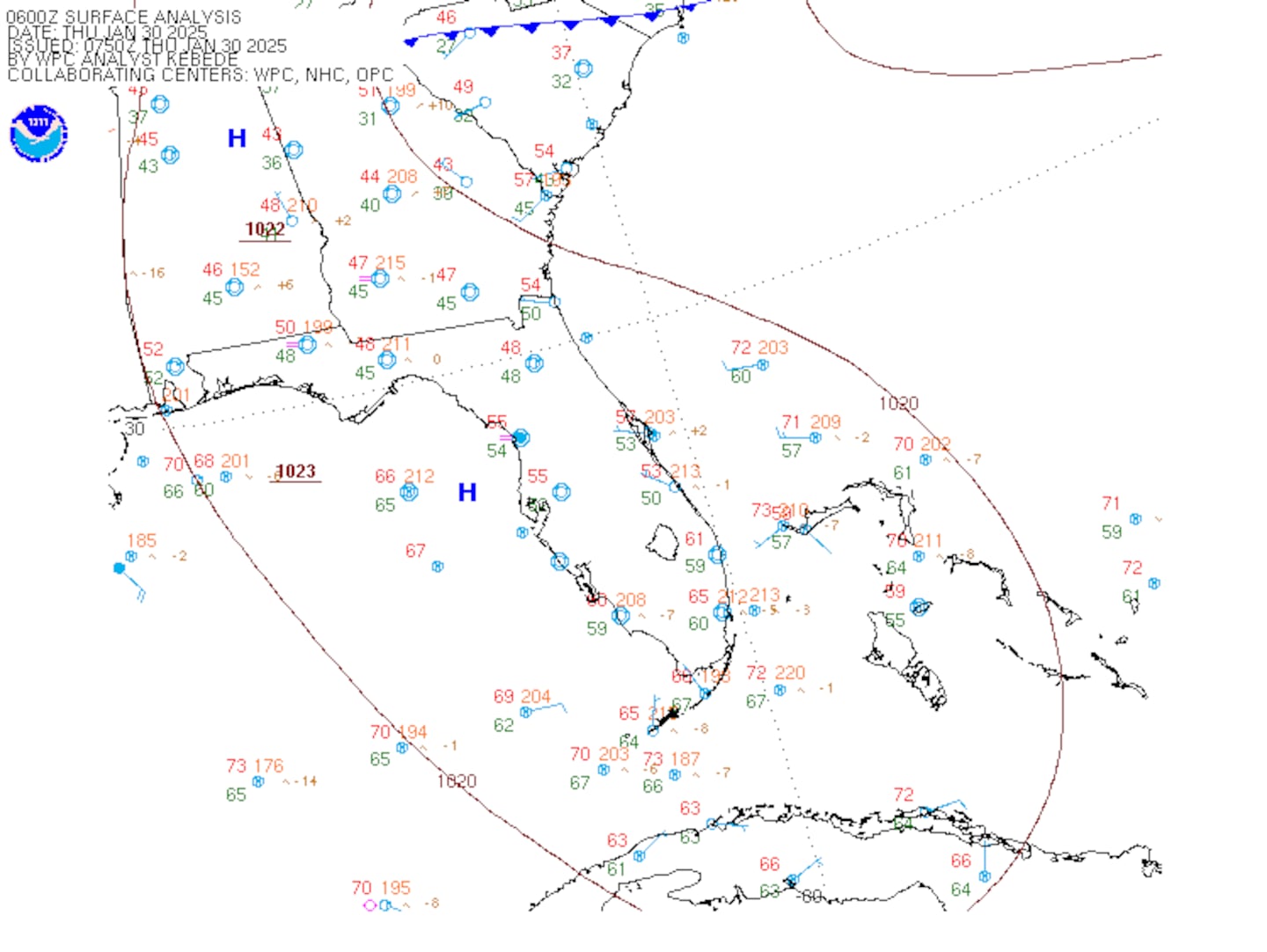
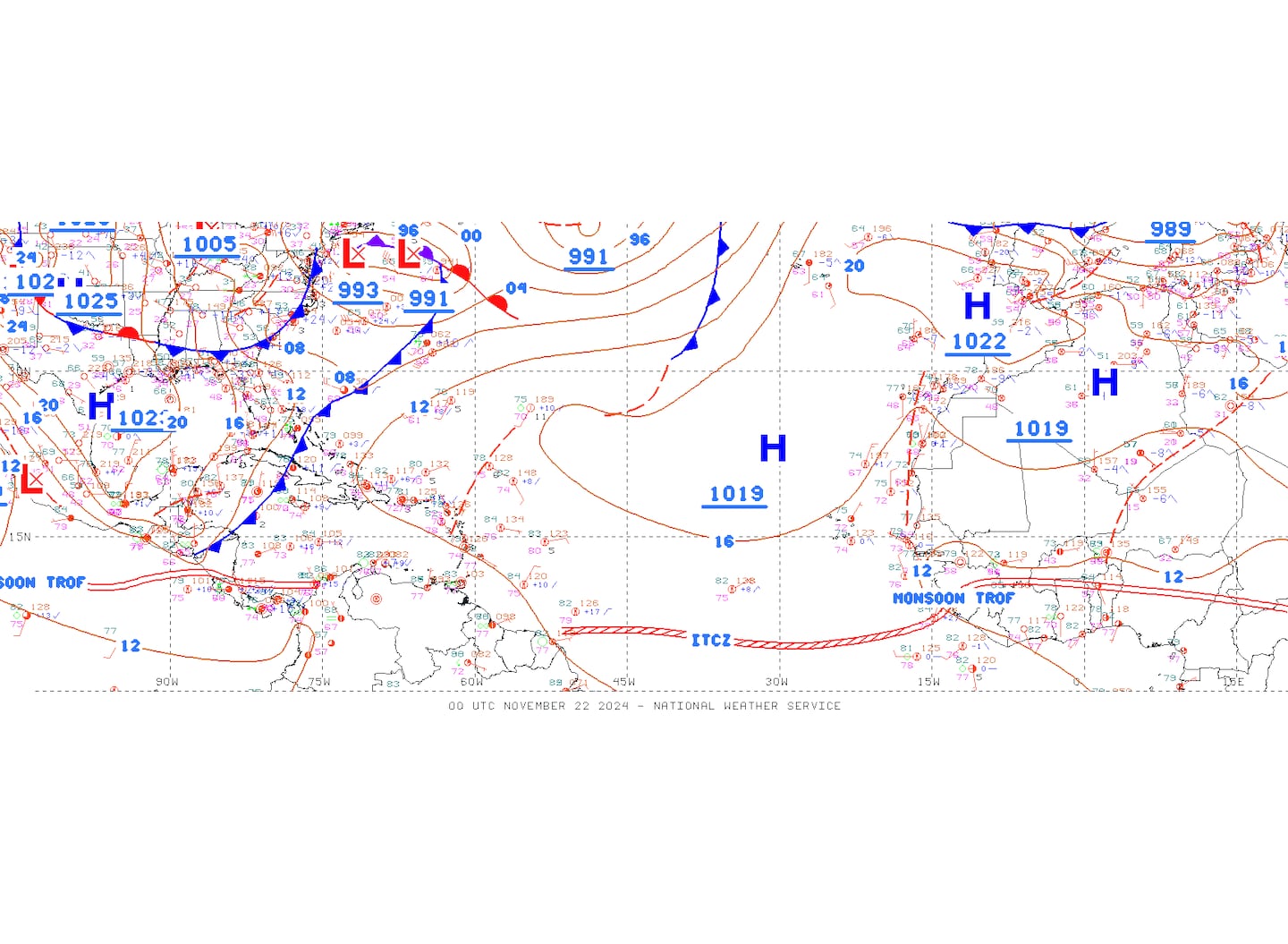
Surface analysis centered on the tropical Atlantic:
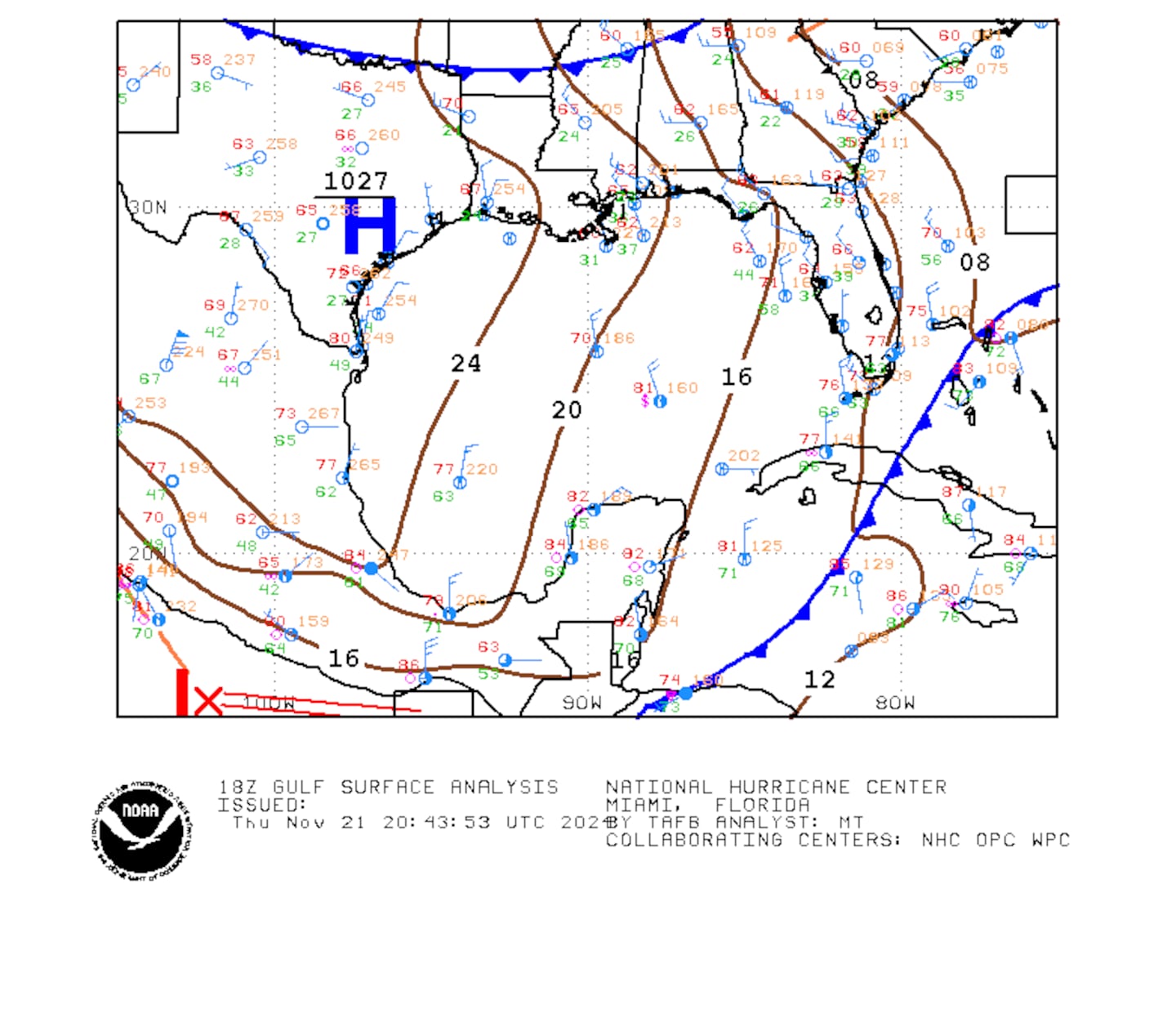
Surface analysis of the Gulf:
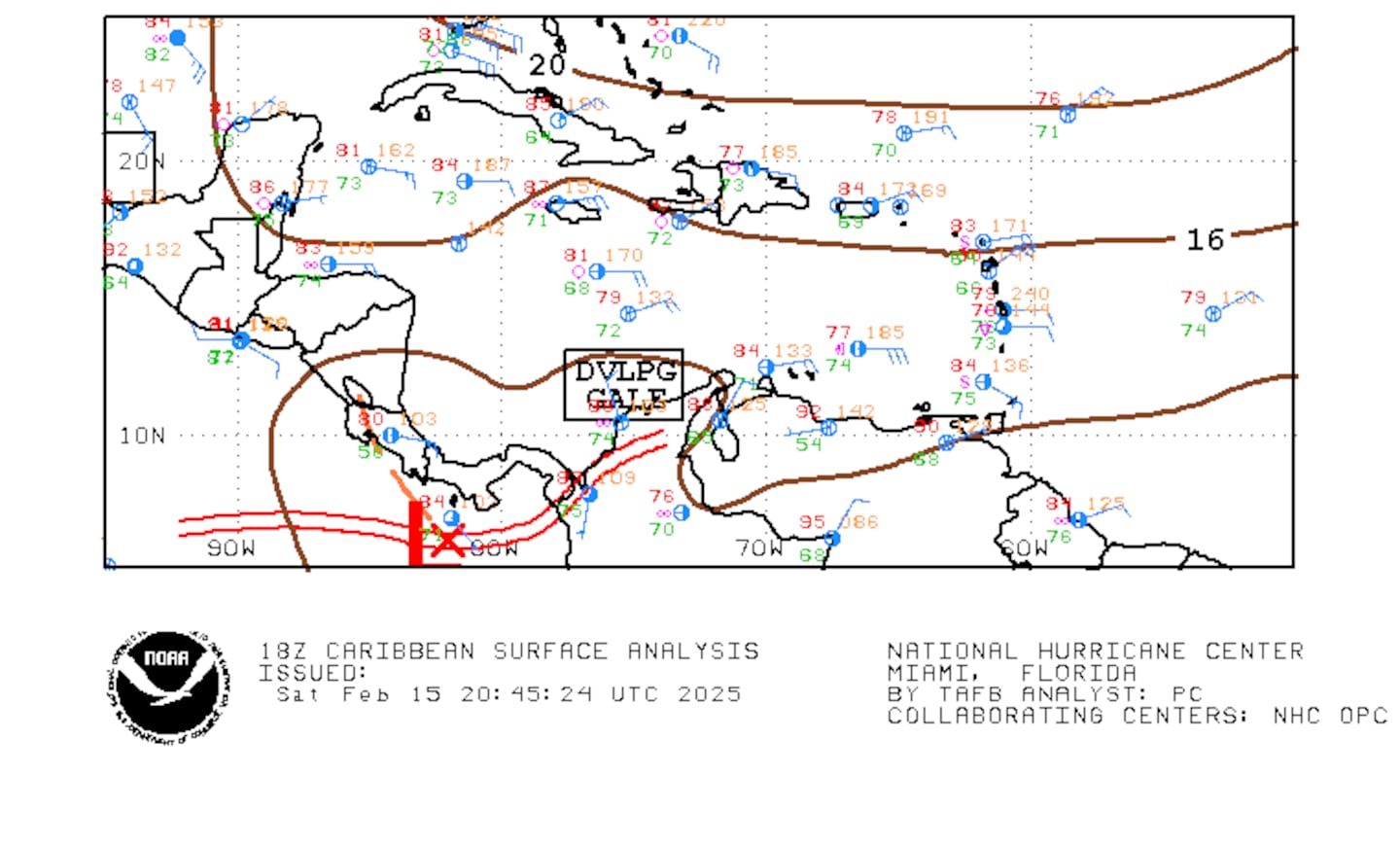
Caribbean:
Cox Media Group


